
Calcium is a well-known mineral that plays a key role in maintaining strong bones and teeth. It is also involved in muscle function, nerve signalling, and overall cellular activity.
Calcium is often associated with dairy products, which can lead to the assumption that plant-based diets may lack sufficient sources. However, a variety of plant foods contain calcium and can contribute meaningfully to daily intake.
In plant-based nutrition, calcium intake is not only about the amount consumed but also how effectively it is absorbed and utilised by the body. Factors such as food combinations and dietary patterns can influence calcium availability.
Understanding where calcium is found in plant-based foods and how to support its absorption helps ensure that nutritional needs are met effectively.
In this guide, we will explore the role of calcium in the body, plant-based sources, factors that influence absorption, signs that intake may need review, and when supplementation may be considered.
Why Calcium Is Important for Bone and Muscle Health
Calcium is essential for maintaining strong bones and teeth. A large proportion of the body’s calcium is stored in the skeletal system, where it provides structural support and helps preserve bone density over time.
In addition to its role in bone health, calcium is involved in muscle function. It helps regulate muscle contraction and relaxation, allowing muscles to move and respond effectively during physical activity.
Calcium also contributes to normal nerve signalling, supporting communication between the brain and the rest of the body. This process is important for coordination, movement, and overall neurological function.
Because calcium supports multiple systems, maintaining adequate intake is important for both short-term function and long-term health.
For individuals following plant-based diets, understanding how calcium is obtained and absorbed helps ensure that dietary patterns continue to support these physiological needs.
Plant-Based Sources of Calcium
Calcium is present in a variety of plant-based foods and can contribute meaningfully to daily intake when included regularly in balanced meals.
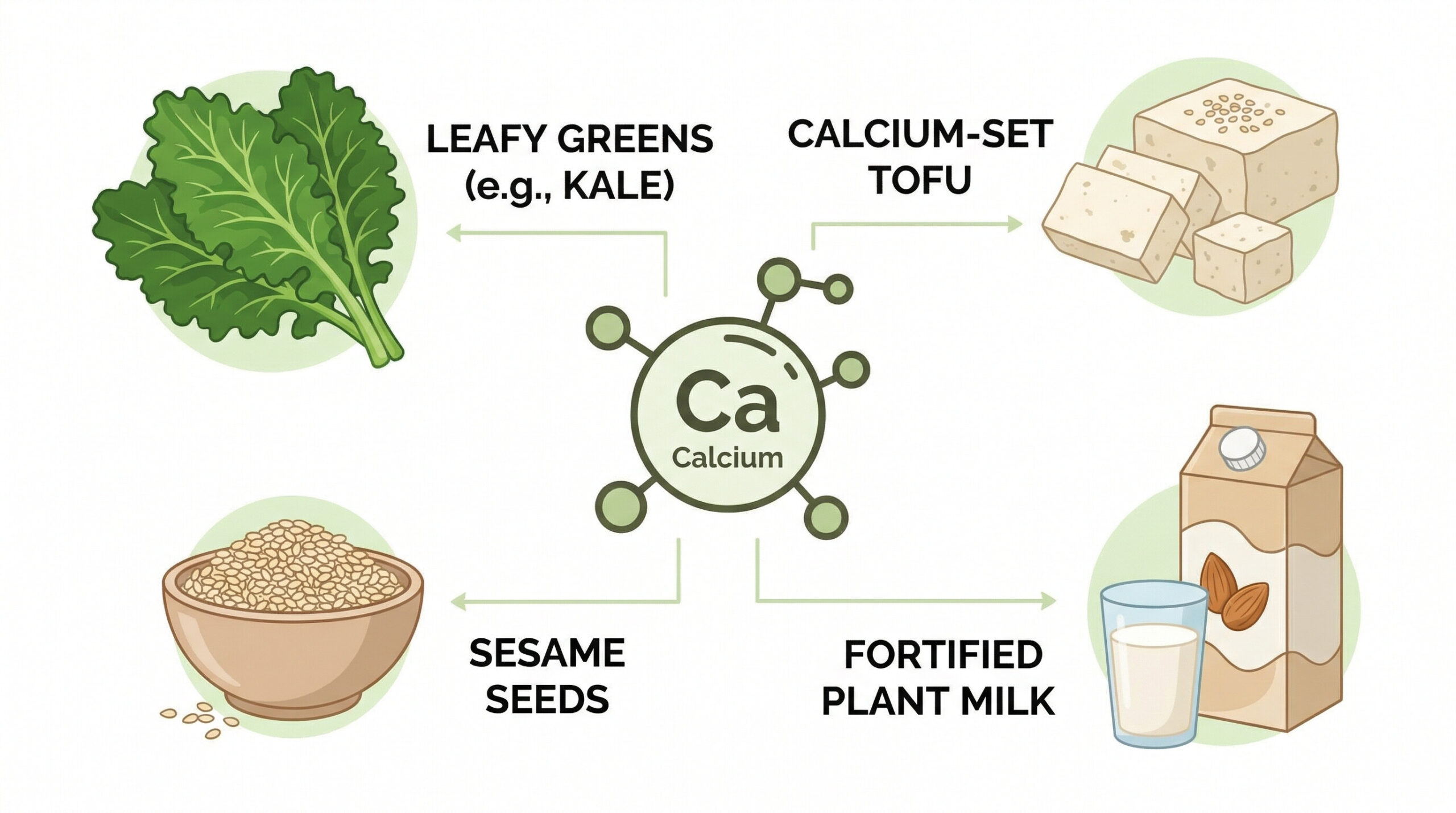
Leafy green vegetables such as kale, bok choy, and collard greens provide calcium and can be easily incorporated into salads, stir-fries, and cooked dishes. These vegetables are often well absorbed compared with some other plant sources.
Calcium-set tofu is another reliable source, as it is prepared using calcium salts that increase its calcium content. It can be included in a wide range of savoury meals.
Fortified plant-based products such as plant milks, yoghurts, and cereals often contain added calcium, making them a convenient way to support daily intake.
Nuts and seeds, including almonds, sesame seeds, and tahini, can also contribute calcium when used regularly in meals and snacks.
Legumes such as beans and lentils provide calcium alongside protein and fibre, supporting overall nutritional balance.
When these foods are included consistently as part of a varied plant-based diet, they can help support healthy calcium intake over time
Factors That Influence Calcium Absorption
While many plant foods contain calcium, the amount the body absorbs can be influenced by several dietary factors.
Certain compounds naturally present in plant foods, such as oxalates and phytates, can bind to calcium and reduce its absorption. Foods such as spinach, for example, contain calcium but also high levels of oxalates, which may limit how much calcium is absorbed.
In contrast, some plant foods such as kale and bok choy contain lower levels of these compounds and are generally better absorbed.
Vitamin D plays an important role in calcium absorption. Adequate vitamin D levels help the body utilise calcium more effectively, which highlights the connection between these two nutrients.
Meal composition can also influence absorption. Consuming a variety of calcium-rich foods throughout the day, rather than relying on a single large source, may help support more consistent calcium availability.
Overall dietary balance and digestive health also contribute to how effectively calcium is absorbed and utilised.
For individuals following plant-based diets, understanding these factors allows simple adjustments that support more effective calcium intake over time.
Signs You May Need to Review Calcium Intake
Calcium plays a central role in bone health, muscle function, and nerve signalling. Because of these roles, changes in calcium intake over time may gradually influence how the body feels and functions.
Some individuals may notice symptoms such as muscle cramps, occasional muscle tension, or general feelings of fatigue. Others may experience changes in bone comfort or physical performance over time.
Calcium is also important for maintaining normal nerve function. When intake is consistently low, some individuals may notice subtle changes in how the body responds to physical activity or stress.
These signs are not unique to calcium status and can be influenced by a range of factors, including overall diet quality, lifestyle habits, and other nutrient considerations.
For this reason, persistent symptoms are best discussed with a qualified healthcare professional who can evaluate dietary patterns and determine whether further testing or nutritional adjustments may be helpful.
For individuals following plant-based diets, periodically reviewing calcium intake can help ensure that dietary patterns continue to support long-term health.
When Calcium Supplementation May Be Considered
Plant-based diets can provide meaningful amounts of calcium through foods such as leafy green vegetables, calcium-set tofu, fortified plant-based products, nuts, seeds, and legumes. For many individuals, regularly including these foods in balanced meals can support healthy calcium intake.
However, some individuals may consider supplementation depending on their dietary habits, lifestyle factors, or specific health circumstances.
For example, individuals who have consistently low intake of calcium-rich foods or who have increased calcium needs may review whether additional calcium support is appropriate.
Calcium supplements are available in different forms, including calcium carbonate and calcium citrate. These forms may differ slightly in absorption and tolerance.
Because nutritional needs vary between individuals, supplementation decisions are ideally made with guidance from a qualified healthcare professional. This helps ensure that the form and dosage are appropriate for individual health needs.
For most people following plant-based diets, focusing on a varied diet rich in whole foods remains the primary foundation for maintaining balanced calcium intake over time.
Calcium Optimisation Checklist
Maintaining healthy calcium intake on a plant-based diet can be supported through a few simple and consistent habits.
• Include calcium-rich foods such as leafy greens, calcium-set tofu, fortified plant milks, nuts, and seeds regularly in meals.
• Choose plant-based foods that are well absorbed, such as kale, bok choy, and fortified products.
• Be mindful of factors that may reduce absorption, such as high oxalate foods, and balance these with other calcium sources.
• Maintain adequate vitamin D levels to support effective calcium absorption.
• Review dietary patterns periodically to ensure consistent calcium intake over time.
With awareness of both calcium sources and absorption factors, plant-based diets can support strong bones and overall wellbeing.
Key Questions About Calcium in Plant-Based Diets
Can plant-based diets provide enough calcium?
Plant-based diets can provide meaningful amounts of calcium through foods such as leafy greens, calcium-set tofu, fortified plant milks, nuts, seeds, and legumes. When these foods are included regularly as part of balanced meals, they can contribute significantly to daily calcium intake.
Is calcium from plant foods well absorbed?
Calcium absorption can vary depending on the food source. Some plant foods, such as kale and bok choy, are well absorbed, while others may contain compounds like oxalates that reduce absorption. Including a variety of calcium-rich foods helps support overall intake.
Do plant-based eaters need calcium supplements?
Not necessarily. Many individuals can maintain healthy calcium levels through a varied diet that includes whole plant foods and fortified products. However, supplementation may be considered in situations where dietary intake is consistently low or individual needs are higher.
Can calcium-related symptoms overlap with other nutrients?
Yes. Symptoms such as fatigue, muscle discomfort, or reduced physical performance can sometimes overlap with other nutritional factors, including vitamin D or magnesium status. Reviewing overall diet and nutrient intake can help provide a clearer understanding of potential causes.