Growing my own vegetables has turned out to be one of the most rewarding choices I’ve made at home.
I used to think of gardening as just a relaxing hobby.
Over the years, however, I’ve realized it brings benefits that go far beyond what ends up on my dinner plate.
Switching to homegrown produce can have a real, positive impact not only on my diet and wallet, but on the environment too.
I want to share what I’ve learned about the eco-friendly advantages of growing vegetables at home, so you can see why this simple habit can mean a lot for your household and the planet.
How Growing My Own Vegetables Helps the Environment
When I started growing food at home, I had no idea how much energy goes into getting supermarket vegetables to my kitchen.
Commercial farming and long distance food transport both use a lot of fuel and packaging.
By picking vegetables fresh from my backyard, I cut out a huge chunk of those resources.
Fewer trucks and containers means fewer emissions pumped into the atmosphere.
Home gardens also encourage the use of less harmful farming methods.
I have direct control over how I feed and tend to my plants, so I avoid synthetic fertilizers and pesticides that might run off into local waterways or harm pollinators.
By choosing natural approaches and composting the garden’s green waste, I lower my footprint even more.
Plus, seeing the difference firsthand makes me more mindful of my environmental impact.
Reducing Food Miles and Its Benefits
“Food miles” is a term you might hear a lot in environmental discussions.
It’s used to describe the distance food travels from where it’s grown to where it’s eaten.
The typical tomato in my local supermarket has often traveled hundreds or even thousands of miles before landing on the shelf, and transportation like this burns fossil fuels and adds to global warming.
When I pick tomatoes from my backyard, they travel only a matter of steps.
By shrinking those food miles to nearly zero, I’m helping reduce the amount of air pollution and greenhouse gases created by food trucks, ships, and planes.
I also find that my vegetables arrive fresher and taste better, since they’re picked right when they’re ready instead of long before.
It makes a real difference both for flavor and for the planet.
Saving Water and Managing Waste
One of the surprising things I learned from growing vegetables at home is how much water I can save with a careful approach.
Large scale commercial farms often need tremendous amounts of water, and sometimes their irrigation methods waste a lot.
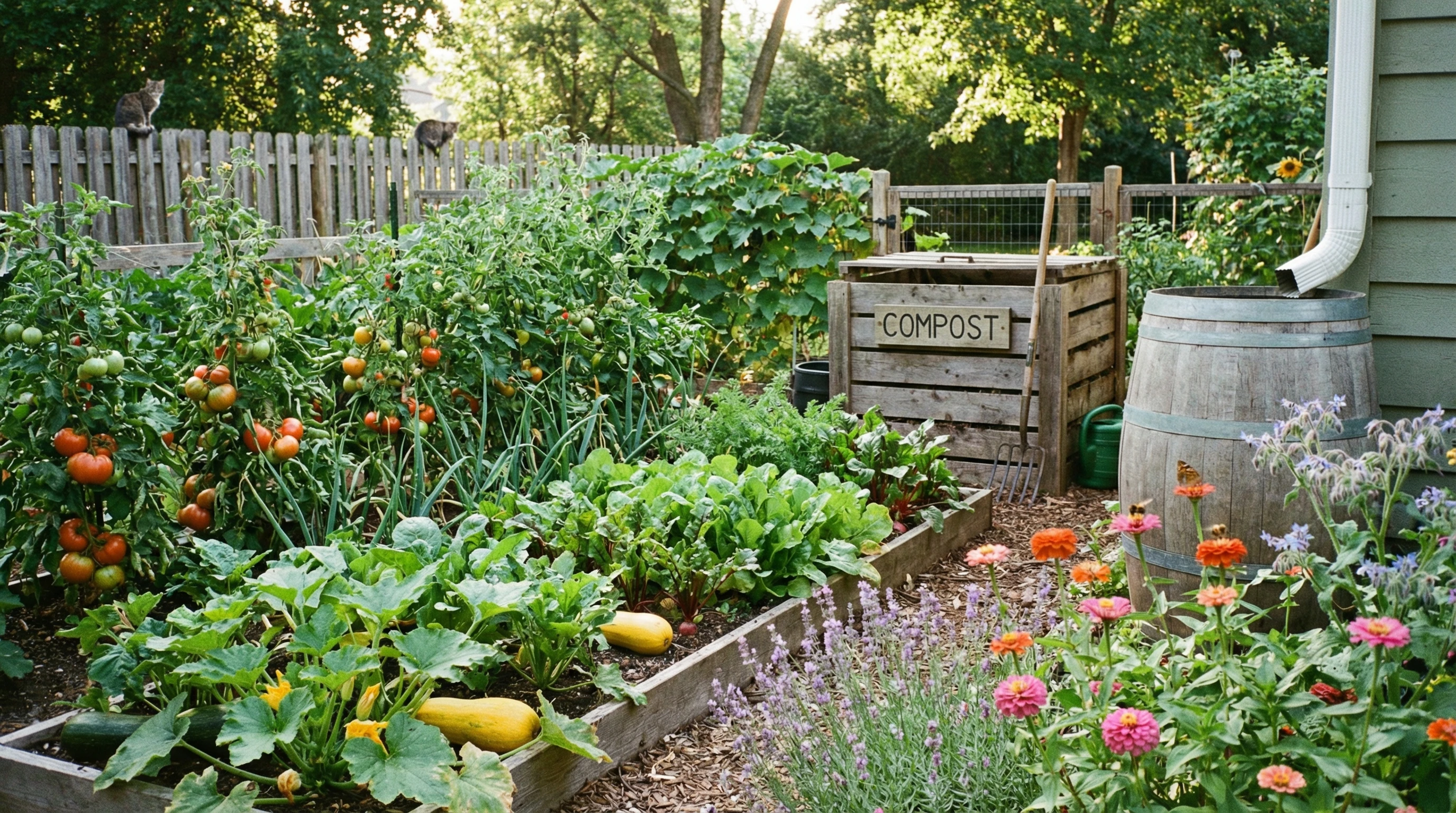
At home, I collect rainwater in a barrel and use targeted hand watering or drip irrigation, which gives plants just what they need and cuts down on waste.
My garden also turns food waste into compost, closing a loop that industrial farming often can’t achieve.
Kitchen scraps, garden clippings, and leaves all go into my compost pile.
This breaks down into soil full of nutrients for the next crop, so less food and organic waste ends up in the landfill.
According to the Environmental Protection Agency (EPA), composting reduces methane emissions from landfills and builds healthier soil.
This helps cut down on reliance on synthetic fertilizers as well.
Supporting Pollinators and Biodiversity
Every season, I see more bees, butterflies, and birds visiting my garden.
Growing a mix of vegetables, herbs, and flowers at home helps native pollinators by providing steady food sources and safe places to rest.
Unlike many commercial fields, my little plot is never a monoculture.
I leave some weeds and native plants around, which means local insects and wildlife stick around too.
Biodiversity is really important for the health of any ecosystem.
More plant and insect variety makes gardens more resilient to pests and disease, and helps keep the local ecosystem balanced.
Even a small home garden can patch together a network of resources for urban wildlife.
By embracing plant diversity, you help stabilize your garden in the face of weather shifts too.
Cutting Down on Plastic and Single Use Packaging
When I grew up, most of my food came wrapped in plastic or some sort of single use packaging.
Today, I hardly need to use any packaging for my homegrown vegetables.
Straight from the garden, they don’t need foam trays, plastic wraps, or stickers.
I store them in glass containers or paper bags, or just use them right away.
The less packaging I use, the less garbage I send off to be processed or buried.
Plastic pollution is a big problem for land and waterways.
By going straight to the source—my own backyard—I’m able to be part of the solution.
Even when I need to share my vegetables with friends or neighbors, reusing baskets and bags has become my go to move instead of buying new ones.
Making these adjustments turns small actions into real environmental benefits.
Boosting Soil Health and Reducing Chemical Use
Commercial farms rely on chemical fertilizers and pest sprays to get high yields, which can break down healthy soils over time.
In my home garden, I skip harsh chemicals and focus on natural soil health.
Adding compost and mulch from kitchen and yard scraps makes a big difference.
A rich, living soil not only supports bigger crops but also stores more carbon from the air—something scientists point to as helpful for addressing climate change (Soil Science Society of America).
I’ve noticed that by protecting and improving my soil, my garden bounces back from drought and heavy rain much better.
Earthworms, fungi, and bacteria thrive in this environment, and that’s great for long term sustainability.
This careful balance lets me grow stronger vegetables with fewer inputs.
Plus, healthy soil is the foundation for growing year after year without wearing out the land.
Common Challenges and Tips for Eco-Friendly Home Gardening
There are a few challenges when trying to keep gardening green and sustainable.
I’ve faced pests before and was tempted to reach for chemical solutions, but found that planting marigolds and using row covers kept bugs down in a natural way.
Another challenge can be water management, capable of becoming a real pain in dry summers.
Setting up a simple rain barrel was a game changer.
Learning to adapt to your local conditions is important for long lasting gardening success.
- Use Native Plants: Blending in native vegetables or edible perennials helps save water and supports local wildlife.
- Plant in the Right Season: I plan what to plant and when so crops grow well and use resources more efficiently.
- Rotate Crops: Changing what I grow in each bed each year keeps pests guessing and boosts soil health.
There’s a learning curve, but these steps can really help a home garden stay environmentally friendly without making things complicated.
Don’t hesitate to ask local gardeners for advice—they often have great tips suited to your region.
Practical Real World Impact of Home Vegetable Gardens
I’ve seen fellow gardeners in my community turn empty lots into lively food patches.
These spaces not only produce healthy food but also clean up neglected land and build green corridors through the city.
I’ve traded homegrown carrots for a neighbor’s zucchini, quickly realizing how gardening at home can strengthen community ties and even reduce trips to the store.
It also makes it easier to get kids and family curious about where food comes from and how it’s grown.
Research from the Nature Sustainability journal shows that if more people are able to grow even a small portion of their vegetables at home or in urban gardens, the combined effect can lead to lower greenhouse gas emissions and healthier local environments.
Even modest home gardens can support pollinator populations, improve neighborhood air quality, and add beauty to shared spaces.
Plus, community gardens give folks who don’t have yards a chance to join in and grow their own food.
Frequently Asked Questions
I often get some of the same questions when I talk about growing vegetables for both taste and an ecofriendly boost.
Here are honest answers based on what I’ve learned.
Question: What are the best ecofriendly practices for a home vegetable garden?
Answer:
Starting a simple compost pile, collecting rainwater, skipping synthetic chemicals, and planting seasonal crops can keep a garden friendly to both nature and your pocket.
Question: Do small gardens actually make a difference for the environment?
Answer:
Yes.
Even small spaces, like raised beds or containers, reduce food miles, cut down on packaging waste, and provide homes for helpful insects.
Question: How can families get started if they’re new to gardening?
Answer:
Start with a few easy vegetables—lettuce, radishes, beans—in a patch or pots.
Spend time learning about your local weather and growing season.
Don’t worry about being perfect; it’s more about trying things out and learning as you go.
Getting Started: Simple Steps for Growing Ecofriendly Vegetables at Home
Even with limited space, I’ve found I can grow a surprising amount of food without heavy equipment or complex systems.
I start by looking at how much sunlight my space gets and choose vegetables that suit those conditions.
Planning ahead saves me time and water.
I use local seed varieties, which are already well suited to my regional weather.
- Choose a sunny spot, since most vegetables need at least six hours of light a day.
- Invest in good soil up front. Mixing compost in makes a huge difference.
- Use mulch to keep moisture in and weeds out.
- Experiment with crop rotation and companion planting to naturally manage pests and keep the garden thriving.
Spending a little time in the garden each day gives me healthy food and a closer connection to nature.
If I have extra, I trade or share, spreading the benefits even further.
For me, growing vegetables at home combines a love of food with care for the environment, making it a habit that keeps on giving.