Getting through a busy workweek always feels simpler when I have plantbased lunches ready to go.
Meal prepping saves time, keeps my spending on track, and helps me stick with healthy eating, especially when my days get hectic.
If you want to build a plantbased meal prep routine but aren’t sure where to start, I’ll show you the steps, tips, and easy systems that make it straightforward.
Why Plant-Based Meal Prep Makes Busy Workdays Simpler
Plantbased meal prep helps me stay energized and focused throughout the day.
I don’t have to scramble to find lastminute food choices, and lunch is already made, which lets me avoid daily stress about what to eat.
I also steer clear of pricey takeout or less healthy office snacks.
With plantbased lunches, I get plenty of fiber, vitamins, and slow-burning carbs that help me breeze through my afternoons.
Studies show that meals built around whole grains, beans, vegetables, and nuts support long-lasting energy and mental focus (source).
Making lunches ahead also puts a dent in food costs and reduces waste.
Whenever I use up leftover roasted veggies or grains from dinner, nothing gets lost at the back of the fridge.
Instead of wilted spinach or half-used broccoli, I’m putting all my groceries to work in lunches I actually look forward to.
Getting Started: Planning Your Plant-Based Lunches
The first step in prepping plantbased lunches is to check what you have in your pantry and picture what will taste good for the week.
Keeping it flexible is helpful.
Most plantbased meals start with a simple blueprint like this:
- Grains: Brown rice, quinoa, farro, whole wheat couscous, or barley.
- Protein: Lentils, beans, chickpeas, or tofu.
- Veggies: Roasted, steamed, or raw fresh vegetables like peppers, carrots, spinach, or zucchini.
- Healthy Fats: Avocado, seeds, nuts, or olive oil.
- Extras: Sauces, dressings, or herbs for taste and variety.
I usually prep two or three bigbatch recipes that can be switched around through the week.
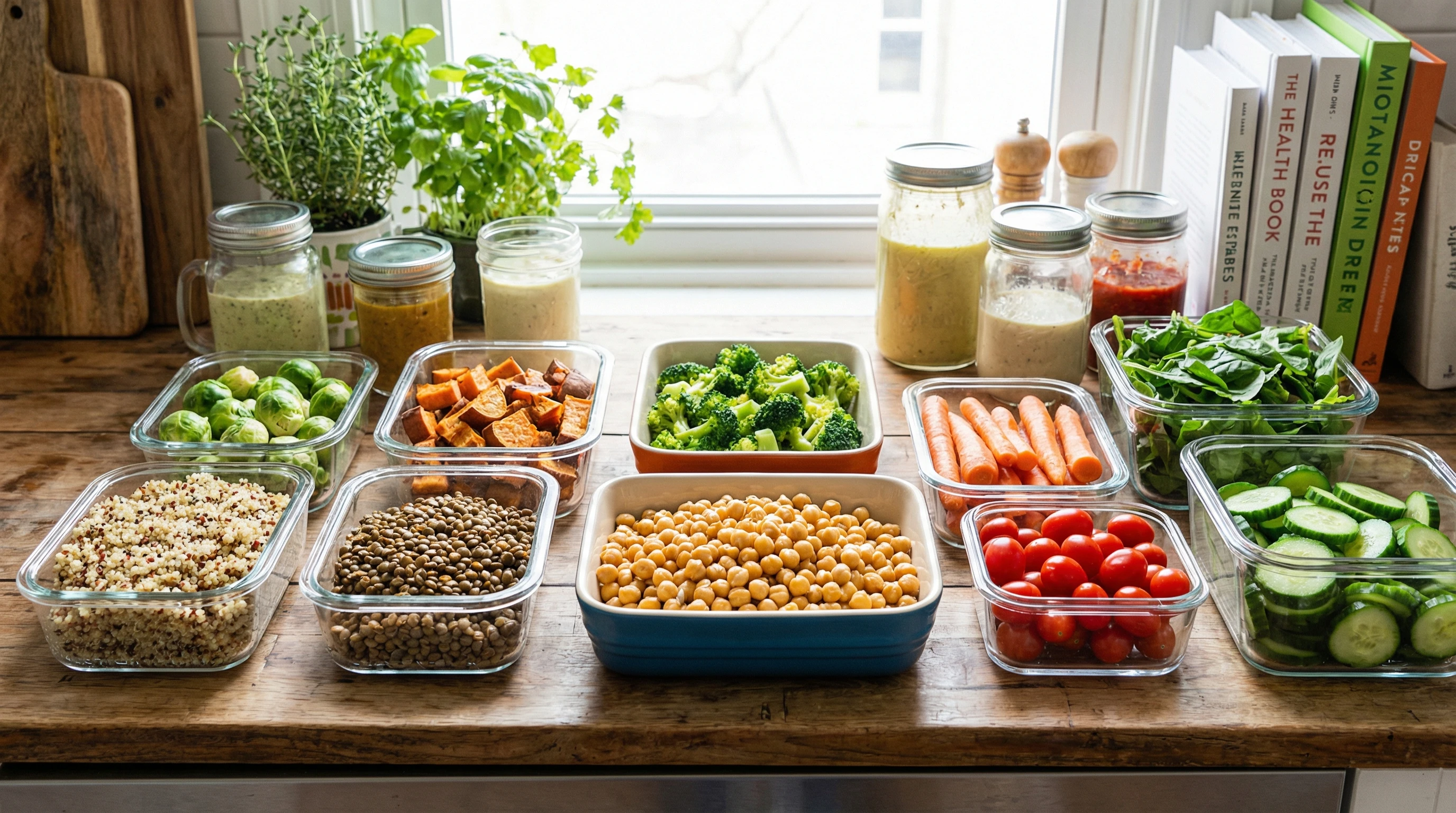
For instance, I’ll make a chickpea salad, roast some sweet potatoes, and cook up quinoa.
These can be turned into bowls, wraps, or plates, keeping my midday menu fun.
Meal Prep Steps: My Simple System
Setting aside a couple of hours once or twice a week is all it takes.
Here’s my easy system for streamlining plantbased meal prep:
- Pick My Recipes: I pick meals that share ingredients. Black beans, for example, fit nicely in both a rice bowl and a veggie wrap.
- Write a Shopping List: I jot down every ingredient I need, including pantry basics, and focus on using what’s already in my kitchen.
- Batch Cook: I cook grains, lentils, or tofu all together. It saves me time and reduces the mountain of dishes.
- Prep Veggies: I chop up a big batch of vegetables, roasting or steaming them. Roasting brings out extra taste and makes veggies more appealing.
- Assemble Lunch Kits: I fill leakproof containers with meal parts. Sauces or juicy ingredients get packed separately, so nothing gets soggy.
Seeing my lunches prepped and waiting in the fridge is satisfying.
It also eliminates another morning decision, freeing up mental space for the workday.
Ideas for Easy, Tasty Plant-Based Lunches
I shake up my lunch meal prep by changing flavors and textures.
Here are several of my favorite combinations, all tasty and lasting up to four or five days in the fridge:
- Mexican Inspired Quinoa Burrito Bowls: Quinoa, black beans, roasted sweet potatoes, corn, tomatoes, and avocado. I splash on cilantro-lime dressing or salsa for a quick taste upgrade.
- Mediterranean Couscous Salad: Whole wheat couscous, cherry tomatoes, cucumber, olives, roasted red peppers, chickpeas, and lemon-herb vinaigrette.
- Rainbow Veggie Stirfry: Brown rice or rice noodles, broccoli, carrots, bell peppers, snap peas, and sauteed tofu, with a ginger-soy sauce.
- Curried Lentil Wraps: Curried brown lentils plus baby spinach, shredded carrots, and cucumber, rolled up in whole grain tortillas.
- Roasted Veggie Hummus Plates: Hummus, roasted cauliflower and carrots, greens, with whole grain pita alongside.
Each meal is sturdy enough to last in the fridge and is perfect eaten cold or warmed, making these great for lunch at your desk or on the go.
Things to Consider When Prepping Plant-Based Lunches
Getting plantbased meal prep right means paying attention to a few extra details.
Here’s how I manage common situations:
- Storage and Freshness: Airtight containers and keeping wet items (like dressing or tomatoes) separate until it’s time to eat truly keep food tasting fresh all week.
- Nutrition Balance: I make sure every meal has grains, protein, and a healthy fat source. I double-check my plate for color—it means I’m getting different vegetables each day.
- Allergies and Preferences: If nuts are out, I use seeds. I keep flavors mild most times, giving me flexibility for changing my meals or sharing them.
- Heating and Serving: Choosing foods that taste good, cold or hot, makes it simpler to have lunch anywhere—whether I’m at my desk or in the break room.
Storage Tips for Maximum Freshness
Through trial and error, I learned that how I store my food affects flavor and texture.
Glass containers keep meals fresher than plastic.
I cool cooked foods before sealing them, and use paper towels in containers with greens or veggies to ward off moisture, which helps food last longer.
Flavor Without Getting Bored
Dressings, sauces, and fresh herbs ward off blandness.
I prep a big batch of dressing—like tahinilemon or spicy peanut—so I can swap flavors between meals.
Mixing in extras, such as pumpkin seeds or scallions, adds different crunch and keeps my taste buds guessing.
Troubleshooting Common Issues
- Lunches getting soggy? I switch to crunchier veggies (like carrots and peppers) and pack greens separately.
- Pressed for prep time? Canned beans, frozen grains, and prechopped veggies are lifelines for getting lunch together quickly.
Staying mindful of these details smooths out my lunch routine, even during my busiest work stretches.
Next Level: Tips to Make Plant-Based Meal Prep Even Easier
Once the basics feel easy, adding a few advanced tricks makes meal prep nearly effortless.
Here’s what has helped me:
Double Up Dinners:
I cook extra at supper and immediately pack extra portions for lunch, saving time and adding new flavors into my week.
Keep Freezer Staples Ready:
Soup, stew, or chili frozen in single-serve portions mean I always have a healthy lunch to grab, regardless of my schedule curveballs.
Stock Up on Good Containers:
Leakproof and stackable containers keep meals tidy, while bento boxes let me separate foods that need to stay fresh.
Quick Flavor Upgrades:
Fresh lemon juice, olive oil, or a handful of herbs take grains and beans from plain to punchy with minimal effort.
Adopting these habits helps me look forward to lunch, even on a jam-packed calendar.
Building a Balanced Plant-Based Lunch: What Should I Include?
Every plantbased lunch I make includes three essentials:
- Plant Protein: Beans, lentils, tofu, tempeh, and edamame fill me up and offer steady energy.
- Complex Carbs: Quinoa, brown rice, whole wheat pasta, or potatoes fuel my afternoon.
- Vegetables: At least two or more colorful veggies for maximum nutrients and taste variety.
Switching up menu items and topping choices is a must for me.
Eating the same mix daily gets boring, so rotating my grains, proteins, sauces, and extras keeps lunch new and satisfying.
Frequently Asked Questions
Question: How far in advance can I safely prep plantbased lunches?
Answer:
Most plantbased meals are good for three to five days when stored properly in airtight containers.
If I need to prep further ahead, I freeze portions and thaw overnight.
Question: How do I stop cooked veggies from getting soggy?
Answer:
I roast veggies till tender, then cool them first.
If needed, I keep cooked vegetables separate until lunchtime.
Question: What should I do if I don’t have time to cook every week?
Answer:
I opt for frozen grains, canned beans, and prewashed salad mixes.
Assemblyonly meals—like wraps and grain bowls—take only a few minutes to pull together, either the night before or in the morning.
The Takeaway: My Honest Experience
Plantbased meal prepping has made my weeks much less stressful and gives a real boost to healthy eating, saving both time and money.
Focusing on easy systems, flavor, and shortcuts keeps my prep fun and sustainable.
The little bit of advance work pays off—my workdays are smoother and my mood is better.
Even packed schedules can fit this simple habit, and the improvement to my daily life is often bigger than I’d expect.