
Chinese food has a way of bringing people together at the table, and for me, some of the most inviting dishes are the ones that don’t rely on meat.
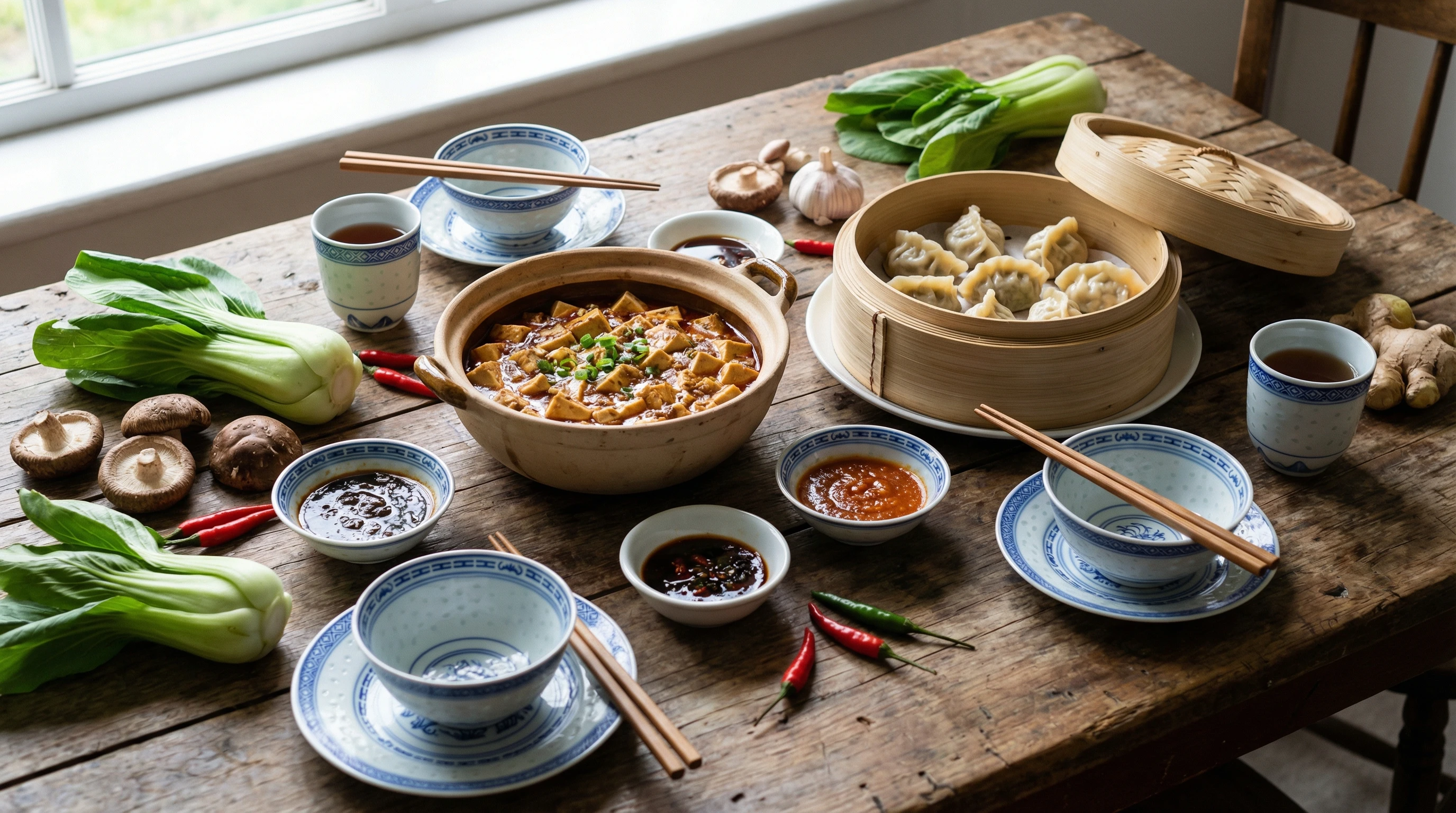
Two favorites always come to mind: tofu mapo tofu and vegan dumplings.
These classics have roots in time-honored cooking, and they continue to glow up for anyone who prefers or needs to skip animal products.
Here, I’ll guide you through what makes these dishes exciting, how to enjoy them at home, and tips from my own kitchen that make plantbased Chinese cooking approachable.
Why Plantbased Chinese Cooking is Having a Moment
Plantbased food is not a new trend in Chinese cuisine.
For centuries, Buddhist temples in China have served flavorful vegetarian meals built on tofu, fresh vegetables, and mushrooms.
More recently, plantbased dishes have become popular worldwide.
Reasons vary; some people are looking for lighter options or avoid animal products for ethical or health reasons.
Others are simply curious about new flavors.
I find it really satisfying to enjoy the complex tastes of Chinese food in a way that suits my lifestyle.
Swapping in tofu or creative vegetable fillings never means giving up on flavor.
China’s culinary traditions offer plenty of dishes that are naturally meatless, making it easy to adapt favorites.
In recent years, more home cooks and restaurants outside China have embraced plantbased styles, and you can even find vegan versions of spicy Sichuan mapo tofu or dumplings packed with greens at many Chinese restaurants.
Getting to Know Mapo Tofu and Vegan Dumplings
Some dishes stand out as true comfort food for me: tofu mapo tofu and vegan dumplings.
They might sound simple at first glance, but some special touches make them memorable.
Mapo tofu is a well-loved Sichuan dish.
Traditionally, it calls for pork or beef, but the tofu takes on a silky texture and soaks up the spicy, numbing sauce.
In plantbased versions, mushrooms often step in to add that “meaty” bite.
The sauce, made with doubanjiang (fermented chili bean paste), Sichuan peppercorns, and garlic, does most of the work.
This means the dish keeps its bold flavors even without meat.
Vegan dumplings are another dish that you can customize for any taste.
I usually use a mix of finely chopped mushrooms, napa cabbage, carrots, and sometimes water chestnuts for crunch.
By carefully seasoning the filling with soy sauce, ginger, and sesame oil, I find that these dumplings never feel like they are missing anything.
Panfried or steamed, they are about the dipping sauce and the fun of sharing, too.
How to Make Plantbased Mapo Tofu at Home
I started making my own mapo tofu at home after a few tries at restaurants left me wishing for more heat and less oil.
Here’s my basic approach:
- Choose the right tofu: Soft or medium tofu works best. I drain it well and gently cut it into cubes so it doesn’t break apart during cooking.
- Layer in deep flavor: The base starts with lots of garlic, ginger, and the heat of Sichuan peppercorns. I add fermented chili bean paste (doubanjiang) for that classic depth, then mushrooms or a plantbased ground as the hearty element.
- Built-in heat and tingle: Toasted Sichuan peppercorns create a numbing feel which, paired with chili oil, brings a signature punch. You can always adjust the amount for your own spice comfort.
- Finish with greens: Scallions or garlic chives add freshness at the end, rounding things out beautifully.
The real secret is simmering everything long enough for the flavors to meld without letting the tofu overcook.
I like backing off a little on oil compared to restaurant versions, but I make sure there is enough to create that classic, slightly glossy sauce.
If you want a slightly different approach, try adding rehydrated shiitake mushrooms for added umami.
They bring out rich flavors while boosting the nutrition profile and add variety to each bite.
Using a splash of Chinese black vinegar at the end can also balance the spice, giving a touch of brightness to the dish.
Vegan Dumplings: Simple Steps for Homemade Success
There’s something relaxing about folding dumplings, and I’ve come to treat it as both a cooking task and a meditative break.
My advice for beginners is to keep things simple at first.
Storebought dumpling wrappers save time and work well for steaming or panfrying.
- The filling matters most: Chop everything finely and squeeze out excess water from cabbage and mushrooms to avoid soggy dumplings. Add a little tofu for softness and protein.
- Flavor boosters: Soy sauce, a few drops of sesame oil, white pepper, scallions, and grated ginger bring everything together.
- Folding tips: Use a small bowl of water to help seal the edges. Don’t worry about fancy pleating unless you want to try. It’s the flavor that counts, and sealed edges are what matter for cooking evenly.
- Cook how you like: I panfry my dumplings in a little oil until the bottoms brown, then add water and cover the pan to steam them through. Steaming or boiling also works, depending on your mood.
For dipping sauces, I usually mix soy sauce, rice vinegar, a touch of chili oil, and sometimes a sprinkle of sugar and minced garlic.
Make extra, people always want more.
To keep things fresh, try adding new vegetables like chopped kale, corn, or even bits of roasted sweet potato for a seasonal twist.
Customize your filling based on what you have, and you’ll find endless possibilities.
Main Things to Know Before Cooking Plantbased Chinese Dishes
I’ve made my fair share of kitchen mistakes with these recipes, but a few tips make the experience easier and more fun:
- Ingredient prep: Chinese cooking often happens quickly over high heat, so have everything chopped and measured in advance.
- Ingredient quality: For mapo tofu, the right chili bean paste and fresh Sichuan peppercorns really do make a difference. If you are sensitive to spice, look for milder versions.
- Good tofu: Not all tofu is the same. Fresh tofu from an Asian grocery store holds up better and tastes much richer than shelfstable brands.
- Practice patience: The first time folding dumplings will feel slow, but you’ll get faster with practice. Make extra and freeze them. Future you will thank you.
Ingredient Prep
Having everything ready ahead of time, from sliced mushrooms to measured out sauces, really makes it easier to cook confidently.
Chinese dishes move fast once you start cooking, so being organized means less stress and better results.
Ingredient Quality
Sourcing the best chili bean paste and spices can really improve the finished flavor.
If you’re struggling to find the right ingredients, look to online Asian grocers or specialty markets near you.
Good spices, fresh tofu, and quality soy sauce are the backbone of plantbased Chinese dishes at home.
Good Tofu
Fresh tofu is often available at Asian markets and can hold up better when simmered in sauces.
Seek out soft yet sturdy blocks for mapo tofu, or slightly firmer tofu for mixing into dumpling filling.
Practice Patience
Your first batch of dumplings may not be perfect, and that’s fine.
My first try was full of odd shapes, still delicious.
Folding them gets easier, and freezing extras saves time for quick meals later.
Practice turns this process into something relaxing and enjoyable.
Once you’ve handled the basics, you can focus on adding small personal twists to your recipes and cook with much more confidence.
Personal Tips to Put Your Own Spin on Vegan Chinese Dishes
Tinkering with recipes has helped me find what works for my tastes.
Here are a few tricks:
Layer flavors with mushrooms:
I often combine different mushrooms like shiitake and oyster for depth in both mapo tofu and dumpling filling.
Dried mushrooms, rehydrated and chopped, add a satisfying bite and umami.
Heat control:
Doubanjiang can be strong.
Taste and build up the heat slowly until you hit your sweet spot.
Homemade chili oil:
Making your own with neutral oil, dried chilies, and a dash of Sichuan peppercorns lifts dishes to a new level.
Stored in a jar, it’s great for drizzling on mapo tofu or dumplings.
Play with vegetables:
Rotate vegetables through the dumpling filling based on season or leftovers in your fridge.
Chopped spinach, bok choy, or sweet corn each bring something new.
Personalizing dishes makes the process fun and keeps meals interesting.
Experimenting with different textures, such as adding chopped nuts or seeds, can also provide a new spin on classic combinations.
If you enjoy a citrus punch, try grating a little lemon or orange zest into your dumpling filling for extra zing.
Common Questions About Vegan Mapo Tofu and Dumplings
Some of these questions are ones I asked when I first started making Chinese dishes without meat.
Question: Do you need special equipment for dumpling making?
Answer:
Not really.
A small bowl for water and a clean surface for folding is all it takes.
A bamboo steamer is handy but not essential; regular pans work fine too.
Question: Can I make mapo tofu less spicy?
Answer:
Of course.
Start with less chili bean paste or use a milder sauce, then add more only if you want extra heat.
Question: What’s the best way to store leftovers?
Answer:
Both dishes keep well in the fridge for up to three days.
Dumplings and mapo tofu both reheat nicely in a pan or microwave, though dumplings may lose a bit of crispness if they were panfried originally.
Question: Are there glutenfree options for wrappers and sauces?
Answer:
Yes!
Glutenfree dumpling wrappers are available at some specialty stores or can be made at home with rice flour, potato starch, and a bit of tapioca flour.
For sauces, tamari or coconut aminos can stand in for soy sauce.
Enjoying Plantbased Chinese Meals Anytime
Cooking vegan versions of Chinese classics like mapo tofu and dumplings opens up a lot of delicious possibilities, whether you’re following a plantbased diet or just want to try something new.
Each time I make these dishes, I find new ways to tweak the flavors and share them with friends who might not expect to enjoy meatfree Chinese food so much.
With a little preparation, good ingredients, and an open mind, you can bring the joy of Chinese cooking to your own table.
No matter your skill level or whether you eat meat, there’s something really welcoming about a plate of fresh dumplings or a bowl of spicy tofu that makes it worth learning over time.
Cooking together, sharing food, and swapping tips all add to the experience, so gather your favorite ingredients and invite others to get involved, making each meal even more enjoyable.