
Creating plantbased Japanese cuisine offers a fresh, satisfying, and nutritious twist on classic favorites.
I find that dishes like sushi rolls and miso soup are especially easy for beginners, and they’re perfect for mixing traditional flavors with plantbased ingredients.
In this article, I’ll walk you through the essentials for making veganfriendly sushi rolls and a delicious bowl of miso soup at home.
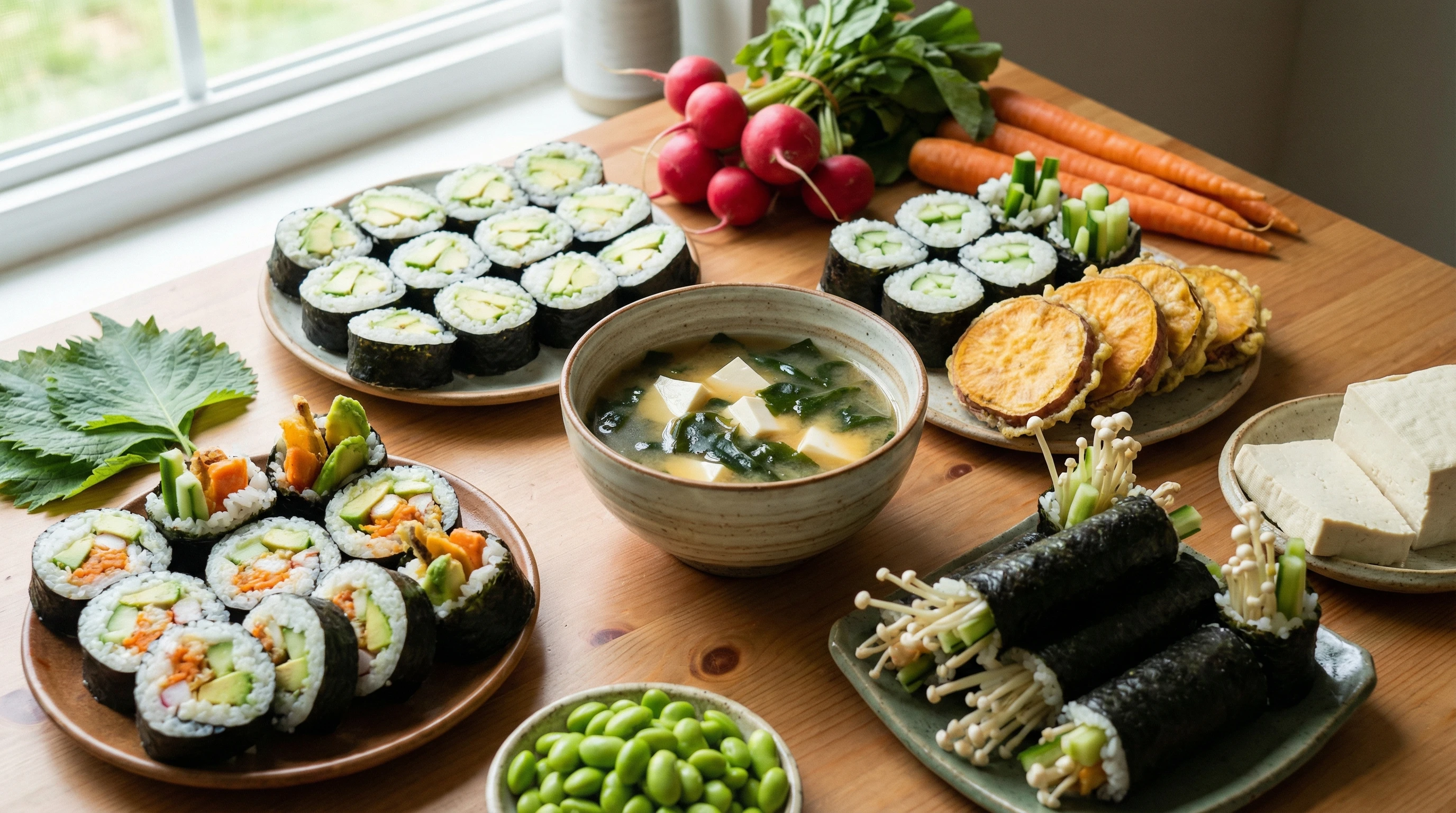
What Makes Japanese Cuisine PlantBased?
Traditional Japanese dishes often feature rice, seaweed, vegetables, and tofu, making them great starting points for plantbased meals.
Many recipes highlight fresh ingredients and simple seasonings, so it’s pretty easy to swap animal products for plantbased ones without losing any flavor.
Plantbased eating centers on foods that come from plants, including vegetables, grains, nuts, seeds, and legumes, while avoiding meat, dairy, and other animalderived products.
Staple ingredients like nori seaweed, soy sauce, rice vinegar, and tofu make moving into plantbased Japanese cooking a breeze.
Vegetablebased sushi is common in Japan, so rolling with only veggies or tofu still feels authentic.
Miso paste, a fermented soybean product, is the backbone of classic miso soup and is naturally plantbased, but some versions use dashi broth made from fish flakes, so I always check labels or make homemade dashi using kombu (seaweed) and shiitake mushrooms to keep things vegan.
Basics for Making PlantBased Sushi Rolls
Making sushi at home starts with gathering the right ingredients and prepping your fillings.
Here’s what I like to have ready:
- Sushi Rice: Short grain Japanese rice, seasoned with rice vinegar, sugar, and salt. This gives the sushi its classic flavor and sticky texture.
- Nori Sheets: Dried seaweed sheets used for rolling. They’re loaded with minerals and give sushi rolls their familiar taste.
- Fillings: Fresh vegetables like cucumber, avocado, carrots, and bell pepper work well. Tofu, pickled radish, and even roasted sweet potato are other tasty options.
- Extras: Soy sauce for dipping, wasabi for a bit of heat, and pickled ginger to refresh the palate between bites.
To roll sushi, I use a bamboo sushi mat, but if you don’t have one, a piece of clean plastic wrap can substitute.
Washing your rice thoroughly and seasoning it after cooking really makes a noticeable difference in taste and texture.
When layering, I try not to overdo the fillings so the roll stays tight and easy to slice.
Using a wet knife helps avoid the rice sticking, giving much cleaner cuts.
How to Prepare Vegan Miso Soup
Miso soup is a comforting staple, and it’s surprisingly simple to make plantbased.
It relies on the taste of miso paste and a rich broth to deliver its familiar flavor.
Here’s what goes into a straightforward vegan miso soup:
- Kombu dashi: This broth comes from soaking dried kombu seaweed and dried shiitake mushrooms in water. It provides the plantbased answer to traditional fish-based dashi.
- Miso paste: White or yellow miso has a mild, slightly sweet taste, while red miso is richer. I add the miso at the end, off the heat, to keep its probiotics alive.
- Add-ins: Silken tofu cubes, green onions, wakame seaweed, and thinly sliced mushrooms are traditional choices. You can also add spinach or thin carrot rounds for extra taste and color.
When making miso soup, I simmer kombu and mushrooms for about 10-15 minutes, then remove them before adding soft ingredients and miso.
Avoid boiling once the miso goes in, as high heat destroys its beneficial properties and flavor.
Steps to Make Sushi Rolls and Miso Soup at Home
- Prepare the rice: Rinse short grain rice several times until the water runs clear, then cook according to the package directions. While it’s hot, season it with a mix of rice vinegar, a bit of sugar, and salt.
- Prep fillings: Slice your vegetables into thin strips. If using tofu, press and slice it, then marinate or gently fry for extra flavor.
- Set up your station: Place a bamboo mat on your counter and lay a sheet of nori on top, shiny side down. Spread a thin, even layer of rice, leaving space at the top for sealing.
- Add fillings: Arrange your veggies and tofu near the bottom edge, then roll tightly using the mat. A little water on the empty edge seals the roll.
- Cut the roll: Use a damp, sharp knife to slice into bite-sized rounds.
- Make the soup: Start by simmering kombu and mushrooms to bring out their flavors. Remove the solids, add tofu and wakame, then dissolve miso in a small bowl of broth and stir it gently back into the pot.
The whole process is hands-on and creative.
I realize that rolling sushi gets easier with every attempt, and experimenting with new filling combinations always keeps me excited.
Challenges and Tips for PlantBased Japanese Cooking
- Rice Texture: Getting perfectly sticky yet fluffy sushi rice takes practice. Keeping an eye on the rice-towater ratio, rinsing until clear, and seasoning while hot gives the best results.
- Finding Vegan-Friendly Ingredients: Some sauces or condiments might include fish or animal products. I always check ingredient labels or reach for plantbased substitutes like tamari instead of soy sauce or vegan mayo for spicy rolls.
- Working with Nori: Nori sheets can get soggy or tear easily if exposed to too much moisture or if the rice is too hot. Use slightly cooled rice and work steadily to keep the nori crisp.
- Flavor Balance: Japanese cuisine leans on subtle, layered flavors. I taste as I go and adjust with a squirt of vinegar, a sprinkle of salt, or a splash of sesame oil if needed.
Rice Texture
Nailing the right texture for sushi rice is one of the hardest steps.
Overcooked rice turns mushy while undercooked grains make the rolls crack.
I stick to shortgrain rice and follow the package, letting the rice rest ten minutes after cooking and then season.
An even layer spreads easiest and gives the best rolls.
Ingredient Selection
Many traditional dashi stocks use fish flakes, so they aren’t vegan.
I use kombu and mushrooms, which provide similar umami without any fish.
You can now find vegan-certified soy sauces and wasabi at most supermarkets, making shopping simpler.
Working with Nori
Keeping nori crisp is vital for both taste and texture. In humid weather, I store nori in an airtight container with a silica gel packet.
Rolling quickly once the rice is ready helps too.
Balancing Flavors
Plantbased sushi can sometimes be a little plain if the fillings are mild.
Adding marinated tofu, sautéed mushrooms, or tangy pickled veggies gives more depth.
A sprinkle of toasted sesame seeds adds a pleasant nutty touch.
Overall, these techniques and tricks really smooth the way for anyone looking to get into plantbased Japanese food at home.
More Creative Plant-Based Sushi Ideas
Plantbased sushi comes in endless combinations.
Here are a few of my personal favorites:
- Sweet Potato Tempura Rolls: Roasted or airfried sweet potato slices paired with avocado deliver a hearty, satisfying roll.
- Spicy Tofu Rolls: Marinated tofu tossed with vegan mayo and sriracha gives some extra spice and creamy texture.
- Cucumber and Pickled Radish: Light, crunchy, and great for summer, this combo is refreshing but full of taste.
- Mango and Red Bell Pepper: For a colorful, sweet, and crisp roll, try thin-sliced mango with bell pepper.
Changing up sauces, like making a spicy vegan mayo or a sweet soy glaze, gives homemade sushi a restaurant feel.
I like to serve my rolls with extra pickled ginger and a simple cucumber and seaweed salad on the side.
If you’re feeling adventurous, try rolling in finely shredded lettuce or adding roasted mushrooms.
The more you try different combinations, the more you’ll stumble upon new favorites that surprise your taste buds.
Frequently Asked Questions
Here are some common questions you might have when you start making plantbased Japanese meals at home:
Question: Can I make sushi rice without sugar?
Answer:
Yes, the sugar simply balances the vinegar to mirror traditional recipes.
You can use a little agave or skip it altogether for a less sweet sushi rice.
The key is still adding rice vinegar for that signature flavor.
Question: Which miso paste is vegan?
Answer:
Most miso pastes are plantbased, but some brands use fish-based dashi.
Check for vegan labels or look at the ingredients to confirm it uses kombu or mushrooms instead of bonito flakes.
Question: How do I stop my sushi from falling apart?
Answer:
The trick is to press the rice firmly (but not too hard) and roll tightly with the nori.
Wetting the knife before slicing keeps everything neat and reduces sticking.
Final Thoughts
Plantbased Japanese cooking is a fun and delicious way to enjoy classic dishes with a healthy twist.
By working with fresh vegetables, tofu, and familiar seasonings, you can create sushi rolls and miso soup that satisfy cravings and encourage creativity.
With a bit of practice and a few staple ingredients, anyone can try these favorites in their own kitchen.
Trying out plantbased Japanese recipes is a perfect chance to get creative and appreciate the simple charm of these dishes.
If Each sushi roll has its own story, and every bowl of soup brings comfort, taste, and a nod to tradition while putting your own spin on it.
So grab your ingredients, get rolling, and enjoy the eye-catching flavors of plantbased Japanese cuisine right at home.