Iron is an essential mineral that plays a central role in energy production, oxygen transport, and overall vitality. It forms a key component of haemoglobin, the protein in red blood cells responsible for carrying oxygen throughout the body.
For those following a plant-based diet, iron intake is often discussed in relation to potential deficiency. However, the conversation is not only about how much iron is consumed, but also how effectively it is absorbed.
Plant foods provide non-heme iron, which is absorbed differently compared with the heme iron found in animal products. This does not make plant-based diets inherently inadequate, but it does mean that food combinations and absorption strategies can play an important role.
With a clear understanding of how iron absorption works and which plant foods provide meaningful amounts of iron, maintaining healthy levels on a plant-based diet is entirely achievable.
In this guide, we’ll explore the role of iron in the body, practical plant-based sources, strategies to improve absorption, signs of low iron status, and when supplementation may be appropriate.
Why Iron Is Important for Energy and Oxygen Transport
Iron supports several essential processes in the human body, the most well-known being its role in oxygen transport. Iron is a core component of haemoglobin, the protein in red blood cells responsible for carrying oxygen from the lungs to tissues throughout the body.
When iron levels are sufficient, oxygen can be delivered efficiently to muscles, organs, and the brain. This supports physical endurance, mental clarity, and overall energy levels. When iron levels fall too low, the body’s ability to transport oxygen can become compromised, which may lead to fatigue and reduced physical performance.
Iron also contributes to normal immune function and plays a role in cellular energy metabolism. Because of these wide-ranging roles, maintaining adequate iron status is important for day-to-day wellbeing as well as long-term health.
For individuals following plant-based diets, awareness of iron intake and absorption can help ensure that these physiological needs continue to be met effectively.
Heme vs Non-Heme Iron: What Plant-Based Eaters Should Know
Iron found in foods exists in two main forms: heme iron and non-heme iron.
Heme iron is found primarily in animal-derived foods such as meat and fish. This form of iron is absorbed more readily by the body and is less affected by other dietary factors.
Plant-based foods provide non-heme iron. While this form is absorbed differently, it is still capable of contributing meaningfully to overall iron intake when consumed regularly as part of a balanced diet.
The key difference lies in how absorption is influenced by other components of a meal. Certain nutrients can enhance non-heme iron absorption, while others may temporarily reduce it.
Understanding these interactions allows plant-based eaters to make simple adjustments that improve iron uptake without needing to rely solely on high iron intake.
This is why food combinations and meal composition can be just as important as the amount of iron present in individual foods.
Plant-Based Sources of Iron
Many plant foods naturally contain iron and can contribute meaningfully to daily intake when included regularly in meals.
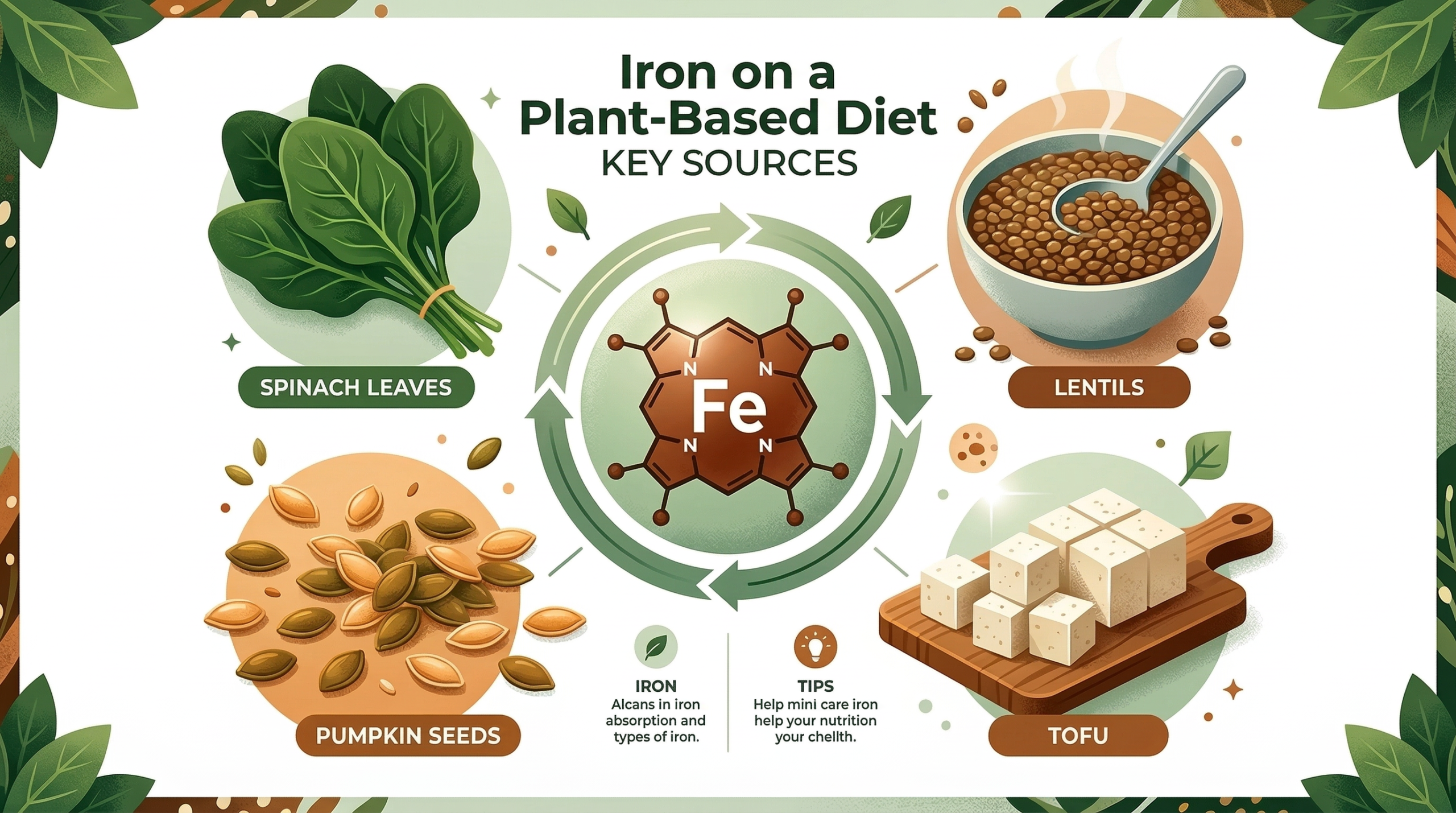
Some of the most reliable plant-based sources of iron include legumes such as lentils, chickpeas, and beans. These foods provide not only iron but also fibre, protein, and other essential micronutrients that support overall health.
Soy-based foods such as tofu and tempeh are also notable sources of plant-based iron and are commonly used in balanced plant-forward meals.
Seeds and nuts, including pumpkin seeds, sesame seeds, and cashews, can provide additional iron while contributing healthy fats and minerals.
Leafy green vegetables such as spinach, kale, and Swiss chard contain iron as well, although the total amount absorbed can vary depending on how they are prepared and combined with other foods.
Fortified foods can also play a role in supporting iron intake. Some plant milks, breakfast cereals, and nutritional products are fortified with iron, helping to provide additional dietary support.
While these foods contribute iron to the diet, the way they are combined within meals can influence how effectively the body absorbs the mineral.
How to Improve Iron Absorption Naturally
While plant foods can provide meaningful amounts of iron, the body absorbs non-heme iron more efficiently when certain supportive nutrients are present.
One of the most effective ways to enhance iron absorption is by including sources of vitamin C in the same meal. Foods such as citrus fruits, bell peppers, tomatoes, and berries can significantly improve the body’s ability to absorb iron from plant-based sources.
Meal composition can also influence absorption. Consuming iron-rich foods alongside legumes, grains, vegetables, and vitamin C–containing foods can help create favourable conditions for iron uptake.
Certain beverages may temporarily reduce iron absorption when consumed at the same time as iron-rich meals. Tea and coffee contain compounds known as polyphenols that can interfere with non-heme iron absorption when taken immediately with food.
Spacing these beverages between meals rather than during meals can help minimise this effect.
Food preparation methods can also make a difference. Techniques such as soaking, sprouting, and fermenting grains or legumes may help improve mineral availability by reducing compounds that bind iron.
When these simple strategies are used consistently, plant-based diets can support healthy iron levels without requiring unusually high intake.
Signs of Low Iron
Iron plays an important role in oxygen transport and energy metabolism, which means low iron levels can gradually influence how the body feels and performs.
Common signs of low iron status may include persistent fatigue, reduced physical endurance, and difficulty maintaining normal energy levels throughout the day. Some individuals may also notice shortness of breath during physical activity or a general sense of weakness.
Other possible signs can include pale skin, brittle nails, or increased sensitivity to cold temperatures. In some cases, individuals may experience difficulty concentrating or reduced mental clarity.
These symptoms can develop gradually and are not unique to iron status alone. Because several nutrients contribute to energy production and overall wellbeing, identifying the underlying cause may require a broader nutritional perspective.
For this reason, persistent symptoms should ideally be discussed with a qualified healthcare professional who can recommend appropriate testing and evaluation.
Iron Testing and Monitoring
Because iron plays a central role in oxygen transport and energy metabolism, individuals who suspect low iron levels may choose to review their status through appropriate testing.
Healthcare professionals commonly evaluate iron status using several markers, including haemoglobin, serum ferritin, and transferrin saturation. Ferritin is often considered one of the more useful indicators because it reflects the body’s stored iron levels.
Testing can provide useful context for individuals experiencing persistent fatigue, reduced endurance, or other symptoms that may be linked to iron status.
It is also helpful to remember that iron is not the only nutrient associated with energy and vitality. Other micronutrients — such as vitamin B12 — can influence similar symptoms when levels are insufficient. Reviewing multiple nutrient factors can help provide a clearer picture of overall nutritional health.
For individuals following plant-based diets, occasional monitoring may provide reassurance that dietary strategies are supporting healthy iron levels over time.
When Supplementation May Be Appropriate
While many plant-based diets can provide meaningful amounts of iron through foods and thoughtful meal composition, supplementation may sometimes be considered in certain circumstances.
Individuals who have confirmed low iron levels through testing may be advised by a healthcare professional to use iron supplements as part of a short-term strategy to restore normal levels. During this period, dietary adjustments can also help support long-term maintenance.
Certain life stages may also increase iron requirements. For example, menstruating individuals, pregnant women, and endurance athletes may have higher iron needs that occasionally require additional support.
Because iron supplements can vary in form and dosage, they should ideally be used with guidance from a qualified healthcare professional. Excessive iron intake may lead to unwanted side effects and should not be self-prescribed without appropriate evaluation.
For most people following plant-based diets, focusing on balanced meals and absorption strategies remains the primary foundation for maintaining healthy iron status over time.
Iron Optimisation Checklist
Maintaining healthy iron levels on a plant-based diet can be supported through a few simple and consistent habits.
• Include iron-rich plant foods such as legumes, tofu, seeds, and leafy greens regularly in meals.
• Pair iron-containing foods with vitamin C sources such as citrus fruits, tomatoes, or bell peppers to support absorption.
• Consider spacing tea and coffee away from iron-rich meals to minimise temporary interference with absorption.
• Use food preparation techniques such as soaking, sprouting, or fermenting when preparing grains and legumes.
• Review iron status periodically if experiencing persistent fatigue or if dietary patterns change significantly.
With awareness of both iron intake and absorption, plant-based diets can support healthy iron status as part of a balanced and sustainable approach to nutrition.
Key Questions About Iron in Plant-Based Diets
Can you get enough iron from plant-based foods?
Plant-based foods such as legumes, tofu, lentils, seeds, and leafy greens can contribute meaningful amounts of iron when included regularly in balanced meals. When these foods are combined with vitamin C–rich ingredients that support absorption, plant-based diets can provide sufficient iron for many individuals.
Why is iron absorption important for plant-based diets?
Plant foods contain non-heme iron, which is absorbed differently compared with heme iron found in animal products. Because absorption can be influenced by other foods in the same meal, understanding how to combine foods effectively can help improve iron uptake.
Do all plant-based eaters need iron supplements?
Not necessarily. Many individuals are able to maintain healthy iron levels through balanced dietary intake and absorption strategies. Supplementation may be recommended in cases where testing confirms low iron levels or where individual needs are increased.
Can symptoms of low iron overlap with other nutrient issues?
Yes. Symptoms such as fatigue or reduced energy can sometimes overlap with other nutritional factors, including vitamin B12 status. Looking at multiple aspects of diet and nutrient intake can help provide a clearer understanding of overall health.