Choosing the right form of vitamin B12 is an important part of maintaining balanced nutrition on a plant-based diet. While many people focus on intake, understanding how different forms of B12 work can help support more consistent and effective supplementation. vitamin B12 on a plant-based diet
Why Vitamin B12 Matters
Vitamin B12 is essential for red blood cell formation, nervous system function, and energy metabolism. Because it is not naturally present in plant foods, individuals following plant-based diets need to obtain it through fortified foods or supplements.
Without consistent intake, levels may gradually decline over time, making supplementation an important consideration.
The Main Forms of Vitamin B12 Supplements
Vitamin B12 supplements are available in several forms, each with slightly different characteristics:
- Cyanocobalamin
This is the most widely used and well-researched form. It is stable, affordable, and effective for most individuals. The body converts it into active forms as needed. - Methylcobalamin
A naturally occurring form that the body can use directly. While often marketed as superior, research shows it performs similarly to cyanocobalamin when taken in appropriate doses. - Hydroxocobalamin
Commonly used in medical settings, particularly in injections. It remains in the bloodstream longer but is less commonly used in everyday supplementation. - Adenosylcobalamin
An active form used within cells for energy production. It is typically found in specialised supplements.
For most plant-based individuals, cyanocobalamin remains the most practical and reliable option.
Forms of Supplement Delivery
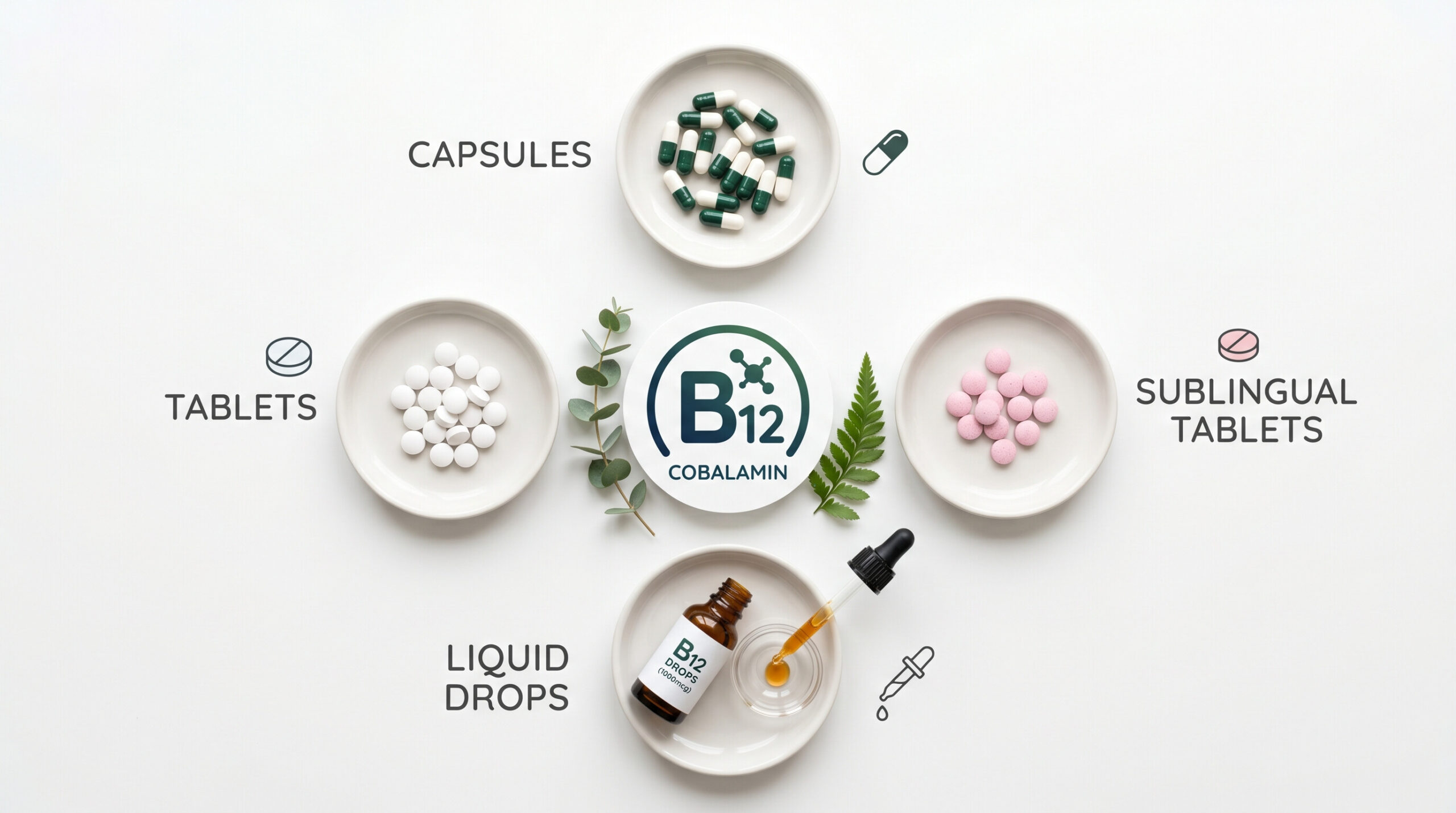
Vitamin B12 supplements are available in different formats:
- Tablets and capsules
Widely available and convenient for daily use - Sublingual tablets or lozenges
Dissolve under the tongue and may be preferred by some individuals - Liquid drops or sprays
Easy to use and suitable for those who prefer not to swallow tablets - Fortified foods
Such as plant milks and cereals, although intake may vary
Consistency is more important than the specific format chosen.
How Much Vitamin B12 Is Needed?
The recommended intake for adults is approximately 2.4 micrograms per day. However, because absorption is limited, higher supplemental doses are typically used.
Common approaches include:
- 25–100 mcg daily
- 1000 mcg taken a few times per week
Both methods can support adequate intake when used consistently. vitamin B12 absorption on a plant-based diet
Choosing a Vitamin B12 Supplement
When selecting a supplement, a few simple considerations can help:
- Choose a clearly labelled product with the B12 form and dosage
- Look for vegan-friendly certification where possible
- Select a dose that fits your routine
- Store supplements correctly and check expiry dates
For most individuals, a simple and consistent supplement routine is sufficient.
Common Questions About Vitamin B12 Supplements
Are plant foods reliable sources of B12?
No. Only fortified foods and supplements provide reliable sources.
Do different forms absorb differently?
While absorption varies slightly, both cyanocobalamin and methylcobalamin are effective when taken in appropriate amounts.
Can vitamin B12 be taken with other supplements?
Yes. It can be taken alongside other nutrients without affecting absorption significantly.
Final Thoughts
Understanding the different forms of vitamin B12 supplements helps simplify decision-making on a plant-based diet. Rather than focusing on complexity, choosing a reliable form and maintaining consistency is the most effective approach.
For a complete overview of vitamin B12 intake, food sources, and supplementation strategies, refer to the full guide. complete vitamin B12 guide for plant-based diets