A plant-based lifestyle offers many health benefits, but it also requires awareness of certain nutrients. One of the most important to monitor is vitamin B12, which supports energy levels, brain function, and the health of red blood cells and the nervous system.
For individuals following plant-based diets, recognising early signs of low vitamin B12 levels and maintaining consistent intake can help support long-term wellbeing. vitamin B12 on a plant-based diet
Why Vitamin B12 Matters
Vitamin B12 is unique because it is produced by bacteria rather than plants or animals. In typical diets, it is obtained through animal-based foods such as meat, dairy, and eggs.
Because plant foods do not reliably contain vitamin B12, individuals following plant-based diets need to obtain it through fortified foods or supplements.
Vitamin B12 plays a key role in:
- Red blood cell formation
- Nervous system function
- DNA production
Without consistent intake, levels can gradually decline over time.
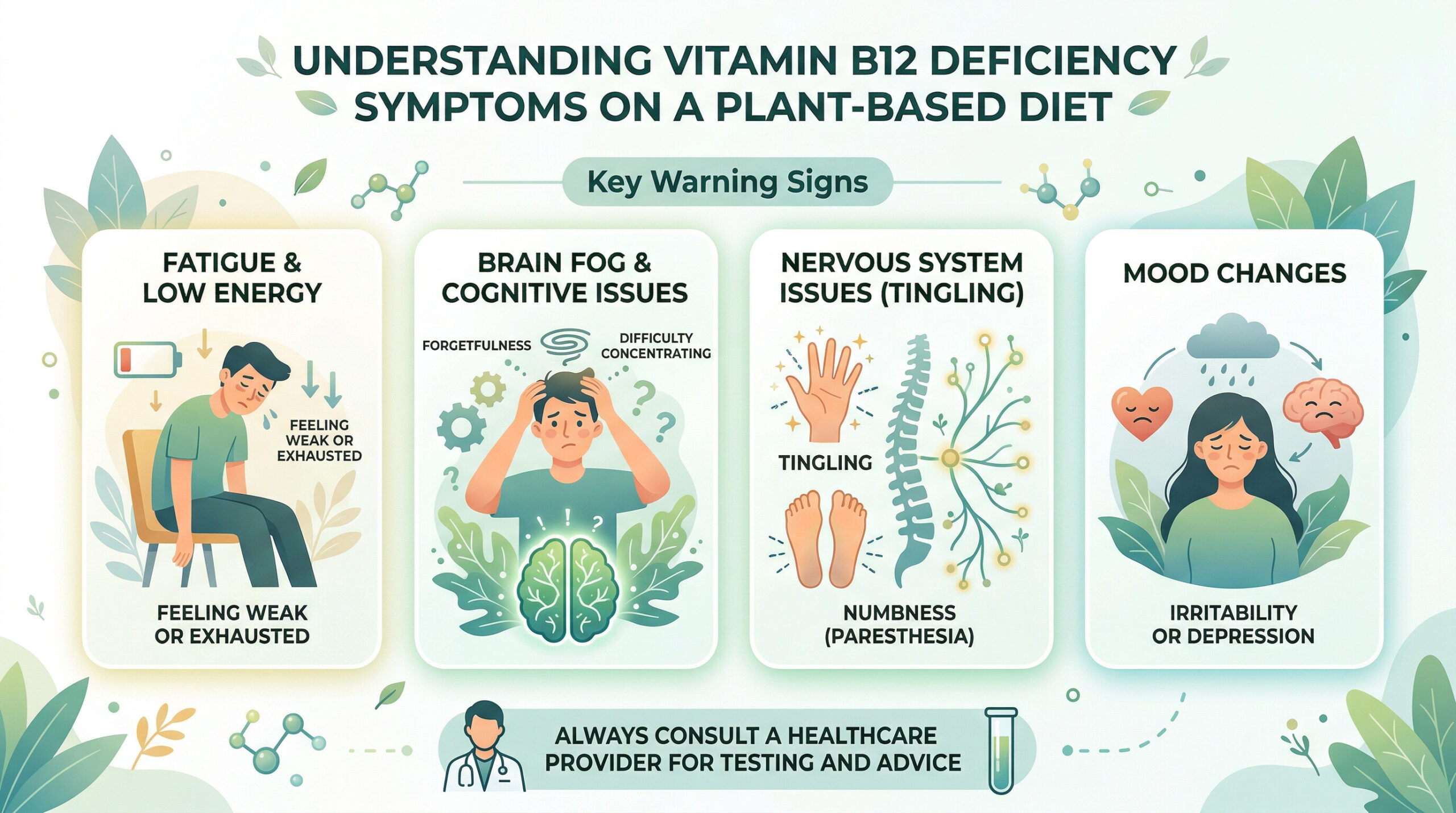
Common Signs of Vitamin B12 Deficiency
Recognising early symptoms can help prevent more serious issues from developing.
Some common signs include:
- Fatigue and low energy
Persistent tiredness is often one of the earliest signs. - Pale skin
Reduced red blood cell production may affect skin tone. - Numbness or tingling
A pins-and-needles sensation in the hands or feet can occur due to nerve involvement. - Balance or coordination issues
Low B12 may affect stability and movement. - Mouth or tongue discomfort
Some individuals notice a sore or smooth tongue. - Shortness of breath or dizziness
Reduced oxygen transport can contribute to these symptoms. - Changes in mood or memory
B12 plays a role in neurological function, which may affect mood and focus.
These symptoms are not unique to B12 deficiency and can be influenced by other factors. Persistent symptoms should always be discussed with a healthcare professional.
How Deficiency Develops Over Time
Vitamin B12 deficiency often develops gradually.
The body stores B12, sometimes for several years, which means symptoms may not appear immediately. However, without regular intake from fortified foods or supplements, these stores can slowly become depleted.
Factors that may increase risk include:
- Long-term plant-based diets without supplementation
- Digestive conditions affecting absorption
- Certain medications
- Age-related changes in absorption
Because of this gradual process, regular intake is important even if no symptoms are currently present.
Sources of Vitamin B12 for Plant-Based Diets
Reliable sources of vitamin B12 include:
- Fortified foods
Such as plant milks, breakfast cereals, and nutritional yeast - Supplements
Available in forms such as tablets, sprays, or drops
Both cyanocobalamin and methylcobalamin are commonly used forms.
Including these regularly helps support consistent intake. complete guide to vitamin B12 intake
Tips for Preventing Vitamin B12 Deficiency
Maintaining adequate B12 levels can be simple with a few consistent habits:
- Include fortified foods regularly
- Use a reliable B12 supplement
- Monitor intake over time
- Consider periodic testing
- Pay attention to early symptoms
With consistent intake, plant-based diets can support healthy vitamin B12 levels.
Final Thoughts
Vitamin B12 is one of the few nutrients that requires special attention on a plant-based diet. By understanding the signs of deficiency and maintaining consistent intake, it is possible to support energy, focus, and long-term health.
For a more detailed breakdown of sources, absorption, and supplementation strategies, refer to the full guide.
vitamin B12 guide for plant-based diets