Selenium is an essential trace mineral that plays an important role in antioxidant protection, thyroid function, and overall cellular health. It contributes to processes that help protect cells from oxidative stress and supports the normal functioning of the immune system.
Unlike many other nutrients, the selenium content of plant foods can vary depending on the soil in which they are grown. This makes selenium intake an important consideration within plant-based diets.
Selenium is also closely linked to thyroid health, as it supports enzymes involved in the production and regulation of thyroid hormones.
Understanding where selenium is found and how intake can vary helps individuals following plant-based diets maintain balanced levels of this important nutrient.
In this guide, we will explore the role of selenium in the body, plant-based sources, factors that influence intake, signs that selenium levels may need review, and when supplementation may be considered.
Why Selenium Is Important for Antioxidant and Thyroid Health
Selenium plays an important role in protecting cells from oxidative stress. It forms part of antioxidant enzymes that help neutralise free radicals, which are naturally produced during normal metabolic processes.
This antioxidant function supports overall cellular health and contributes to maintaining balance within the body’s systems.
Selenium is also closely linked to thyroid function. It supports enzymes that help convert thyroid hormones into their active forms, which are essential for regulating metabolism and energy balance.
Because of this relationship, selenium works alongside iodine to support healthy thyroid activity. Adequate intake of both nutrients helps maintain normal hormone production and metabolic function.
In addition, selenium contributes to normal immune system function and supports processes involved in cell repair and maintenance.
For individuals following plant-based diets, understanding how selenium supports both antioxidant protection and thyroid health helps ensure that dietary patterns continue to support overall wellbeing.
Plant-Based Sources of Selenium
Selenium is found in a variety of plant-based foods, although the amount can vary depending on the soil in which those foods are grown.
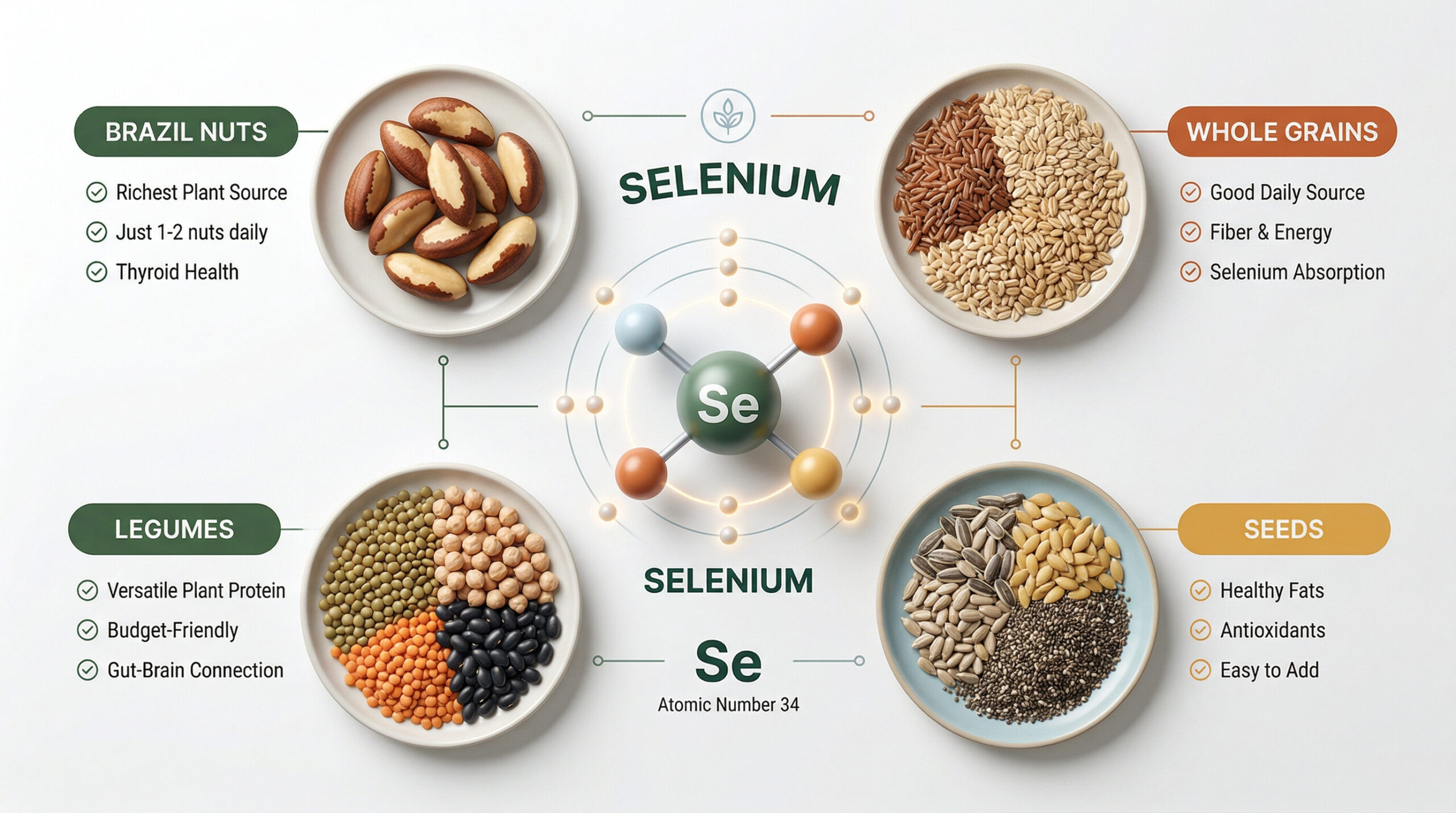
Brazil nuts are one of the most concentrated sources of selenium. Even small amounts can provide significant levels of this mineral, although intake should be moderate due to their high selenium content.
Whole grains such as brown rice, oats, and whole wheat products can contribute selenium, although levels may vary based on soil conditions.
Legumes, including lentils, chickpeas, and beans, also provide selenium alongside protein and fibre, supporting overall dietary balance.
Nuts and seeds, such as sunflower seeds and cashews, can contribute smaller amounts of selenium when included regularly in meals and snacks.
Because selenium content in plant foods is influenced by soil quality, intake can vary between regions and food sources.
For individuals following plant-based diets, including a variety of selenium-containing foods helps support more consistent intake over time.
Factors That Influence Selenium Intake
Selenium intake can vary significantly depending on environmental and dietary factors. Unlike many other nutrients, the selenium content of plant foods is directly influenced by the soil in which they are grown.
In regions where soil selenium levels are low, plant-based foods may contain lower amounts of this mineral. As a result, individuals following plant-based diets may experience variation in selenium intake depending on where their food is sourced.
Food variety plays an important role in supporting consistent intake. Including a range of whole grains, legumes, nuts, and seeds helps provide a broader nutritional profile and may support more stable selenium intake over time.
The inclusion of foods known to contain higher levels of selenium, such as Brazil nuts, can also help support intake when consumed in appropriate amounts.
Overall dietary patterns and food sourcing can influence selenium levels, making awareness of these factors an important part of maintaining balanced intake.
For individuals following plant-based diets, understanding these influences allows for simple dietary adjustments that support consistent selenium intake.
Signs You May Need to Review Selenium Intake
Selenium contributes to several systems in the body, including antioxidant protection, thyroid function, and immune health. Because of these roles, changes in selenium intake over time may gradually influence overall wellbeing.
Some individuals may notice symptoms such as fatigue, changes in energy levels, or reduced resilience during periods of physical or mental stress. Others may experience changes in hair or nail strength, as selenium plays a role in cellular maintenance.
Because selenium supports thyroid function, imbalances in intake over time may influence processes related to metabolism and energy regulation.
These signs are not unique to selenium status and can be influenced by many factors, including overall diet quality, lifestyle habits, and other nutrient considerations.
For this reason, persistent symptoms are best discussed with a qualified healthcare professional who can evaluate dietary patterns and determine whether further testing or nutritional adjustments may be helpful.
For individuals following plant-based diets, periodically reviewing selenium intake can help ensure that dietary patterns continue to support long-term health.
When Selenium Supplementation May Be Considered
Plant-based diets can provide selenium through a variety of foods, including whole grains, legumes, nuts, and seeds. For many individuals, regularly including these foods in balanced meals can support healthy selenium intake.
However, some individuals may consider supplementation depending on their dietary patterns and the variability of selenium content in foods.
For example, individuals living in regions with lower soil selenium levels or those with limited dietary variety may review whether additional selenium support is appropriate.
Selenium supplements are available in different forms, including selenomethionine and sodium selenite. These forms may differ slightly in how they are absorbed and utilised by the body.
Because both low and excessive selenium intake can affect health, supplementation decisions are ideally made with guidance from a qualified healthcare professional. This helps ensure that intake remains within appropriate ranges.
For most individuals following plant-based diets, maintaining a varied diet and awareness of selenium sources remains the primary approach to supporting balanced intake.
Selenium Optimisation Checklist
Maintaining balanced selenium intake on a plant-based diet can be supported through a few simple and consistent habits.
• Include a variety of whole grains, legumes, nuts, and seeds in daily meals to support consistent intake.
• Consider including small amounts of selenium-rich foods such as Brazil nuts, while being mindful of portion sizes.
• Maintain dietary variety to help account for differences in soil selenium levels across food sources.
• Be aware that selenium content in foods can vary depending on where they are grown.
• Review dietary patterns periodically to ensure consistent intake over time.
With awareness of food variety and sourcing, plant-based diets can support healthy selenium intake and overall wellbeing.
Key Questions About Selenium in Plant-Based Diets
Can plant-based diets provide enough selenium?
Plant-based diets can provide selenium through foods such as whole grains, legumes, nuts, and seeds. However, because selenium content depends on soil quality, intake may vary. Including a variety of foods can help support more consistent selenium intake.
Why does selenium content vary in plant foods?
Selenium levels in plant foods are influenced by the soil in which they are grown. In regions with lower soil selenium levels, foods may contain less selenium, which can affect overall intake.
Do plant-based eaters need selenium supplements?
Not necessarily. Many individuals can obtain adequate selenium through a varied diet. However, supplementation may be considered in situations where dietary intake is inconsistent or where soil selenium levels are low.
Can selenium-related symptoms overlap with other nutrients?
Yes. Symptoms such as fatigue or changes in energy levels can sometimes overlap with other nutritional factors, including iodine or iron status. Reviewing overall diet and nutrient intake can help provide a clearer understanding of potential causes.