Iron is an essential mineral that helps transport oxygen throughout the body, supports energy production, and contributes to overall health. While a well-planned vegan diet can provide sufficient iron, plant-based eaters should pay attention to both iron intake and absorption.
Recognising the early signs of iron deficiency and understanding how to manage iron on a plant-based diet and how to prevent it can help support long-term energy, focus, and wellbeing.
Why Iron Matters on a Vegan Diet
Iron plays a vital role in the production of hemoglobin, the protein in red blood cells responsible for carrying oxygen around the body.
Plant foods contain non-heme iron, which is not absorbed as efficiently as the heme iron found in animal products. This does not mean vegans cannot meet their iron requirements, but it does mean that food choices and meal planning become especially important.
Iron deficiency is one of the most common nutrient deficiencies worldwide and, if left untreated, can eventually lead to iron-deficiency anemia.
Common Signs of Iron Deficiency
Iron deficiency can develop gradually, and the early symptoms are often easy to overlook.
Some of the most common signs include:
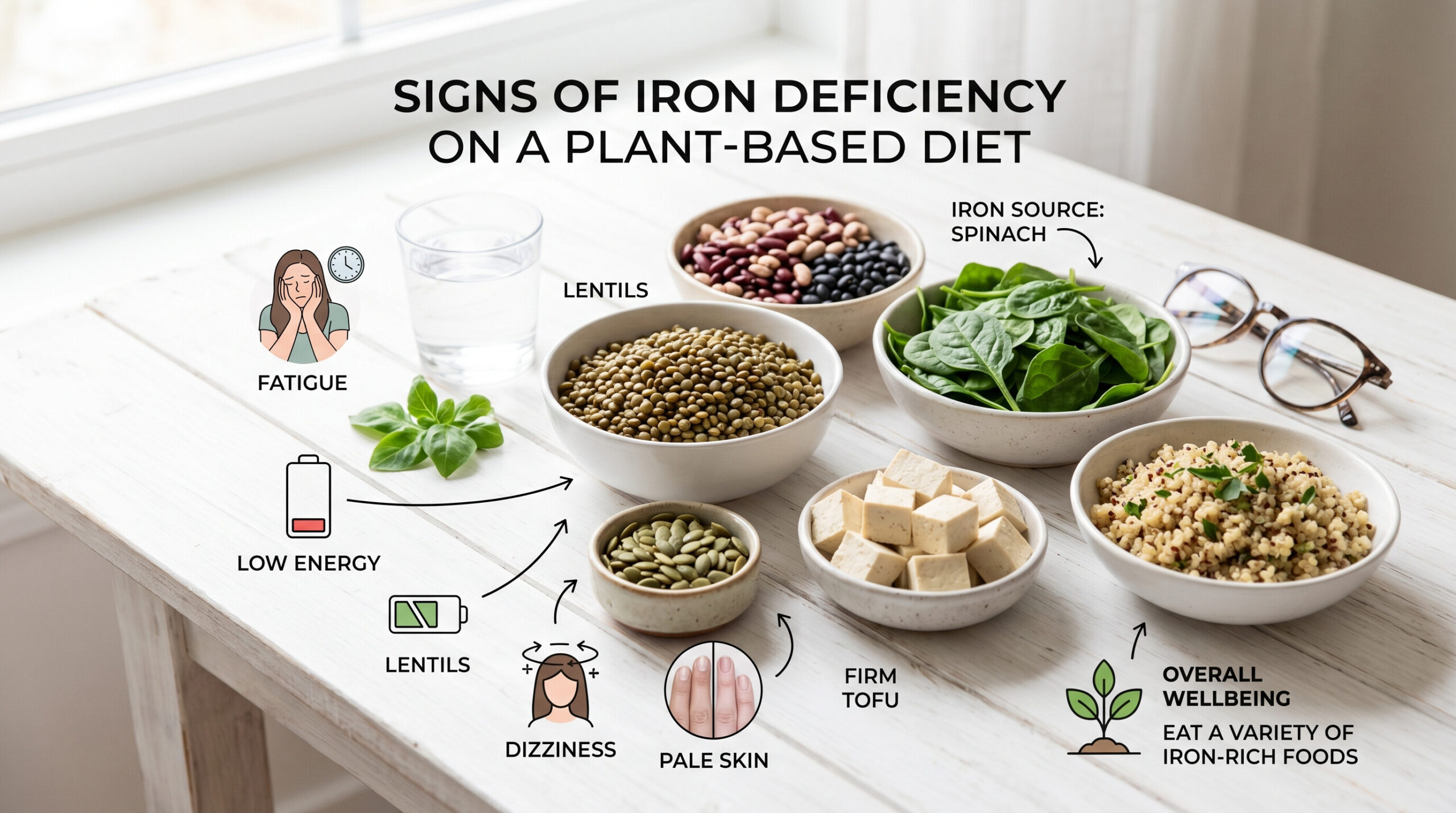
Fatigue and Low Energy
Persistent tiredness is often one of the first warning signs. You may feel exhausted despite getting enough sleep.
Shortness of Breath
Low iron levels can reduce oxygen delivery throughout the body, making everyday activities feel more demanding.
Headaches and Dizziness
Frequent headaches, light-headedness, or dizziness may occur when iron stores become depleted.
Pale Skin
A lack of healthy red blood cells can result in paler skin, gums, or the inside of the eyelids.
Cold Hands and Feet
Feeling unusually cold, particularly in the hands and feet, may sometimes indicate low iron levels.
Hair Loss and Brittle Nails
Iron deficiency can affect healthy hair and nail growth in some individuals.
Why Vegans Need to Pay Attention to Iron Intake
Although many plant foods contain iron, several factors can influence how much is actually absorbed.
These include:
- Lower absorption of non-heme iron
- High intake of phytates from grains and legumes
- Regular tea or coffee consumption with meals
- Increased iron requirements during menstruation
- Intense physical activity or endurance training
For this reason, many experts suggest that plant-based eaters pay close attention to both iron intake and absorption strategies.
Best Vegan Sources of Iron
Many nutritious plant foods provide significant amounts of iron.
Some of the best options include:
- Lentils
- Chickpeas
- Black beans
- Kidney beans
- Tofu
- Tempeh
- Pumpkin seeds
- Sunflower seeds
- Quinoa
- Oats
- Spinach
- Kale
- Fortified cereals
Including a variety of these foods regularly can help support healthy iron levels.
How to Improve Iron Absorption
Absorption is just as important as iron intake itself.
Simple strategies include:
Pair Iron with Vitamin C
Vitamin C can significantly increase the absorption of non-heme iron.
Good sources include:
- Oranges
- Bell peppers
- Strawberries
- Tomatoes
- Kiwi fruit
- Broccoli
Avoid Tea and Coffee with Meals
Tea and coffee contain compounds that can reduce iron absorption when consumed alongside iron-rich foods.
Use Preparation Techniques
Soaking, sprouting, and fermenting legumes and grains can improve mineral availability.
Cook with Cast Iron
Cooking acidic foods in cast iron cookware may slightly increase the iron content of meals.
Do You Need an Iron Supplement?
Not everyone following a vegan diet requires supplementation.
However, supplements may sometimes be recommended for:
- Individuals with confirmed iron deficiency
- People with heavy menstrual cycles
- Endurance athletes
- Pregnant women
- Individuals with certain medical conditions
Always seek professional advice and appropriate blood testing before starting an iron supplement.
Frequently Asked Questions
Can you get enough iron on a vegan diet?
Yes. A well-planned vegan diet containing a variety of iron-rich foods can provide sufficient iron for most people.
What is the best way to confirm iron deficiency?
A blood test measuring markers such as ferritin and hemoglobin is the most reliable way to assess iron status.
Does spinach provide enough iron?
Spinach contains iron but also contains oxalates, which can reduce absorption. Combining spinach with vitamin C-rich foods may help improve uptake.
Final Thoughts
Iron deficiency can affect energy, concentration, physical performance, and overall wellbeing. Fortunately, a balanced vegan diet that includes iron-rich foods and absorption-supporting strategies can help maintain healthy iron levels.
Recognising the warning signs early and taking proactive steps can help support long-term health while enjoying the many benefits of a plant-based lifestyle.