Getting enough iron on a plant-based diet is about more than simply eating iron-rich foods. Plant foods contain non-heme iron, which is not absorbed as efficiently as the heme iron found in animal products. Fortunately, a few simple strategies can significantly improve iron absorption and help support healthy energy levels.
Understanding how iron absorption works is an important part of managing iron on a plant-based diet successfully.
Understanding Plant-Based Iron
Iron plays a vital role in transporting oxygen throughout the body, supporting energy production, cognitive function, and overall wellbeing.
There are two types of dietary iron:
- Heme iron – found in animal foods and absorbed more efficiently.
- Non-heme iron – found in plant foods and absorbed less efficiently.
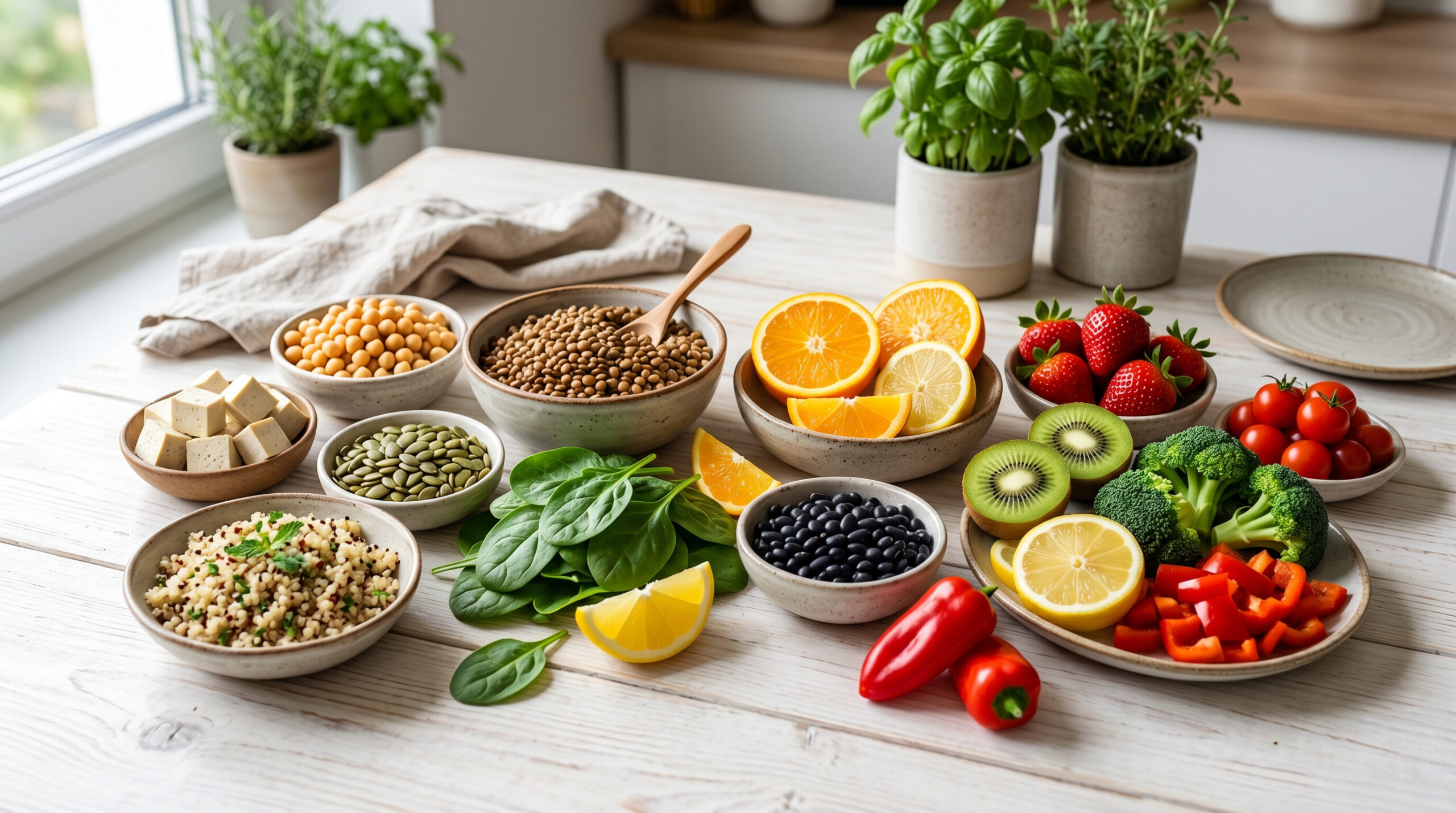
While plant-based eaters rely on non-heme iron, many excellent plant foods provide substantial amounts of this important mineral, including:
- Lentils
- Chickpeas
- Tofu
- Pumpkin seeds
- Quinoa
- Kale
- Spinach
- Fortified cereals
- Dried apricots
With the right meal combinations, these foods can contribute significantly to daily iron intake.
Pair Iron-Rich Foods with Vitamin C
One of the most effective ways to improve iron absorption is by combining iron-rich foods with vitamin C-rich foods.
Vitamin C helps convert non-heme iron into a form that is easier for the body to absorb.
Good vitamin C sources include:
- Oranges
- Strawberries
- Bell peppers
- Broccoli
- Tomatoes
- Kiwi fruit
- Lemon juice
Simple combinations include:
- Lentil soup with tomatoes and lemon
- Tofu stir-fry with bell peppers
- Oatmeal topped with berries
- Chickpea salad with citrus dressing
This small habit can make a significant difference over time.
Be Mindful of Coffee and Tea
Coffee and tea contain compounds called tannins and polyphenols, which can reduce iron absorption when consumed with meals.
To maximise iron uptake:
- Drink tea or coffee at least one hour before meals.
- Wait one to two hours after eating before consuming these beverages.
Water, herbal tea, or fruit juice are often better options alongside iron-rich meals.
Reduce the Impact of Phytates
Phytates are naturally present in foods such as:
- Beans
- Lentils
- Whole grains
- Nuts
- Seeds
Although these foods are nutritious, phytates can reduce iron absorption.
Simple preparation methods can help:
Soaking
Soak beans and legumes overnight before cooking.
Sprouting
Sprouted grains and legumes contain lower levels of phytates.
Fermenting
Foods such as sourdough bread and fermented soy products may improve mineral availability
Separate Iron and Calcium Supplements
Calcium can interfere with iron absorption when taken at the same time.
If supplements are required:
- Take iron and calcium supplements at different times of the day.
- Allow at least two hours between them whenever possible.
Always seek professional advice before beginning supplementation.
Consider Cooking with Cast Iron
Cooking with cast iron cookware can slightly increase the iron content of foods, particularly acidic dishes such as:
- Tomato sauces
- Chilli
- Bean stews
While this should not replace dietary sources, it can provide a helpful boost.
Signs Your Iron Intake May Need Attention
Iron deficiency can develop gradually and may be difficult to recognise initially.
Common signs include:
- Fatigue
- Weakness
- Poor concentration
- Headaches
- Dizziness
- Pale skin
- Feeling cold frequently
If symptoms persist, consult a healthcare professional and consider appropriate blood testing.
Everyday Habits That Support Healthy Iron Levels
Small daily habits can make a big difference:
Include iron-rich foods regularly
Aim to include legumes, tofu, seeds, or whole grains in your meals each day.
Snack smartly
Good options include:
- Roasted chickpeas
- Pumpkin seeds
- Trail mix
- Dried fruit
Add greens to meals
Spinach, kale, and other leafy greens can help increase overall iron intake.
Rotate protein sources
Alternate between lentils, beans, tofu, tempeh, and other plant proteins to improve nutrient variety.
Frequently Asked Questions
How do I know if I am getting enough iron?
A blood test measuring iron markers such as ferritin is the most reliable way to assess iron status.
Should I take an iron supplement?
Iron supplements should only be taken under professional guidance following appropriate testing.
Can plant foods provide enough iron?
Yes. A well-planned plant-based diet can provide sufficient iron when a variety of iron-rich foods are included and absorption strategies are used.
Final Thoughts
Improving iron absorption on a plant-based diet does not need to be complicated. Pairing iron-rich foods with vitamin C, limiting iron blockers around meals, and using simple preparation techniques can help your body make the most of the iron you consume.
With consistent habits and a varied diet, it is entirely possible to maintain healthy iron levels while enjoying the many benefits of plant-based eating.