Getting enough iron on a plant-based diet is about more than simply eating iron-rich foods. Plant foods contain non-heme iron, which is not absorbed as efficiently as the heme iron found in animal products. Fortunately, vitamin C can significantly improve iron absorption and help your body make better use of the iron you consume.
Understanding how vitamin C and iron work together is one of the most effective ways to support healthy energy levels and long-term wellbeing on a plant-based diet.
Understanding Iron on a Plant-Based Diet
Iron is essential for producing hemoglobin, the protein in red blood cells that carries oxygen throughout the body. It also supports energy production, cognitive function, and immune health.
There are two forms of dietary iron:
- Heme iron – found in animal foods and absorbed more efficiently.
- Non-heme iron – found in plant foods and absorbed less efficiently.
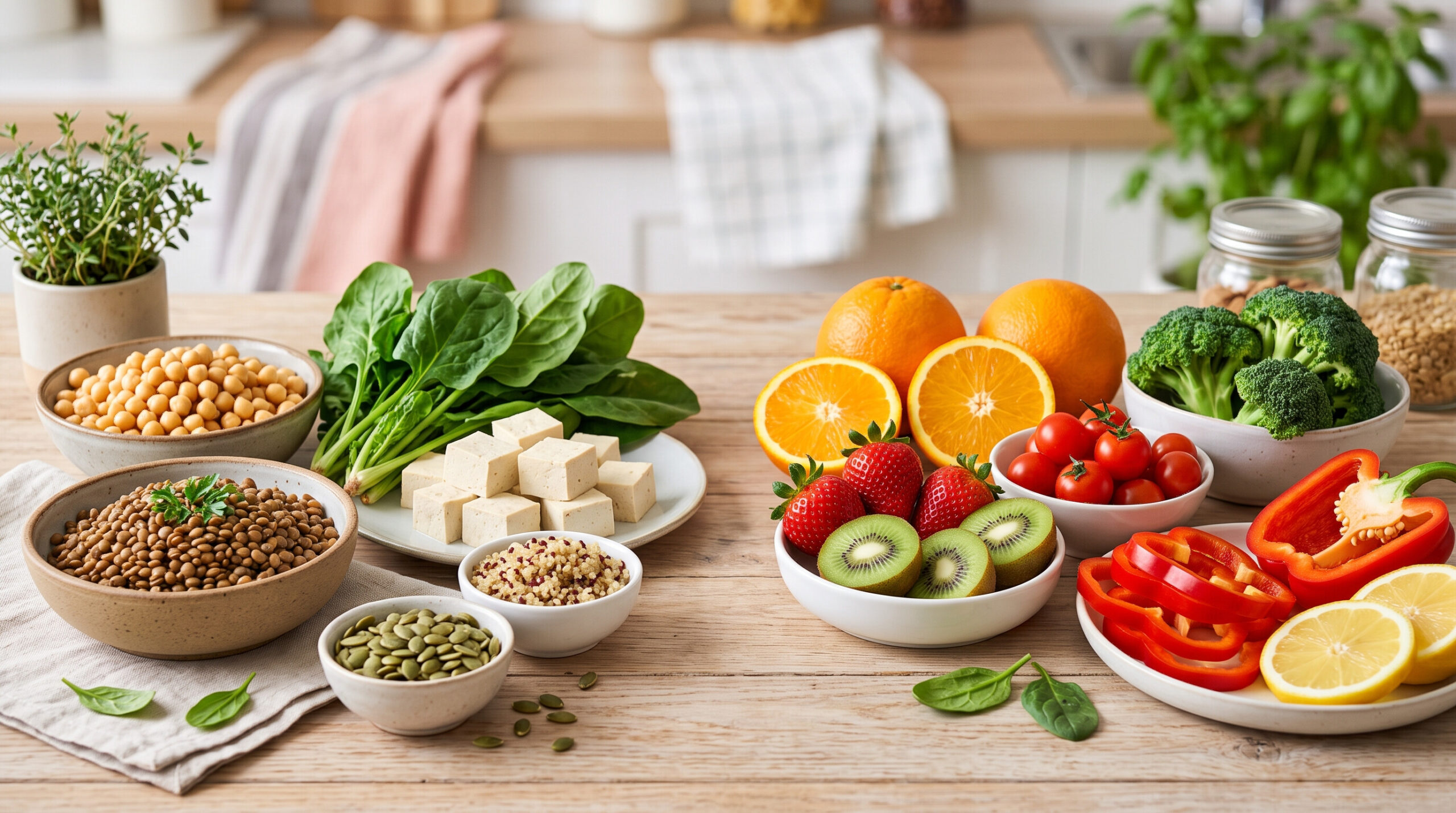
Plant-based eaters rely on non-heme iron from foods such as:
- Lentils
- Beans
- Chickpeas
- Tofu
- Quinoa
- Pumpkin seeds
- Spinach
- Kale
Because non-heme iron is harder to absorb, strategies that improve absorption become especially important.
Why Vitamin C Matters
Vitamin C is one of the most effective nutrients for improving non-heme iron absorption.
It helps convert iron into a form that is easier for the body to absorb in the digestive tract. Research shows that adding vitamin C-rich foods to an iron-rich meal can significantly increase iron absorption.
This means simple food combinations can make a meaningful difference to your iron status over time.
Best Vitamin C Foods to Pair with Iron-Rich Meals
Many fruits and vegetables provide excellent amounts of vitamin C.
Good options include:
- Oranges
- Strawberries
- Kiwi fruit
- Bell peppers
- Tomatoes
- Broccoli
- Brussels sprouts
- Lemon juice
Including one or more of these foods alongside iron-rich meals can help maximise absorption.
Simple Food Combinations That Work
One of the easiest ways to improve iron absorption is through smart meal pairings.
Lentils and Lemon Juice
A squeeze of fresh lemon over lentils can help increase iron absorption while adding flavour.
Black Beans and Salsa
Tomatoes in salsa provide vitamin C, making this combination both practical and effective.
Tofu Stir-Fry with Bell Peppers
Bell peppers are among the richest sources of vitamin C and pair perfectly with tofu.
Spinach Salad with Citrus Fruit
Adding orange segments or a citrus dressing can help increase the availability of iron from leafy greens.
Oatmeal with Strawberries
A simple breakfast that combines iron-containing oats with vitamin C-rich fruit.
Factors That Can Reduce Iron Absorption
While vitamin C helps improve absorption, some factors may reduce it.
Tea and Coffee
Tea and coffee contain compounds called polyphenols and tannins, which can reduce iron absorption when consumed with meals.
For best results:
- Drink tea or coffee between meals.
- Wait at least one hour after eating before consuming them.
Calcium
Calcium may compete with iron absorption when consumed at the same time.
If taking calcium supplements, consider spacing them away from iron-rich meals.
Phytates
Phytates are naturally found in:
- Whole grains
- Legumes
- Seeds
- Nuts
Simple preparation methods such as soaking, sprouting, and fermenting can help reduce their impact.
How Much Vitamin C Do You Need?
Most adults require approximately:
- 75 mg per day for women
- 90 mg per day for men
Fortunately, meeting these requirements is usually straightforward through a diet rich in fruits and vegetables.
For example:
- One medium orange provides around 70 mg of vitamin C.
- Half a red bell pepper can provide more than 90 mg.
Who Should Pay Extra Attention?
Some individuals may benefit from paying closer attention to iron absorption:
- Women of childbearing age
- Athletes
- Teenagers
- Pregnant women
- People with a history of iron deficiency
For these groups, combining iron-rich foods with vitamin C-rich foods can be especially valuable.
Frequently Asked Questions
Can vitamin C supplements improve iron absorption?
Yes. Vitamin C supplements can help improve iron absorption, although obtaining vitamin C from whole foods also provides fibre and other beneficial nutrients.
Are there foods that contain both iron and vitamin C?
Some vegetables, such as broccoli and Brussels sprouts, contain both nutrients. However, combining different foods is often the easiest strategy.
Does cooking destroy vitamin C?
Vitamin C is sensitive to heat, so some losses occur during cooking. Including a mixture of raw and cooked fruits and vegetables can help maintain intake.
Final Thoughts
Vitamin C plays a powerful role in improving iron absorption from plant-based foods. By combining iron-rich foods with vitamin C-rich fruits and vegetables, you can help your body make better use of the iron you consume.
Simple habits such as adding lemon juice to lentils, pairing beans with tomatoes, or including fruit alongside meals can make a significant difference over time. These practical strategies can help support healthy iron levels, energy production, and overall wellbeing while following a plant-based lifestyle.