Iron is one of the most important nutrients to pay attention to on a plant-based diet. It plays a key role in energy production, oxygen transport, immune health, and cognitive function. While plant-based diets can provide plenty of iron, understanding how iron absorption works can help support long-term health and avoid deficiency.
With the right food choices and meal combinations, it is completely possible to maintain healthy iron levels on a plant-based lifestyle.
Why Iron Matters on a Plant-Based Diet
Iron is essential for producing hemoglobin, the protein in red blood cells responsible for carrying oxygen throughout the body. Low iron levels can affect energy, concentration, and overall wellbeing.
There are two forms of dietary iron:
- Heme iron — found in animal products and absorbed more easily
- Non-heme iron — found in plant foods and absorbed less efficiently
Because plant-based diets rely on non-heme iron sources, paying attention to both iron intake and absorption becomes especially important.
According to the National Institutes of Health, adult men generally require around 8 mg of iron daily, while women under 50 may require approximately 18 mg per day.
Plant-Based Sources of Iron
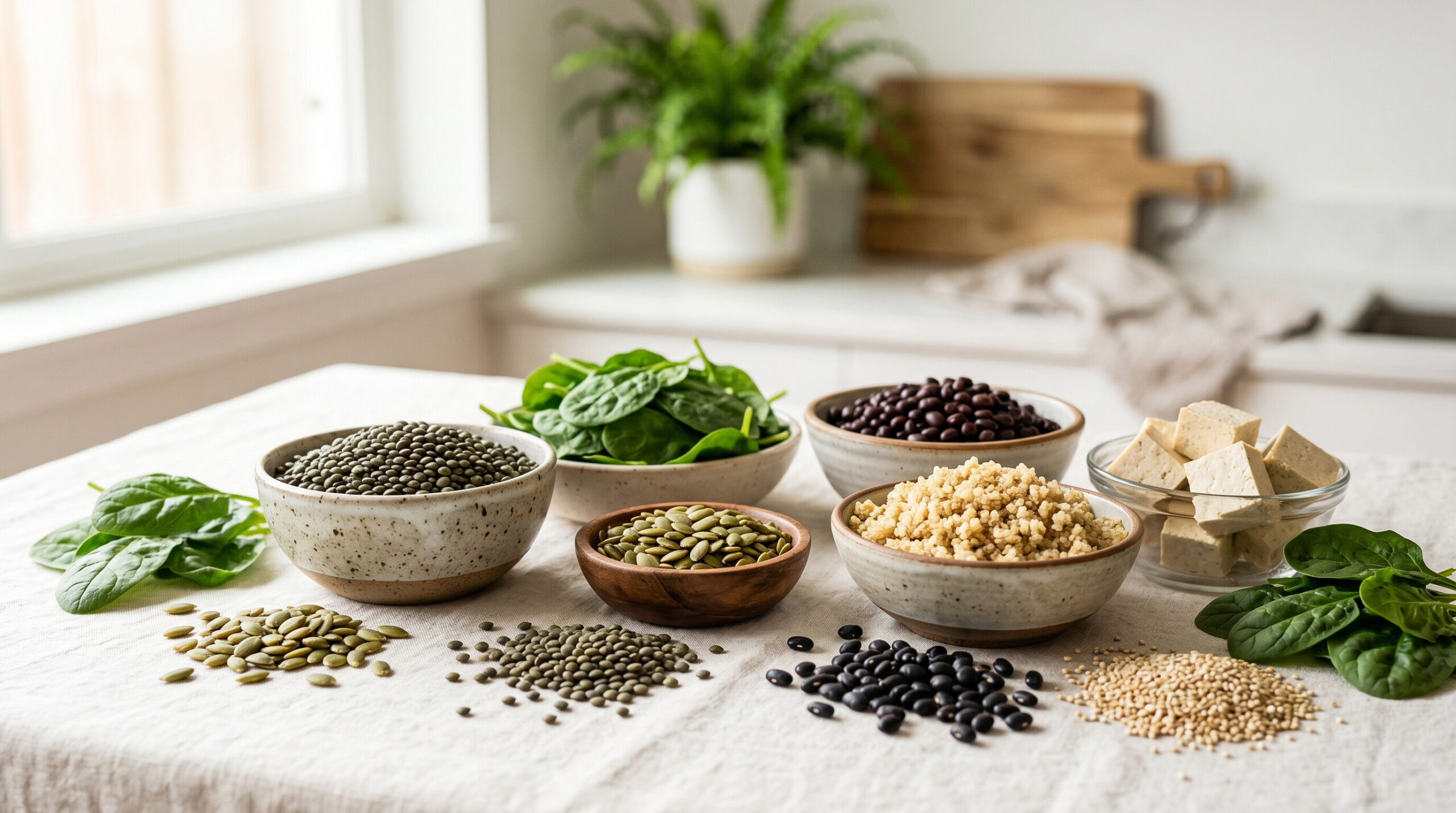
Many plant foods contain significant amounts of iron. Including a variety of these foods regularly can help support healthy iron intake.
Some of the best plant-based sources include:
- Lentils
- Chickpeas
- Black beans
- Tofu and tempeh
- Pumpkin seeds
- Quinoa
- Spinach
- Swiss chard
- Fortified cereals
- Whole grains
Rotating these foods throughout the week can help create a more balanced and nutrient-dense diet.
How to Improve Iron Absorption
Absorption is one of the most important aspects of managing iron on a plant-based diet.
Vitamin C can significantly improve the absorption of non-heme iron. Pairing iron-rich foods with vitamin C-rich foods is a simple but effective strategy.
Examples include:
- Lentils with tomatoes
- Spinach with lemon juice
- Beans with bell peppers
- Oatmeal with berries or citrus fruit
Some foods and drinks may reduce iron absorption when consumed alongside iron-rich meals, including:
- Coffee
- Tea
- Calcium supplements
Spacing these away from iron-rich meals may help improve absorption efficiency.
Signs of Low Iron Levels
Low iron levels can sometimes develop gradually and may not always be immediately obvious.
Common signs of iron deficiency may include:
- Fatigue
- Weakness
- Difficulty concentrating
- Dizziness
- Feeling cold frequently
- Shortness of breath
- Pale skin
If symptoms persist, it is important to speak with a healthcare professional and consider blood testing where appropriate.
Simple Ways to Support Healthy Iron Intake
Maintaining healthy iron levels on a plant-based diet often comes down to consistent habits and meal planning.
Helpful strategies include:
Include legumes regularly
Beans, lentils, and chickpeas are among the most reliable plant-based iron sources.
Add seeds and nuts
Pumpkin seeds, sunflower seeds, and cashews can increase iron intake while adding healthy fats and texture.
Combine iron with vitamin C
This remains one of the most effective ways to support absorption naturally.
Consider fortified foods
Some cereals, breads, and plant milks provide additional iron.
Use cast iron cookware
Cooking acidic foods in cast iron cookware may slightly increase iron content.
Everyday Plant-Based Iron Meal Ideas
Breakfast
Oatmeal with pumpkin seeds, dried fruit, and berries.
Lunch
Lentil and spinach soup with wholegrain bread.
Snack
Trail mix with nuts, seeds, and dried figs.
Dinner
Tofu stir-fry with broccoli, bell peppers, and quinoa.
These small meal combinations can help support iron intake consistently throughout the day.
Frequently Asked Questions
Can plant-based diets provide enough iron?
Yes. With proper meal planning and variety, plant-based diets can provide sufficient iron intake.
Do all plant-based eaters need iron supplements?
Not necessarily. Many people can meet their needs through food alone, although some individuals may require supplementation depending on blood levels, menstruation, pregnancy, or medical conditions.
Why is vitamin C important for iron absorption?
Vitamin C helps improve the absorption of non-heme iron found in plant foods.
Final Thoughts
Maintaining healthy iron levels on a plant-based diet is entirely achievable with a balanced approach to nutrition and meal planning. Understanding iron-rich foods, absorption strategies, and potential signs of deficiency can help support long-term energy and overall wellbeing.
With consistent habits and a varied diet, iron can become a manageable and sustainable part of a healthy plant-based lifestyle.