
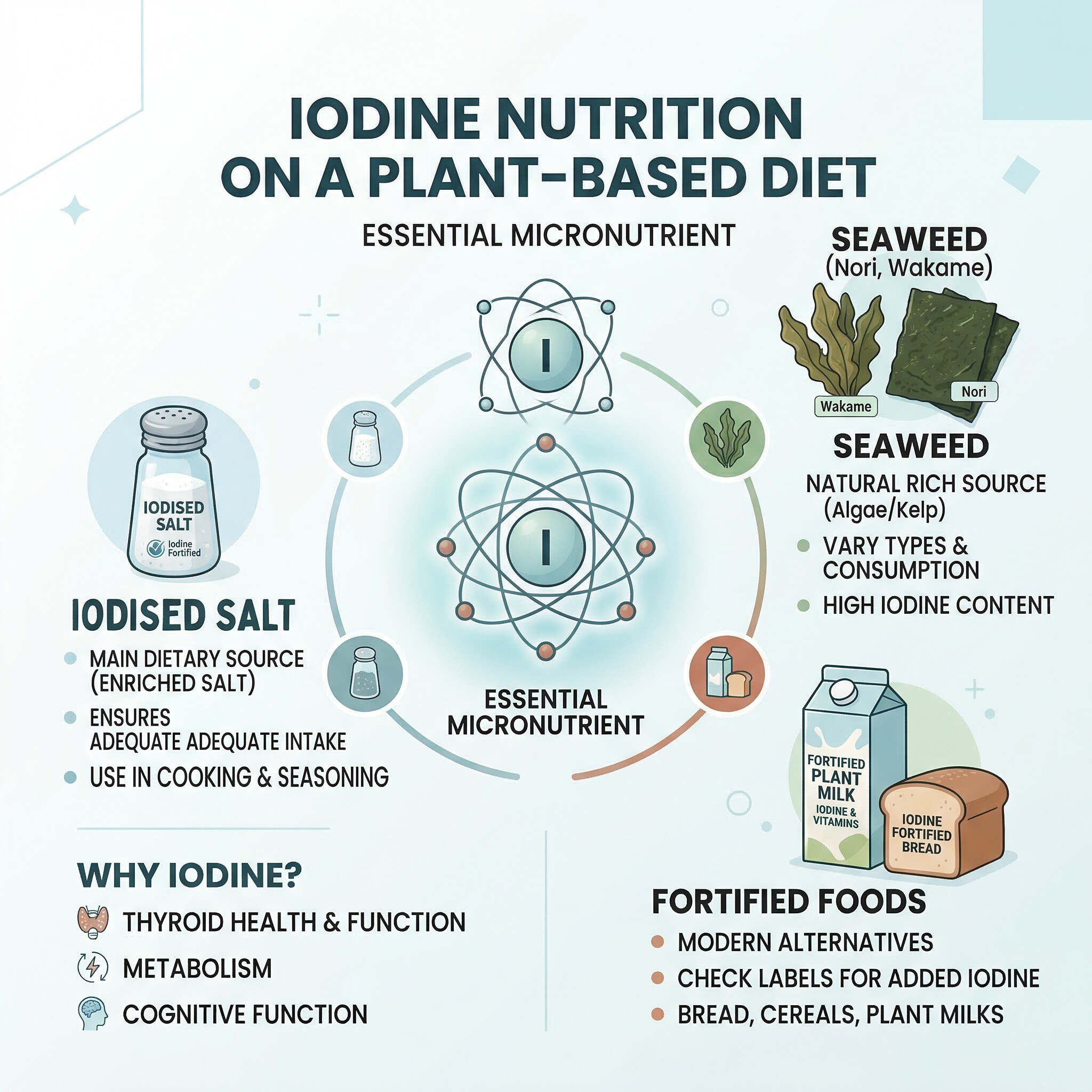
Iodine is an essential trace mineral that plays a crucial role in the production of thyroid hormones. These hormones help regulate metabolism, energy production, and the body’s overall growth and development.
Because iodine supports thyroid function, it influences many processes that affect daily wellbeing, including energy balance, temperature regulation, and metabolic activity.
Within plant-based nutrition, iodine intake is sometimes overlooked because common dietary sources differ from those typically found in omnivorous diets. However, several plant-based options can contribute iodine when included thoughtfully in the diet.
Understanding where iodine comes from and how it supports thyroid health can help individuals following plant-based diets maintain balanced iodine intake.
In this guide, we will explore the role of iodine in the body, plant-based sources of iodine, factors that influence intake, signs that iodine levels may need review, and when supplementation may be considered.
Why Iodine Is Important for Thyroid and Metabolic Health
Iodine plays a central role in the production of thyroid hormones, which are essential for regulating the body’s metabolism. These hormones influence how the body converts food into energy and help maintain the normal functioning of many organs and systems.
The thyroid gland uses iodine to produce the hormones thyroxine (T4) and triiodothyronine (T3). These hormones help control metabolic rate, body temperature, and energy balance.
Because of this role, iodine contributes to processes that affect daily wellbeing, including growth, neurological development, and overall metabolic regulation.
When iodine intake is adequate, the thyroid gland can maintain balanced hormone production, supporting stable energy levels and normal metabolic function.
For individuals following plant-based diets, understanding how iodine supports thyroid health and where it can be obtained from dietary sources helps ensure that nutritional needs continue to be met effectively.
Plant-Based Sources of Iodine
Iodine is less widely distributed in foods compared with many other minerals, which makes understanding reliable dietary sources particularly important.
One of the most consistent sources of iodine in many diets is iodised salt. When used in moderate amounts as part of balanced meals, iodised salt can contribute meaningfully to daily iodine intake.
Sea vegetables such as seaweed can also provide iodine, although the amount can vary significantly depending on the type and source. Varieties such as nori, wakame, and kombu contain differing levels of iodine, so intake should be approached with awareness of portion sizes.
Some plant-based products, including certain fortified foods, may also contain added iodine. Checking product labels can help identify whether iodine has been included.
The iodine content of plant foods can vary depending on the soil in which they are grown. As a result, fruits, vegetables, and grains are not always reliable sources of iodine on their own.
For individuals following plant-based diets, understanding these sources helps support consistent iodine intake and overall thyroid health.
Factors That Influence Iodine Intake and Absorption
Iodine intake can vary depending on dietary habits, food choices, and environmental factors. Unlike many other nutrients, iodine levels in foods are influenced by the iodine content of the soil in which plants are grown.
In plant-based diets, reliance on whole foods alone may not always provide consistent iodine intake, as fruits, vegetables, and grains can contain variable amounts of this mineral.
The use of iodised salt can help support more consistent iodine intake, although overall intake depends on how frequently it is used in cooking and food preparation.
Certain foods, often referred to as goitrogens, may influence thyroid function when consumed in very large amounts. These include foods such as cruciferous vegetables (for example, broccoli, cabbage, and kale). However, when consumed as part of a balanced diet, these foods are generally not a concern for most individuals.
Cooking methods can also influence iodine content. For example, iodine may be reduced in foods through prolonged cooking or processing.
For individuals following plant-based diets, being aware of these factors helps support consistent iodine intake and balanced thyroid function over time.
Signs You May Need to Review Iodine Intake
Iodine supports thyroid function and metabolic regulation, which means changes in iodine intake over time may gradually influence how the body feels and functions.
Some individuals may notice changes such as low energy levels, sensitivity to cold, or difficulty maintaining normal metabolic balance. Others may experience changes in concentration or general feelings of fatigue.
Because iodine plays a role in thyroid hormone production, prolonged imbalances in intake may influence processes related to metabolism and overall energy regulation.
These signs are not unique to iodine status and can be influenced by a range of factors, including overall diet quality, lifestyle habits, and other nutrient considerations.
For this reason, persistent symptoms are best discussed with a qualified healthcare professional who can evaluate dietary patterns and determine whether further testing or nutritional adjustments may be helpful.
For individuals following plant-based diets, periodically reviewing iodine intake can help ensure that dietary patterns continue to support long-term health.
When Iodine Supplementation May Be Considered
Plant-based diets can support iodine intake through sources such as iodised salt, sea vegetables, and certain fortified foods. For many individuals, including these sources regularly can help maintain balanced iodine levels.
However, some individuals may consider supplementation depending on their dietary habits and consistency of iodine intake.
For example, individuals who do not regularly use iodised salt or consume iodine-containing foods may choose to review whether additional iodine support is appropriate.
Iodine supplements are available in different forms, including potassium iodide and iodine-containing multinutrient supplements. The amount of iodine provided can vary, so it is important to consider appropriate intake levels.
Because both low and excessive iodine intake can affect thyroid function, supplementation decisions are ideally made with guidance from a qualified healthcare professional.
For most people following plant-based diets, maintaining awareness of iodine sources and including them regularly in meals remains the primary foundation for supporting healthy iodine status.
Iodine Optimisation Checklist
Maintaining balanced iodine intake on a plant-based diet can be supported through a few simple and consistent habits.
• Use iodised salt in moderate amounts as part of regular meal preparation where appropriate.
• Include iodine-containing foods such as sea vegetables occasionally, with awareness of portion sizes.
• Check labels on plant-based products to identify those that may be fortified with iodine.
• Maintain a varied diet to support overall nutrient balance and metabolic health.
• Review dietary patterns periodically to ensure consistent iodine intake over time.
With awareness of iodine sources and consistent dietary habits, plant-based diets can support healthy thyroid function and long-term wellbeing.
Key Questions About Iodine in Plant-Based Diets
Can plant-based diets provide enough iodine?
Plant-based diets can support iodine intake through sources such as iodised salt, sea vegetables, and certain fortified foods. When these sources are included regularly and thoughtfully, they can contribute to maintaining adequate iodine levels.
Why is iodine important for thyroid health?
Iodine is required for the production of thyroid hormones, which regulate metabolism, energy balance, and many physiological processes throughout the body. Adequate iodine intake helps support normal thyroid function.
Do plant-based eaters need iodine supplements?
Not necessarily. Many individuals can maintain healthy iodine levels through regular dietary sources. However, supplementation may be considered in situations where iodine intake is inconsistent or limited, depending on individual dietary patterns.
Can iodine-related symptoms overlap with other nutrients?
Yes. Symptoms such as fatigue or changes in energy levels can sometimes overlap with other nutritional factors, including iron or vitamin B12 status. Reviewing overall diet and nutrient intake can help provide a clearer understanding of potential causes.