
Omega-3 fatty acids are widely recognised for their role in supporting heart health, brain function, and overall wellbeing. These essential fats contribute to numerous physiological processes, including inflammation regulation and cellular membrane function.
Within plant-based nutrition, omega-3 intake is sometimes misunderstood because the body processes plant sources differently compared with those found in fish. Rather than being absent from plant-based diets, omega-3 fats are present in several foods, but the body must convert them into the forms most commonly associated with health benefits.
This conversion process means that both the type of omega-3 consumed and the overall dietary context can influence how effectively the body utilises these fats.
With the right understanding of plant-based omega-3 sources and simple dietary strategies, maintaining healthy omega-3 status on a plant-based diet is entirely achievable.
In this guide, we’ll explore the different types of omega-3 fatty acids, the best plant-based sources, how conversion works in the body, and when supplementation may be considered.
Why Omega-3 Fatty Acids Matter for Overall Health
Omega-3 fatty acids play an important role in several physiological functions throughout the body. They are incorporated into cell membranes, where they influence how cells communicate and respond to signals.
These fats are particularly important for the brain and nervous system. A significant portion of the brain’s structure is composed of fatty acids, and omega-3s contribute to maintaining healthy cognitive and neurological function.
Omega-3 fatty acids are also associated with cardiovascular health. They support normal blood lipid balance and help regulate inflammatory responses that occur naturally within the body.
In addition, omega-3s contribute to eye health and may support normal visual development and function. Because the body cannot produce omega-3 fatty acids on its own in sufficient amounts, they must be obtained regularly through diet.
For individuals following plant-based diets, understanding where these fats come from and how they are converted in the body can help ensure that nutritional needs continue to be met effectively.
ALA vs EPA vs DHA: Understanding Omega-3 Conversion
Omega-3 fatty acids exist in several different forms, the most commonly discussed being ALA (alpha-linolenic acid), EPA (eicosapentaenoic acid), and DHA (docosahexaenoic acid).
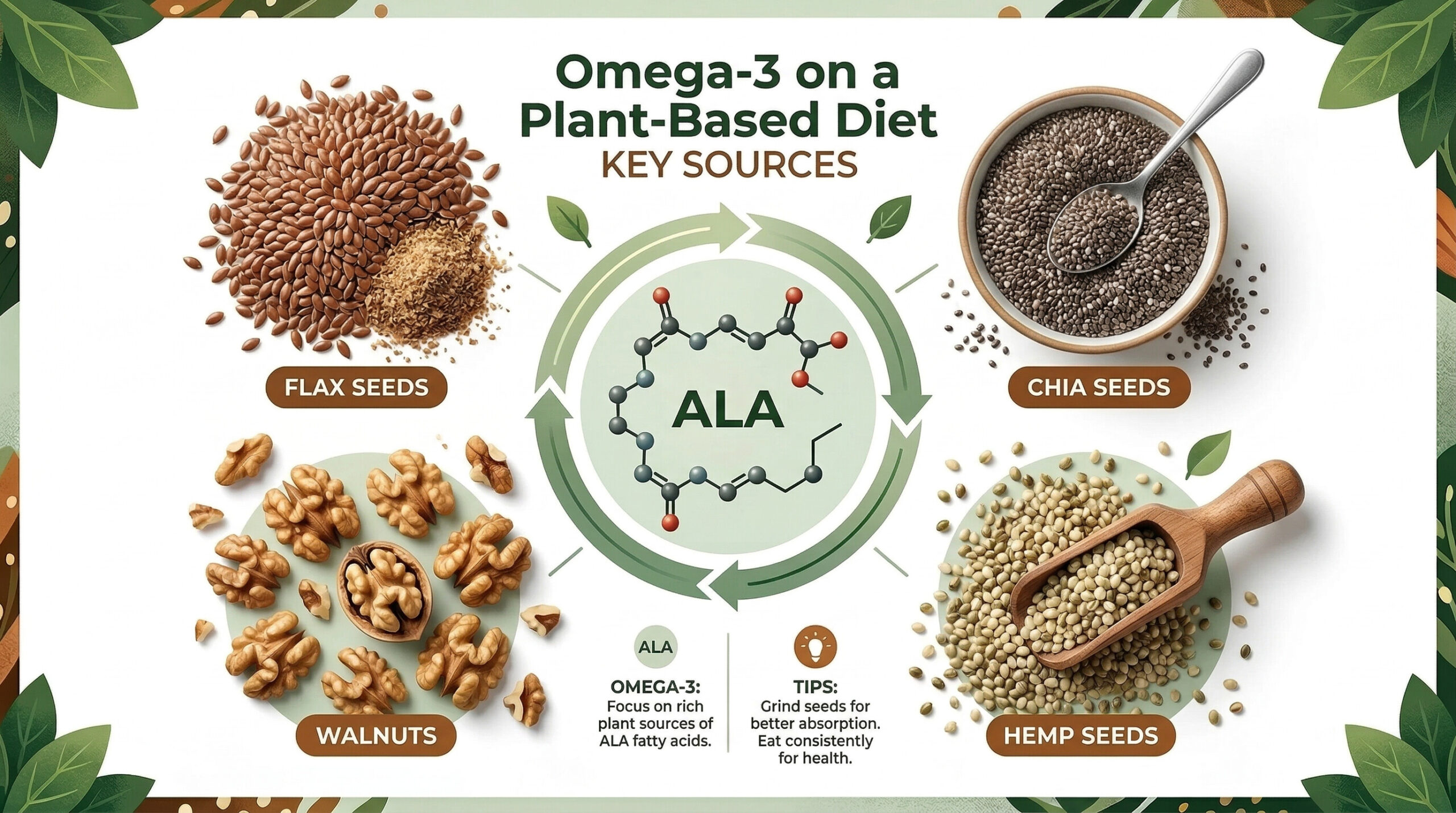
Plant-based foods such as flaxseeds, chia seeds, walnuts, and hemp seeds provide ALA, which is the primary omega-3 fat found in plant sources. ALA is considered essential because the body cannot produce it independently.
EPA and DHA are the forms of omega-3 fatty acids most often associated with cardiovascular, brain, and eye health. These forms are commonly found in marine sources such as fish and algae.
The human body has the ability to convert ALA into EPA and DHA, although the efficiency of this conversion can vary between individuals. Factors such as overall diet, genetics, and lifestyle can influence how effectively this process occurs.
Because of this conversion step, plant-based diets often focus on maintaining consistent intake of ALA-rich foods while also considering dietary patterns that support efficient omega-3 metabolism.
Understanding this relationship helps explain why omega-3 nutrition on a plant-based diet is often discussed in terms of both food sources and conversion efficiency.
Plant-Based Sources of Omega-3
Several plant foods provide meaningful amounts of omega-3 fatty acids in the form of ALA (alpha-linolenic acid). Including these foods regularly can help support overall omega-3 intake within a balanced plant-based diet.
Flaxseeds are one of the richest plant sources of ALA. Ground flaxseeds can be easily incorporated into smoothies, oatmeal, or baked foods, making them a convenient addition to daily meals.
Chia seeds are another notable source of plant-based omega-3 fats. They can be added to yoghurt alternatives, overnight oats, or puddings while also providing fibre and minerals.
Walnuts contain ALA and can contribute to omega-3 intake when included as snacks or added to salads and grain-based dishes.
Hemp seeds also provide ALA along with a balanced profile of other fatty acids and protein. Their mild flavour makes them easy to sprinkle onto meals such as salads, soups, or grain bowls.
In addition to whole foods, certain plant-based products such as fortified plant milks, spreads, or nutritional products may also contain added omega-3 fatty acids.
While these foods provide valuable sources of ALA, understanding how dietary patterns influence the body’s ability to convert ALA into EPA and DHA can further support effective omega-3 nutrition.
How to Support Omega-3 Conversion Naturally
Because plant-based diets primarily provide omega-3 in the form of ALA, supporting the body’s ability to convert ALA into EPA and DHA becomes an important part of long-term optimisation.
One practical strategy is to maintain a healthy balance between omega-6 and omega-3 fatty acids. Many modern diets contain high amounts of omega-6 fats from processed foods and certain vegetable oils. While omega-6 fats are not inherently harmful, excessive intake may compete with omega-3 metabolism.
Focusing on whole foods and minimising heavily processed oils can help support a more balanced fat profile. Choosing cooking and dressing options that align with a whole-food approach can also support overall dietary quality.
Regular intake of ALA-rich foods is equally important. Rather than consuming flax or chia occasionally, consistent inclusion over time allows the body to maintain a steady supply of omega-3 precursors.
Including a variety of nutrient-dense foods may also support overall metabolic efficiency. Nutrients such as zinc, magnesium, and vitamin B6 play roles in broader metabolic processes that indirectly support fatty-acid metabolism.
When these dietary habits are maintained consistently, plant-based diets can support effective omega-3 utilisation as part of a balanced nutritional strategy.
Signs You May Need to Review Omega-3 Intake
Omega-3 fatty acids contribute to several systems in the body, including cardiovascular health, brain function, and inflammatory balance. Because of these wide-ranging roles, low intake over time may gradually influence overall wellbeing.
Some individuals may notice changes such as dry skin, reduced concentration, or increased feelings of fatigue. Others may experience changes in mood or find that recovery after physical activity feels slower than usual.
These signs are not unique to omega-3 status and can be influenced by many factors, including overall diet quality, lifestyle, and other nutrient considerations.
For this reason, persistent symptoms are best discussed with a qualified healthcare professional who can help evaluate dietary patterns and determine whether further testing or nutritional adjustments may be helpful.
For individuals following plant-based diets, periodically reviewing omega-3 intake can provide reassurance that dietary strategies continue to support overall health.
When Omega-3 Supplementation May Be Considered
Plant-based diets can provide meaningful amounts of omega-3 fatty acids through foods such as flaxseeds, chia seeds, walnuts, and hemp seeds. For many individuals, regularly including these foods can support healthy intake of ALA, the primary omega-3 found in plant foods.
However, some individuals may choose to consider supplementation depending on their dietary patterns, health status, or life stage.
For example, individuals who rarely consume ALA-rich foods, those with higher nutritional demands, or those seeking to support specific health considerations may explore omega-3 supplements derived from algae. Algae-based supplements provide EPA and DHA directly and are suitable for plant-based diets.
Because nutritional needs can vary between individuals, supplementation decisions are ideally made with guidance from a qualified healthcare professional. This helps ensure that dosage and form are appropriate for personal health needs.
For most plant-based eaters, prioritising a varied diet that includes omega-3 rich foods remains the primary foundation for maintaining balanced intake.
Omega-3 Optimisation Checklist
Maintaining balanced omega-3 intake on a plant-based diet can be supported through a few simple and consistent habits.
• Include ALA-rich foods such as flaxseeds, chia seeds, walnuts, and hemp seeds regularly in meals.
• Aim for consistent intake rather than occasional large servings, as regular consumption supports steady availability of omega-3 precursors.
• Pair omega-3 rich foods with a varied, whole-food diet that supports overall nutrient balance.
• Be mindful of excessive intake of heavily processed vegetable oils, which may influence overall fatty acid balance.
• Review dietary patterns periodically to ensure omega-3 sources remain a regular part of meals.
With consistent dietary habits and awareness of omega-3 sources, plant-based diets can support healthy fatty acid balance over the long term.
Key Questions About Omega-3 in Plant-Based Diets
Can plant-based diets provide enough omega-3 fatty acids?
Plant-based diets can provide meaningful amounts of omega-3 fatty acids through foods rich in ALA, such as flaxseeds, chia seeds, walnuts, and hemp seeds. When these foods are included regularly as part of balanced meals, they can contribute significantly to overall omega-3 intake.
Why is omega-3 conversion important for plant-based diets?
Plant foods primarily provide ALA, which the body can convert into EPA and DHA. Because this conversion varies between individuals, maintaining regular intake of ALA-rich foods and supporting overall dietary balance helps optimise how effectively the body uses these fats.
Do all plant-based eaters need omega-3 supplements?
Not necessarily. Many individuals maintain healthy omega-3 status through regular consumption of plant-based sources. However, some people may choose algae-based supplements that provide EPA and DHA directly, depending on dietary habits or individual health considerations.
Can symptoms related to omega-3 intake overlap with other nutrients?
Yes. Symptoms such as fatigue, concentration difficulties, or general changes in wellbeing can sometimes overlap with other nutritional factors, including iron or vitamin B12 status. Reviewing overall diet and nutrient intake provides a clearer understanding of potential causes.