
Plantbased lunches have become my go-to way to eat healthier while keeping food costs down.
Prepping meals in advance saves time during the busy week and eliminates the stress of deciding what to eat every single day.
If you’re searching for ways to smooth the way for your lunch routine without blowing your budget, I’ve gathered plantbased lunch prep hacks that truly work for me and others on a budgetfriendly quest to eat well.
Why I Choose Plantbased Lunch Prep
Eating plantbased gives me more energy in the afternoons, keeps lunch fun, and is usually much cheaper than grabbing premade meals or eating out.
Many plant proteins, like beans, lentils, and tofu, are inexpensive compared to animalbased choices.
By prepping in advance, I can avoid expensive lastminute takeout or impulsive snack runs, which quickly drains extra cash.
Plantbased diets are gaining popularity around the world.
According to a Statista report, the plantbased food market is steadily growing as more people track down the perks of adding more vegetables to everyday meals.
Whether you want to make a full switch or simply mix in more plant meals, prepping lunches in advance is a practical move for your health and your bank account.
Getting Started with Plantbased Lunch Prep: The Basics
When starting out, simplicity makes everything smoother.
You don’t need to plan seven new dishes for the week.
I tend to choose two or three easy recipes for batch-cooking or mixing with various sides.
Many ingredients are quite affordable, keep well, and are super flexible.
- Grains: Brown rice, quinoa, farro, and bulgur are filling, adaptable, and great for prepping ahead. I make large batches and store them in the fridge.
- Legumes: Beans, lentils, and chickpeas are walletfriendly, loaded with protein and fiber, and can be bought dried or canned for even bigger savings.
- Veggies: Buying seasonal or on-sale produce makes a difference. I roast, steam, or stirfry big batches to last the week.
- Homemade Sauces and Dressings: Whipping up basic dressings—like vinaigrette, tahini, or peanut—helps keep every meal lively without much extra effort.
- Reusable Containers: A small set of sturdy containers keeps food fresh and makes packed lunches quick to grab and go.
Simple Hacks to Save Time and Money
Lunch prep doesn’t mean spending your whole Sunday in the kitchen.
Here are methods that help me keep things fast and efficient:
- Pick a Theme for the Week: For example, a Mediterranean-themed week with hummus, roasted veggies, and grains focuses your grocery list and limits food waste.
- Double Up on Dinner: Making a big batch of plantbased chili or curry? Cook extra for lunch leftovers to make prepping lunches almost effortless.
- Use the Freezer: I portion out cooked grains and beans and keep them in the freezer. That way, I can whip up a bowl or wrap even when short on time or when I forgot to prep.
- DIY Snack Packs: Split up bulk nuts, seeds, or dried fruit into mini containers for grab-and-go snacks—much cheaper and healthier than single packs from the store.
- Shop Discounts and Bulk: I look for sales and buy pantry basics like rice, oats, and beans in bulk. Then I store them in jars for easy access and lower costs long-term.
Plantbased Lunch Prep Step-by-Step: How I Do It
1. Plan Your Menu
I start by picking two or three main meals and writing out the needed groceries.
My usual picks are grain bowls, wraps, and robust soups.
For a bowl, I’ll use brown rice and chickpeas, adding roasted peppers, spinach, and a drizzle of cashew dressing.
This system gives lots of room for changing things up week to week.
2. Batch Cook Staples
On meal prep day, I always cook my grains and legumes first.
While they’re simmering, I roast mixed vegetables and put a pot of lentil soup on.
By layering tasks, like chopping salad while other pieces cook, I finish much faster and keep cleanup easy.
3. Mix and Match Meals
I rotate different combinations of the prepped foods.
Roasted veggies and grains become a salad, or paired with hummus and pita for a Mediterranean-inspired plate.
Mixing and matching keeps things fun and stops lunch from feeling repetitive.
4. Pack and Store
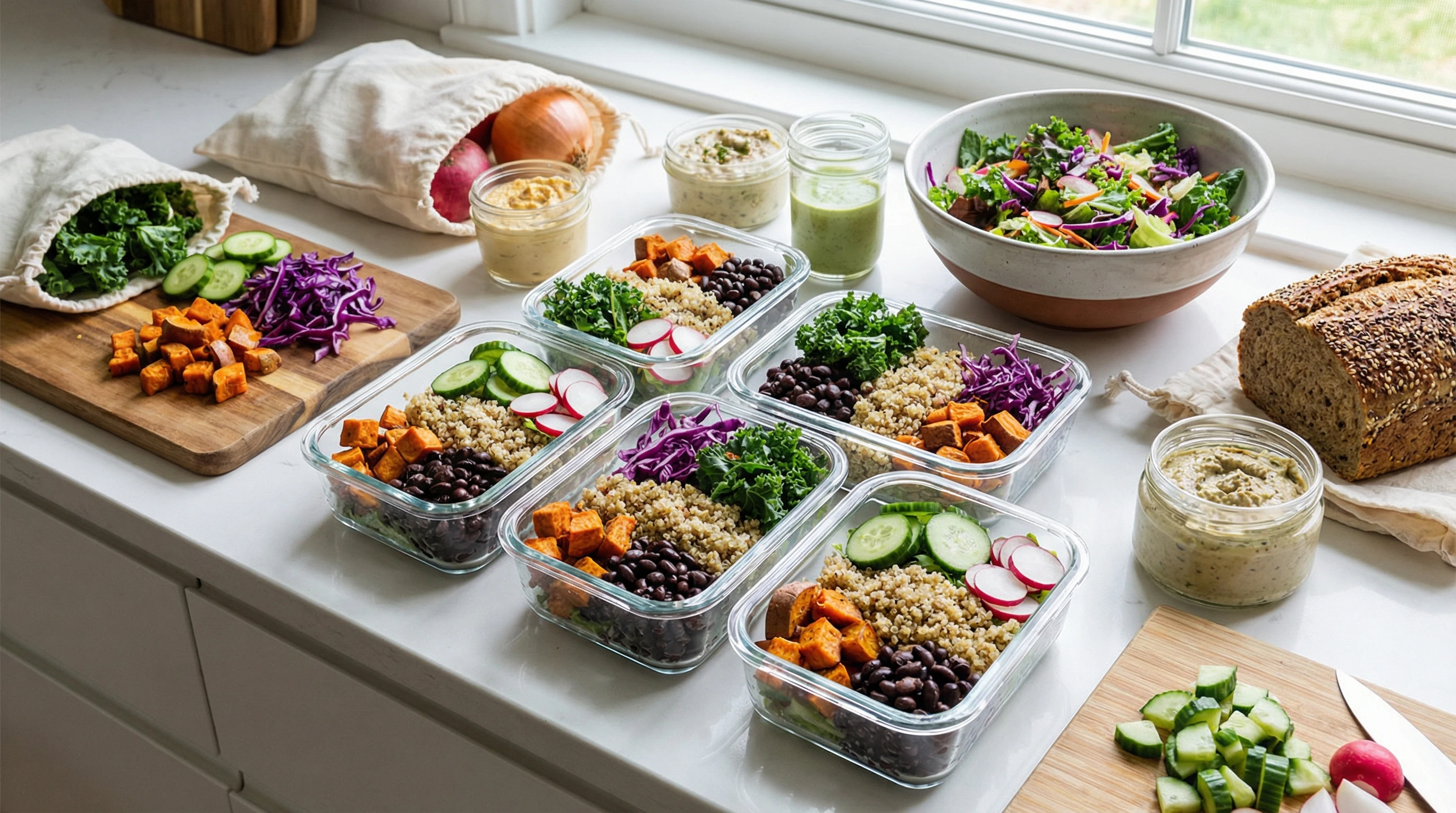
Lunch gets portioned into containers and stacked in the fridge, ready for the week.
Glass storage containers make it simple to see what’s inside.
Extra portions go in the freezer for busy times or days I need a no-cook option.
Things to Watch For: Common Lunch Prep Pitfalls
- Forgetting Variety: Sticking to the exact same lunch can get dull. Mixing in sauces, toppings, or rotating grains brings back excitement. Even swapping rice for farro is a big upgrade.
- Overcomplicating Recipes: When I tried three brand new meals in one week, it got overwhelming. Now, I keep the recipes simple—sticking with old favorites and introducing just one new thing each week.
- Not Storing Food Properly: It helps to let food cool before putting it in sealed containers. Air-tight jars preserve dry goods while some veggies, like leafy greens or cucumbers, stay crisp if added right before eating.
- Forgetting Quick Snacks: I stash carrot sticks, whole fruit, and roasted chickpeas in easy-toreach places, ready to pop into lunch boxes as needed.
Storage Tips for Freshness
Making meals last all week is possible with a little attention.
Grains and beans will keep in the fridge for about four or five days.
Roasted vegetables can usually last up to four days.
I keep dressings separate from salad greens and only add dressing just before eating to prevent soggy greens.
My Favorite Advanced Plantbased Prep Tricks
Once lunch prep becomes second nature, you can get creative with flavors and textures:
- Add a Power Protein: Extra firm tofu, tempeh, or edamame make bowls and salads way more filling. I marinate cubes of tofu or tempeh overnight and then bake or airfry them in batches for the week.
- Flavor Boosters: Items like pickled onions, sauerkraut, roasted nuts, and seeds offer tang and crunch. Throwing a handful into a salad or bowl changes up the basics in seconds.
- DIY Dips: Making a quick cashew cream, bean dip, or spicy hummus levels up any grain bowl or is great as a veggie dip for snacks.
- Mason Jar Salads: Layering salads in jars (dressing at the bottom, greens at the top) is a smart way to keep ingredients crisp throughout the week.
- Try Different Cuisines: Exploring new global flavors keeps lunch fresh and exciting. Thai peanut bowls, Italian farro salads, or Middle Eastern chickpea wraps are among my favorites to mix things up.
Real-Life Plantbased Lunch Prep Scenario
Just last month, I kicked off lunch prep on Sundays for a whole work week.
I cooked up a big pot of chili, roasted sweet potatoes and broccoli, made a batch of quinoa, and mixed a lime-tahini sauce.
Each lunch was a little bit different—one day a rice and chili bowl, the next a veggie wrap, and another a big salad with all the toppings.
Having those options ready made for stressfree mornings and helped me skip the daily takeout stops, saving a surprising amount of money by the end of the month.
Frequently Asked Questions
Question: What is the most budget-friendly plantbased lunch to prep?
Answer:
Bean salads, grain bowls loaded with lentils or chickpeas, and tofu stirfry with frozen vegetables are filling and inexpensive.
Using whatever produce is in season or on sale lowers costs even more.
Question: How far ahead can I prep plantbased lunches?
Answer:
Most plantbased lunches will hold up well for three to five days if they’re in airtight containers and the dressing stays separate.
Grains and legumes are freezer-friendly for up to three months, so you can cook in bigger batches.
Question: How can I avoid getting bored eating the same thing all week?
Answer:
Switch up the sauces, add new proteins, or try different add-ins like roasted seeds, salsa, or pickled veggies.
Rotating these elements keeps things interesting day to day.
Why Plantbased Prep Works for Busy Lives
Batch prepping plantbased lunches lets me eat better, save cash, and keep stress off my plate during the week.
Once the routine sticks, meal prepping a week’s worth of lunches feels easy.
Plantbased meals are freezer ready, easily customizable, and flexible enough for busier days.
Keeping things basic, storing food right, and adding a handful of flavor boosts have turned lunch into something I actually look forward to.
The habit of prepping lunch not only lifts my energy levels through the day, but also helps keep my healthy eating plans on track.
Whether plantbased eating is new for you or you just want a quicker, smoother lunch plan, these tips should make things easier, no matter how busy your week gets.
By staying flexible and planning ahead, you can always look forward to a delicious lunch.