Growing your own vegetables is incredibly rewarding.
But timing your plantings with the seasons can be confusing if you’re new to gardening.
Knowing when to sow seeds, when to move starts, and how weather patterns affect your vegetables makes a real difference in your harvest.
I’ve learned these lessons through plenty of attempts in my own beds, and I’m eager to walk you through practical guidance for planning your veggie garden across the seasons.
Understanding Seasonal Planting Basics
Vegetables all have their own preferred growing conditions.
The timing of when you plant matters a lot since some crops love cooler weather and others need the summer heat.
Grouping your vegetables according to their seasonal needs helps you get the biggest and healthiest harvest.
Most veggies fit into three main planting windows: cool season (spring and fall), warm season (late spring and summer), and overwintering crops that you plant in late summer to survive winter and give an early spring harvest.
I always check my area’s average last spring frost and first fall frost.
These dates set the basic framework for deciding which seeds to put in the ground and when.
Keeping a calendar with these important dates helps me stay on track throughout the year.
Choosing and Planning Your Vegetable Beds
Before planting, make sure your beds get at least six hours of sun per day, and that your soil drains well.
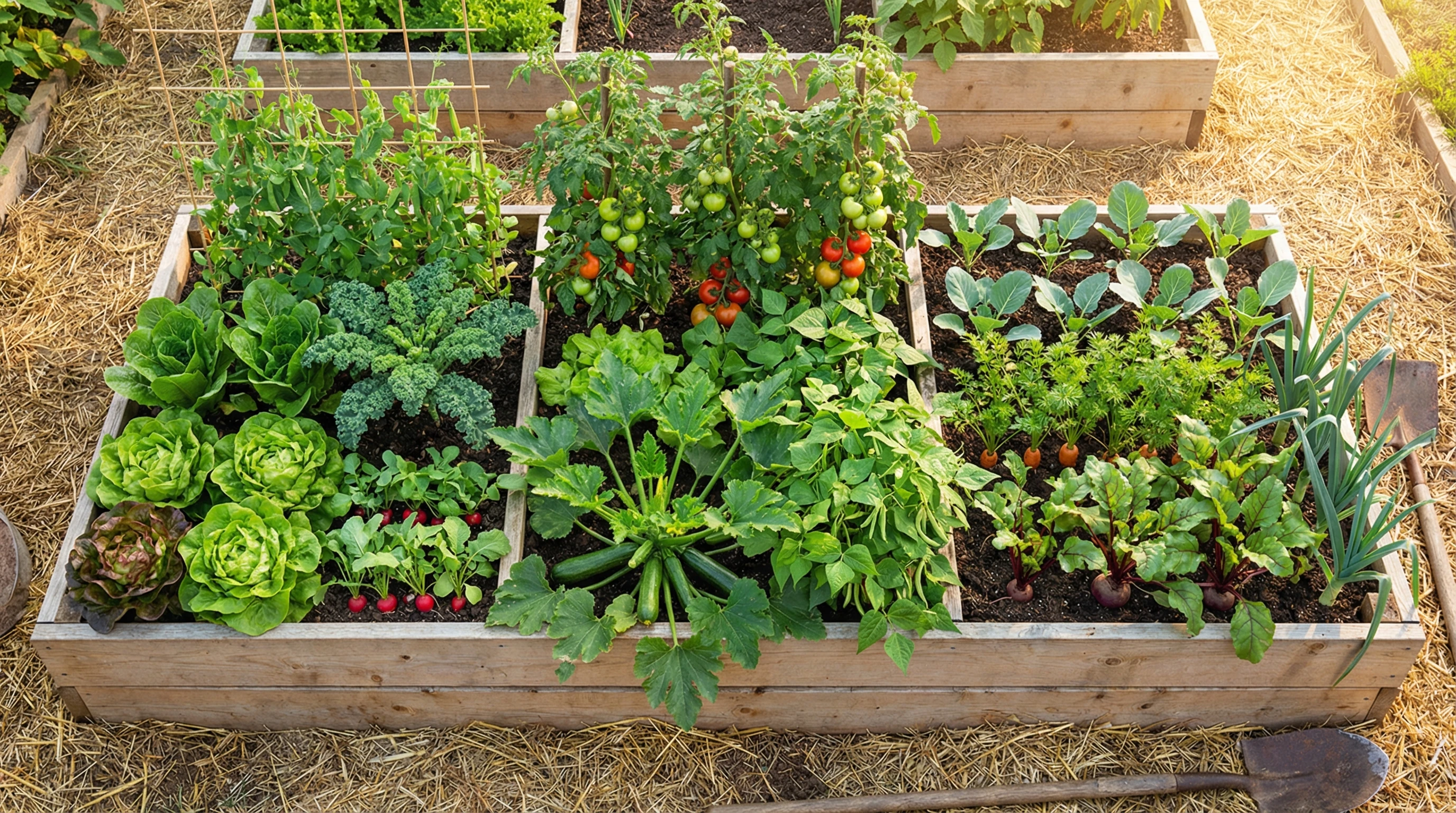
If you’re starting from scratch, raised beds are a smart choice.
They let you control soil quality and usually mean fewer weeds show up.
I usually sketch my beds on paper, or use a digital garden planner each season, mapping out where each crop will grow.
Rotating where you put plants every year is important.
It helps ward off common soil diseases and keeps pests guessing.
Try not to plant the same family of veggies (for example, tomatoes and peppers) in the same place two years in a row.
Spring Planting: Cool Season Vegetables
Spring soil starts out chilly but slowly warms up.
Some vegetables thrive in these cooler temps.
I get great results with leafy greens, peas, radishes, beets, onions, and broccoli.
If frost is still possible, I sow spinach, lettuce, and peas seeds directly outdoors as soon as the ground can be worked.
Using row covers is a good idea to protect early seedlings if a hard frost threatens.
For brassicas (broccoli and cabbage), I start seeds inside and move them out when nights regularly stay above 40°F (4°C).
- Leafy greens: Spinach, lettuce, arugula, and kale love cool weather. If days get hot too soon, these greens might bolt. For best results, grow them early or later in the year.
- Root crops: Radishes, carrots, turnips, and beets all grow well from seed in cool soil. Carrot seeds might need extra patience—they’re slow to sprout and like the soil to be moist.
- Peas: I plant snap or shelling peas along a trellis so they can climb. Early spring’s cooler and wetter weather helps peas thrive.
Extra tip: Mulching your spring crops lightly with straw can help hold in moisture and keep the soil at a steady temperature, boosting early growth and reducing weeds.
Summer Planting: Warm Season Vegetables
As soon as the frost risk is past and soil stays above 60°F (16°C), it’s time to mix it up and add warm-season crops.
Tomatoes, peppers, squash, cucumbers, beans, and corn love these warmer days.
I usually start tomatoes and peppers indoors six to eight weeks ahead, then plant them in the garden when nights are reliably warm.
Squash, cucumber, beans, and corn all do well when seeded directly into the garden after the last frost.
Be careful with your spacing, especially for vining crops, so they don’t crowd each other.
- Tomatoes and Peppers: These need warmth to thrive. I stake my tomatoes or use cages right from the start. That way, the plants are easy to manage later.
- Squash and Cucumbers: Sown directly after frost, these veggies need plenty of space and sunlight for strong, productive growth.
- Beans and Corn: Beans help shade the soil as they grow, keeping roots cooler. Corn does best when planted in a block rather than a single row to encourage pollination.
Don’t forget to add organic mulch around your growing plants; this helps hold soil warmth and moisture through hot and dry spells.
Fall Planting: Extending the Season
Many cool-season crops can be sown again as summer winds down and temperatures start dropping.
I’ve noticed fall-grown greens, root vegetables, and brassicas taste even better, especially once they’re kissed by the first frost—the sugars in the plant rise, making them sweeter.
I begin my fall plantings 8 to 10 weeks before the first expected frost.
My go-to crops are kale, spinach, arugula, and plenty of lettuce, which all handle the cooler weather.
Shading baby plants with a row cover during the late summer helps them get growing before it cools off too much.
Carrots and beets need to get in the dirt by midsummer so they have time to mature.
- Brassicas: Broccoli, cauliflower, and cabbage started in late summer transition well to fall. There are fewer pests in autumn, so these veggies are less stress to grow.
- Leafy Greens: Arugula, spinach, and lettuce can be sown even in August or September for a late harvest. Most of these greens won’t blink at a light frost.
- Carrots and Beets: These root crops sweeten up as the temperature cools, and you can often leave them in the ground under mulch until you’re ready to eat them.
Extra tip: Covering your fall crops with old bed sheets or row covers when a hard freeze threatens will help you stretch the growing season a little longer.
Managing Common Challenges Across Seasons
Gardening is never totally smooth sailing, but over the seasons, I’ve picked up a few practical tricks to work around common issues.
- Soil Preparation: Before each major planting, I work compost into my beds for a nutrient bump. It’s good to test your soil every couple of years to find any major issues and fix them.
- Weather Fluctuations: Sudden heat waves or late surprise frosts can put young plants at risk. I always have row covers, lightweight shade cloth, and plenty of mulch ready to go so I can help my plants cope with temperature swings.
- Pests: Spring can bring aphids, summer might bring squash bugs, and fall brings caterpillars. Using insect netting, handpicking bugs, or welcoming natural predators like ladybugs really pays off.
- Watering: Beds with just-seeded carrots or lettuce need steady moisture to sprout. For older plants, deep but less frequent watering leads to stronger roots.
Overwintering Crops
Some vegetables can be planted in late summer or early fall then left to slowly grow all winter, giving you one of the earliest spring harvests you can get.
Garlic is my favorite: plant it in autumn, mulch, and it’ll give fresh bulbs next summer.
Onions, spinach, and kale are also good options.
Give them extra mulch or use a low tunnel to shield them until days start to lengthen again.
Tips for Planning a Productive Year-Round Vegetable Bed
Getting your vegetable beds to produce all year takes practice and some trial and error, but here are strategies that make it easier:
- Write down your frost dates, so you know when to kick off each season’s planting.
- Sow in stages: Instead of planting everything at once, plant a bit every couple of weeks for a non-stop harvest.
- Try planting quick growers (like radishes or lettuce) alongside slow crops (like tomatoes), so you get more out of each bed.
- Keep a garden journal with what you planted, when you planted it, and how it did. It’ll help you tweak and improve next year’s plan.
Don’t be afraid to try new varieties, experiment with mixtures of crops, or even grow some flowers alongside vegetables to attract helpful pollinators.
Frequently Asked Questions
If you’re new to seasonal planting, you might have a few questions.
Here are some that come up all the time:
Question: How do I decide if I should start seeds indoors or sow them directly?
Answer:
If your growing season is short or you want an earlier harvest, starting seeds inside for tomatoes, peppers, and brassicas can give you a jumpstart.
Hardy, fast sprouting crops—like lettuce, peas, and radishes—do better right from the garden soil.
Question: Can I plant more than one crop in the same space during a season?
Answer:
You sure can!
Succession planting lets you plant one crop, then follow it with another sharing the same space.
You can also try interplanting—growing carrots with onions, for instance—to save space and help manage pests.
Question: What do I do with my beds over winter?
Answer:
Sow a cover crop like clover or winter rye, or simply pile on a thick layer of leaves or straw mulch.
This shields the soil, keeps weeds down, and means better structure when you’re ready to plant again next year.
Year-Round Success Comes From Smart Seasonal Planning
Tuning your vegetable planting plan to each season means more productive beds, tastier produce, and less effort fighting pests or bad weather.
Watching your garden week by week, keeping notes, and being open to trying fresh approaches make gardening even more fun.
Each year you’ll get a better feel for what works, when to plant, and soon your garden beds will be producing plenty of homegrown food no matter the season.
Bottom line:
With steady practice, a bit of observation, and a willingness to try new things, any gardener can get into the rhythm of planting with the seasons and enjoy fresh veggies throughout the year.