If you’re after bold flavors and vibrant plates, plant-based Mexican cooking has plenty to offer.
Tacos and enchiladas stand out in this crowd, not just because they’re super delicious, but also because they’re easy to customize for any mood or gathering.
Going plant-based doesn’t mean missing out on authentic spices, satisfying textures, or the wow factor from Mexican meals.
Here’s my take on how to get those traditional flavors using veggies, beans, and a couple of time-saving tricks.
What Makes Mexican Cuisine So Good for Plant Based Eaters?
Many traditional Mexican recipes already celebrate ingredients like beans, corn, tomatoes, and chiles.
Even before plant-based diets took off in popularity, Mexican home cooks were making magic with humble veggies and grains.
Staples like nopales (cactus paddles), black beans, zucchini, and potatoes come up again and again in classic recipes—proof that Mexican cuisine is naturally full of good stuff for plant-based eaters.
With all that built-in goodness, swapping out cheese and meat for a fully plant-based meal doesn’t feel like a compromise, especially when you tap into the deep traditions.
My own kitchen experiments have shown that using traditional spices and cooking methods brings out bold, authentic flavors with no animal products needed.
It helps that beans, corn, and fresh produce are easy on your budget and a cinch to prep in big batches, making everyday meals as stress-free as possible.
This approach fits perfectly into the trending push for eating more plants for health and sustainability.
There’s also the bonus of easy meal prep and budget-friendly shopping, making plant-based Mexican cooking ideal for busy weeknights or casual entertaining.
Staple Ingredients for Plant Based Mexican Cooking
Starting out, I always suggest stocking your pantry and fridge with these plantbased basics:
- Beans: Black beans, pinto beans, or even lentils. They’re the backbone for hearty fillings with tons of protein.
- Corn: Fresh, frozen, or masa harina for making tortillas and tamales. Corn shows up everywhere, from sides to main dishes.
- Squash and Zucchini: Lightly sautéed, roasted, or diced for fillings and sides.
- Tomatoes: Fresh or canned tomatoes work for sauces and salsas. They add color and tang to so many dishes.
- Chiles: Dried (like guajillo or pasilla) and fresh (jalapeño, serrano, poblano) for smoky flavor and heat.
- Herbs: Cilantro, Mexican oregano, and epazote keep everything tasting super fresh. Fresh herbs always give a final punch of flavor.
- Lime: A squeeze over tacos or enchiladas wakes up the flavors and brightens up any dish.
- Avocado: Creamy and rich—especially in guac or as a topping. Avocado is key to making tacos and salads feel satisfying.
Most mainstream supermarkets stock all of these, so finding ingredients shouldn’t be a hassle.
If you want even more Mexican flair, try local Latin markets for specialty goods—they can be treasure troves of hard-to-find chiles or tortillas.
Traditional Tacos Done Plant Based
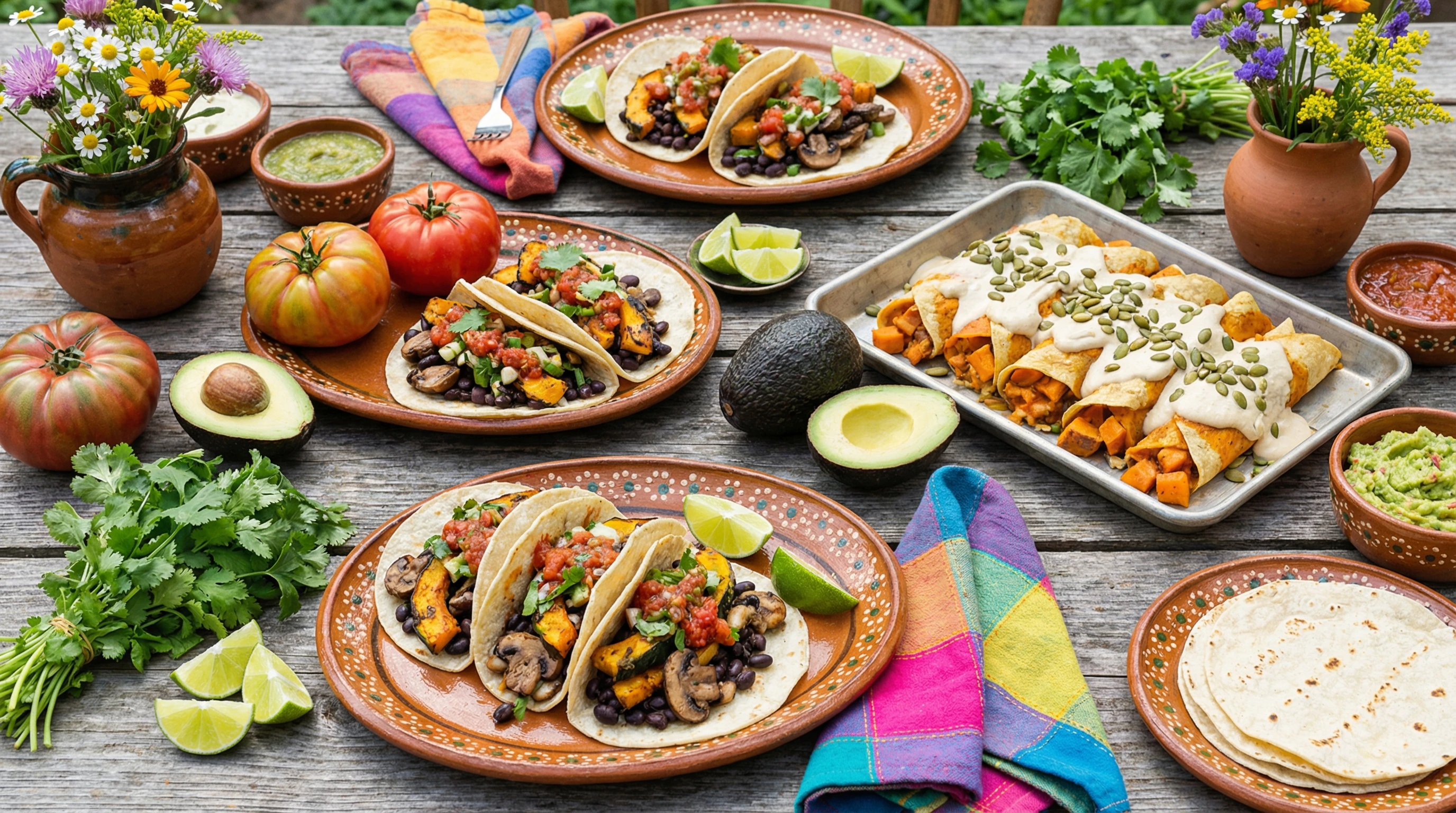
Tacos might be the first thing you think of for Mexican street food, and they’re surprisingly easy to make plant based.
I like to focus on filling options with plenty of texture and flavor.
Here are some crowd pleasers:
- Grilled Mushrooms: Meaty, smoky, and they soak up marinades really well. Button mushrooms or portobello strips both work.
- Potato and Poblano: Diced potatoes sautéed with roasted poblano peppers create a spicy, super satisfying taco filler.
- Lentil Chorizo: Brown lentils cooked with smoky spices (paprika, cumin, chili powder) make a hearty taco base. I sometimes add a splash of vinegar for tanginess.
- Jackfruit Carnitas: When I’m craving something shredded and savory, canned young jackfruit gets soft and crispy when roasted with lime juice, onion, and garlic—perfect for tacos.
Taco toppings really bring it all together.
I always put out diced onion, chopped cilantro, quick pickled onions or radishes, and lots of salsa (try salsa verde with tomatillos for something zippy).
The toppings are where you can really mix in some variety and let people build their own creation.
Layering Flavors: Sauces and Salsas
Great tacos and enchiladas shine because of the sauces.
Making them plant based is easy with a few simple swaps:
- Salsa Roja: Roast tomatoes, onion, garlic, and dried chiles, blend them up, and season to taste. Home roasting brings out that rich, bold flavor.
- Salsa Verde: Using roasted tomatillos (they look like green tomatoes, but they’re tangier), blend with fresh cilantro and jalapeño or serrano for an extra kick.
- Creamy Cashew Crema: Soak cashews and blend with lime juice, salt, and water for a nondairy crema. It’s silky and cools down spicy bites.
- Guacamole: Avocado mashed with lime, salt, tomato, and cilantro. Super simple, but it makes everything pop.
All of these can be made in a regular blender or food processor; they’re fridge-friendly for a few days and add a next-level punch to any meal.
Building Authentic Plant Based Enchiladas
Enchiladas are all about layers—both flavor and texture matter here.
The trick is to use sturdy corn tortillas, a solid sauce, and fillings that stay moist but not soggy.
Here’s how I usually make them:
- The Filling: My go-to is a mix of black beans, sweet potato, and sautéed onion. Spinach, squash, or mushrooms also work well when chopped small.
- The Sauce: Red enchilada sauce comes from stewing chiles (like ancho and guajillo) with tomato and garlic, then blending and simmering with cumin and oregano. For something brighter, try a tomatillo-based green sauce.
- Assembly: Dip corn tortillas quickly in the warm sauce, fill, roll up, and nestle into a baking dish. Pour extra sauce over to keep everything moist.
- Bake: Pop them in the oven (about 15 minutes at 375°F) to get everything bubbly and soft.
I like to finish with a spoonful of cashew crema, a dusting of chopped cilantro, and a hit of lime juice before serving.
This combination even wins over cheese lovers—it’s incredibly satisfying and filling, with all the rich flavors you’d hope for.
Common Challenges and How to Deal with Them
Trying out plantbased Mexican dishes for the first time brings a few kitchen hiccups.
Here’s what I’ve come across and how I work around them:
- Tortillas Falling Apart: Corn tortillas break if they’re not warm or dampened with sauce. I always give them a quick warmup in a pan or microwave, then work with them quickly.
- Sauces Too Thin or Bland: Let the sauce simmer longer to thicken up, or boost the chile and salt if the flavor isn’t quite bold enough.
- Missing Cheese: If you’re craving something cheesy, add a sprinkle of nutritional yeast, some cashew cheese, or try one of the meltable plantbased cheese brands for a bit of texture.
- Boring Fillings: Don’t skimp on spices! Cumin, smoked paprika, and a splash of vinegar or lime juice can really give beans and veggies a lift. Experiment with different spice blends to find what you enjoy most.
Spicing It Up Authentically
Spices are what set Mexican cooking apart.
They’re not just about heat—they bring depth and layers.
I always keep cumin, coriander, chili powder, smoked paprika, and Mexican oregano handy.
Grinding whole spices yourself amps up flavor, but using preground is totally fine; freshness makes a bigger difference than you might think.
Hacks for Quick Weeknight Meals
- Batch Cook Beans: Make a big pot and freeze in portions for filling tacos and enchiladas on demand. Pull out what you need and dinner comes together fast.
- Store Bought Tortillas: Grab some soft corn tortillas from a Latin market or the grocery store, and warm until flexible before using.
- Meal Prep Salsas: Whip up a few different salsas and stash them in the fridge. They’re great for chips, bowls, or toppings for just about any meal.
Frequently Asked Questions
Here are some things people usually ask about when getting started with plantbased Mexican cooking:
Can I make tacos and enchiladas ahead of time?
Yes, fillings, sauces, and even rolled enchiladas can be prepped ahead.
Store each part separately or assemble right before baking to keep tortillas from turning mushy.
Is plant based Mexican food spicy?
Only if you want it!
Adjust the amount or type of chilies you use to suit your spice tolerance, and skip the hottest chiles for a gentler heat.
Do I need specialty ingredients?
Not at all.
Most recipes use basics from any grocery store, plus a couple of extras like dried chiles or masa harina for next-level flavor and texture.
Local markets add choices but aren’t required.
Recipes to Try at Home
- Mushroom Tacos with Salsa Verde: Grilled mushrooms, avocado, and bright tomatillo salsa for a super fresh street taco.
- Black Bean and Sweet Potato Enchiladas: Spiced black beans and sweet potato wrapped in corn tortillas, topped with homemade enchilada sauce, baked until bubbly.
- Lentil Tinga Tacos: Lentils stewed with smoky chipotle, onions, and Mexican spices, tucked into warm tortillas with cabbage slaw. Perfect for meal prep and leftovers.
Mix and match, put your own spin on these ideas, and don’t forget a squeeze of lime over everything!
It wakes up flavors and adds an exciting finish.
Plant Based Mexican Cooking: Bold, Easy, and Super Tasty
Tacos and enchiladas are great entry points into plantbased Mexican cuisine.
They show just how creative, flavorful, and filling plantbased meals can be.
By sticking to classic techniques and fresh ingredients, you’ll put together dishes that are genuinely authentic—no special tricks needed.
Just be open to experimenting and enjoy the process of finding bold new flavors in your kitchen.
Try starting with a single filling or sauce, then branch out as you gain confidence.
With each batch, you’ll figure out how to balance flavors and textures to match your taste.
Mexican food celebrates creativity, and it’s all about turning basic ingredients into something you really crave.
Give it a try and let your kitchen get a little more colorful!