If you’ve ever wished you could enjoy French classics without the animal products, you’re definitely not alone.
French cuisine is famous for rich flavors, beautiful plating, and comforting dishes, but some staple recipes rely pretty heavily on butter, cream, cheese, or meat.
The good news is there are more ways than ever to veganize your favorite French dishes, from hearty ratatouille to a decadent crème brûlée.
Let me show you how I handle classic French food—no animals needed.
Why Veganize French Classics?
French food has a reputation for being a bit stubborn when it comes to swapping animal products for plantbased options.
Think about dishes like coq au vin, quiche Lorraine, or moules marinière.
At first, it seems like making a vegan version means missing out on what makes the dish special.
My experience has been the opposite; going plantbased lets you get creative, check out local produce, and even lighten things up.
You still get all the cozy flavors and textures, just without any dairy, eggs, or meat.
I’ve found that French cooking techniques, like sautéing veggies, making a good sauce, or slow simmering, translate perfectly to vegan ingredients.
That means no matter your skill level, you can make a dish that feels totally classic, with a plantbased twist.
Getting Started: The Basics of Vegan French Cooking
Before jumping into specific dishes, knowing which plantbased swaps really work can save you some trial and error.
Here are a few things I rely on:
- Butter & Cream: Margarine, olive oil, coconut cream, and plant milks like soy or oat give sauces and pastries a super silky finish. Cashew cream works wonders for creamy textures.
- Eggs: For quiches or custards, silken tofu, chickpea flour, and flaxseed “eggs” step in nicely. Sometimes a pinch of kala namak (black salt) gives a subtle eggy flavor.
- Meat Swaps: Mushrooms, seitan, jackfruit, and even tofu soak up classic sauces and marinades really well.
- Cheese: Nutritional yeast, cashewbased cheeses, and storebought vegan cheese all have their place. A homemade bechamel with plant milk and nutritional yeast takes the place of gooey gruyère.
Stocking your pantry with herbs like tarragon, thyme, parsley, and bay leaf also brings out that signature French flavor in vegan recipes.
The Vegan Ratatouille: A PlantBased Star
Ratatouille is already pretty plantfriendly, but traditional versions sometimes get finished with butter or topped with cheese.
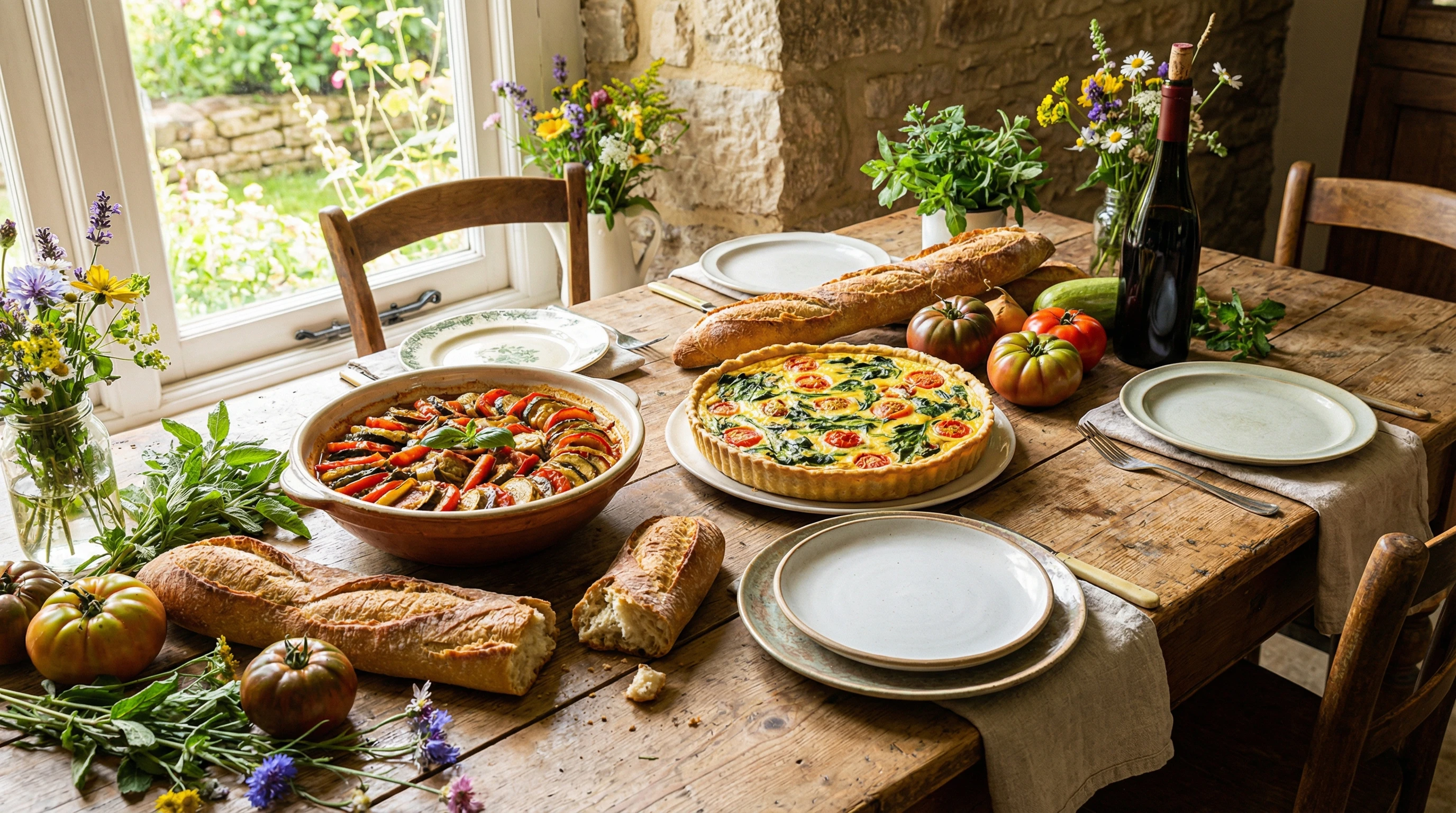
My vegan ratatouille is pure veggies—eggplant, zucchini, tomatoes, bell pepper, and onion—slowcooked until everything’s meltingly soft and bursting with flavor.
For extra flavor, I drizzle a little olive oil and sprinkle fresh basil before serving.
Baking the sliced vegetables in a spiral like in the famous animated movie is a fun, eye-catching touch for guests.
- Quick tip: Salting the eggplant before cooking draws out moisture, making the texture less spongy and richer. I lay the slices in a colander, salt them generously, and rinse after about 20 minutes.
Other French Favorites Made Vegan
I’ve tried a bunch of classic French recipes, and they translate better than you might expect.
Here are some favorites and how to get them right:
Vegan French Onion Soup
This crowdpleaser relies on caramelized onions and that delicious breadandcheese topping.
Swap beef broth for a hearty homemade veggie stock with a splash of soy sauce or mushroom powder.
For the cheesy finish, top a slice of baguette with shredded vegan cheese and broil until bubbly.
I use a mix of storebought mozzarellastyle cheese and rich cashew cheese for that stretchy, gooey feel.
Quiche Lorraine
Quiche usually uses loads of eggs and cream.
My favorite swap is silken tofu blended with nutritional yeast, a pinch of black salt, sautéed onions, mushrooms, and vegan bacon bits.
Pour into a flaky vegan pastry shell and bake till golden.
It’s perfect for brunch or a lighter dinner.
Boeuf Bourguignon Without the Boeuf
This red wine stew shines thanks to the sauce.
I use mushrooms and seitan chunks, simmered with carrots, onions, and pearl onions in a red wine base.
A bit of tomato paste and plenty of simmer time give the meal a deep, savory vibe—no beef needed.
Crème Brûlée, Vegan-Style
No need to skip dessert.
Coconut cream, cashew cream, or thick soy milk make a lush custard base.
Adding a fresh vanilla bean ups the authentic factor.
I sprinkle sugar over each ramekin and caramelize with a kitchen torch or superhot broiler.
The crackly sugar top always wins guests over—nobody misses the eggs or dairy.
Simple Steps to Veganize a French Recipe
I always start by checking what’s essential in the original recipe and picking vegan ingredients that match both taste and texture.
My process usually looks like this:
- Read through the recipe: Spot which animal products need swapping. Cheese, cream, butter, and eggs show up most often.
- Pick plantbased replacements: Usually there are several options depending on whether you want something lighter, richer, or with particular flavor notes (smoky, cheesy, etc).
- Taste and cook as you go: Vegan ingredients don’t act exactly like their traditional counterparts. Sauces sometimes need thickening with more flour or cornstarch. Broths get deeper flavor from extra simmer time and plenty of herbs.
- Stick with classic techniques: French cooking means slowcooking, careful layering, and lots of attention to seasoning. These steps work great for vegan dishes too.
Common Issues and How I Tackle Them
Texture can be tricky when swapping out cheese or eggs.
Here are a few quick fixes I use:
- Cheese that won’t melt: Mixing homemade cashew cheese with some tapioca starch helps it melt and stretch. Some storebought brands do this better than others—worth reading reviews for your dish.
- Runny custards: Plantbased custards may not set the same way. Combining cornstarch with agar agar firms the filling for a more classic texture.
- Lack of savory depth: A spoonful of miso paste, some tomato paste, or a dash of soy sauce brings umami. Dried mushrooms tossed into broth work wonders too.
Tips for Cooking and Serving Vegan French Food
Presentation is important in French cuisine. I like to serve vegan French meals with a side of fresh, crusty baguette (many storebought baguettes are accidentally vegan—just read the ingredients).
For quiche, a simple green salad with mustard vinaigrette is classic.
Choose seasonal veggies, fresh herbs, and keep it simple on the plate.
Even a basic ratatouille looks gourmet when neatly layered or served in small ramekins.
For gatherings, adding edible herbs or roasted cherry tomatoes as garnish makes the whole presentation nextlevel cool.
Frequently Asked Questions
Question: What’s the best cheese substitute for French recipes?
Answer:
For melting, vegan mozzarella or a homemade cashew cheese with nutritional yeast work great.
For sharper flavors (like in French onion soup), storebought vegan gruyère or cheddarstyle cheese is the way to go.
Nutbased cream cheeses are handy for pastries and croissants.
Question: Can you make vegan croissants that are really flaky?
Answer:
Yes, vegan croissants are totally possible using margarine or nondairy butter that’s firm when cold.
The key is patience—rolling, chilling, and folding the dough takes time, but the result is a superflaky, buttery pastry.
Online recipes with photos can help a lot here.
Question: Is wine in French recipes always vegan?
Answer:
Not every wine is vegan, since some are processed with animal fining agents.
Look for bottles labeled “vegan” or check online wine directories for more info.
Site like Barnivore are helpful.
Bringing French Vegan Recipes to Your Table
French food might seem challenging to veganize, but there’s a ton of flexibility once you break things down.
Comfort classics like ratatouille, onion soup, and even crème brûlée deliver classic flavors with simple, modern plantbased swaps.
Once you pick up some staple techniques and learn your favorite substitutes, it’s incredibly rewarding to bring a touch of Paris or Provence home—without using any animal products.
Grab some fresh market vegetables, your go-to vegan basics, and try a plantbased makeover on a classic French dinner.
Go for a rustic ratatouille or take on the ultimate vegan croissant—French flavors are waiting in your kitchen, ready to share and enjoy.