Keeping a vegetable garden healthy isn’t just about planting the right seeds or choosing the sunniest spot.
How you water your garden plays a huge role in how well your veggies grow, taste, and produce.
Getting watering right can help your garden bounce back from tough weather, cut down on diseases, and give your harvests a good boost.
This guide will jump into practical watering techniques for thriving vegetable gardens, whether you’re working with a couple of pots on the patio or whole rows of crops in the backyard.
Why Watering Matters for Vegetable Gardens
Vegetables are pretty needy when it comes to water, especially compared to lawns or ornamental plants.
They use a ton of water to put out lush leaves, flowers, and—most importantly—tasty fruits and veggies.
Consistent watering helps plants take up nutrients from the soil and keeps them growing strong, even during dry spells.
It’s not just about dumping water around the roots.
Watering too little, too much, or at the wrong time can lead to problems with disease, stunted growth, or bland vegetables.
For example, tomatoes often split when they get a big drink after a dry period, while lettuce can taste bitter if it grows in droughty soil.
Paying attention to when and how you water is an important part of growing healthy vegetable crops.
Understanding When to Water: Timing and Frequency
The best time to water vegetables is early in the morning.
Overnight dew mixed with water on leaves in the evening encourages diseases like powdery mildew, especially in humid or shady gardens.
Giving leaves time to dry out after watering in the morning helps cut back on disease risk.
How often to water comes down to your local climate, type of soil, and what you’re growing.
Vegetable gardens usually need about 1-2 inches of water per week, counting both rain and what you add with hoses or watering cans.
Sandy soils dry out faster and need lighter, more frequent watering, while heavy clay soils hang on to moisture longer but can get waterlogged if overwatered.
- Sandy soil: Drains quickly and warms up fast, but dries out in a flash. Water more often but use a smaller amount each time.
- Clay soil: Clings to moisture but can get soggy and compacted. Let the surface air out before you water again.
- Raised beds: Typically dry out much faster, especially when the sun is blazing. You might end up watering these daily in summer.
One thing to remember: keep an eye on recent weather.
Extra hot, dry periods mean you’ll need to water more often, while frequent rain can help you skip a session or two.
Don’t just stick to a schedule out of habit—be flexible and adapt to what your garden is actually telling you.
Regularly check the soil by poking your finger in a few inches deep. If it feels dry, it’s time to water.
Methods for Watering Vegetable Gardens
There’s no single perfect way to water every garden.
Here are some tried-and-true methods for keeping your vegetables happy:
- Soaker Hoses: These hoses seep water slowly along the ground, right where it matters most. They’re super handy for saving water and time, especially in garden beds that fill up with foliage as the summer gets going. Snaking a soaker hose through your rows before adding mulch lets you keep the soil damp without soaking the leaves.
- Drip Irrigation: This technique delivers water to each plant right at the roots, one drop at a time. It might take a little effort to set up, but it pays off big time in large raised beds, rows, or sloping gardens. Drip irrigation pinpoints the roots and limits waste.
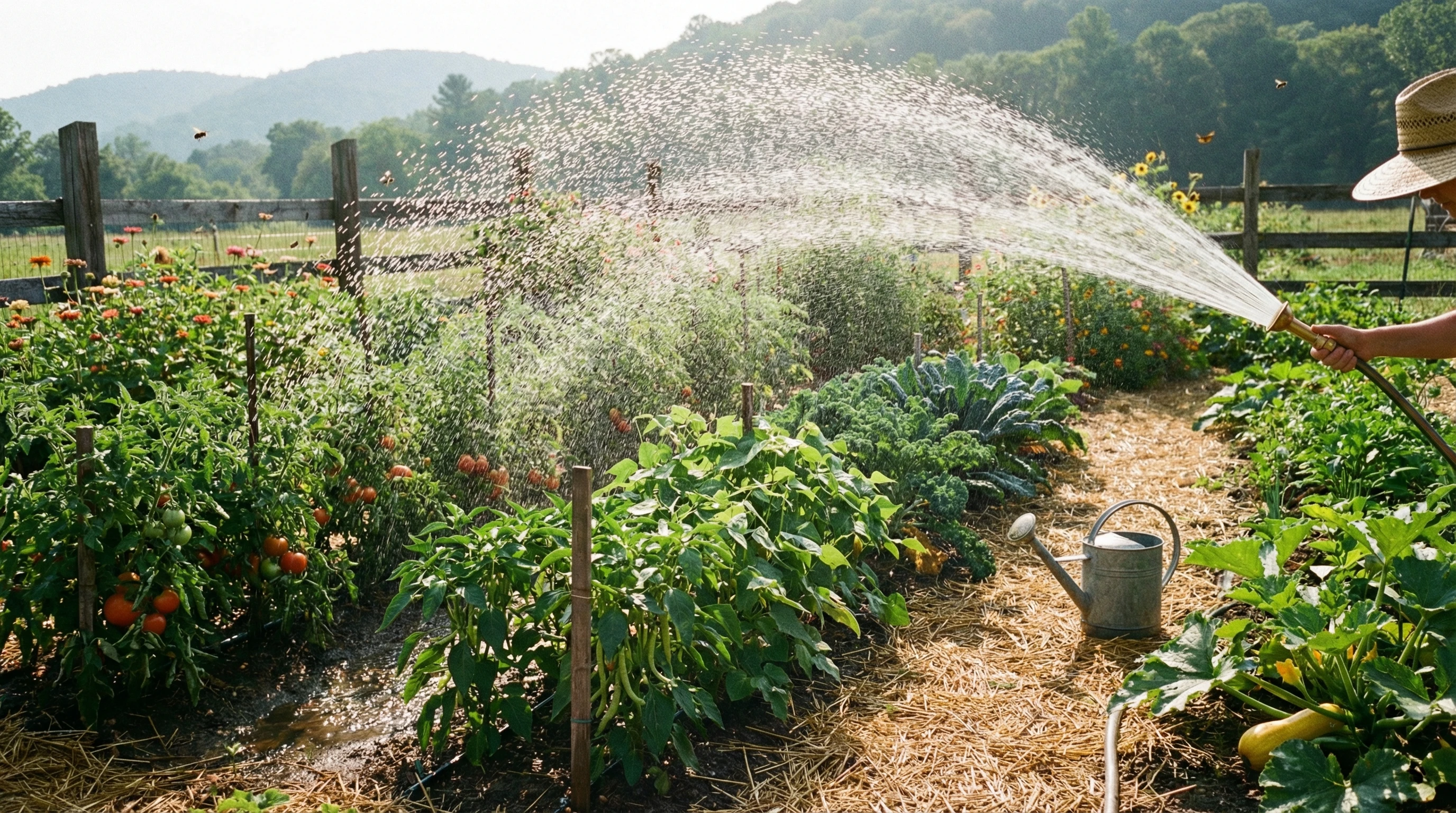
- Watering Cans and Hoses: For smaller gardens or seedlings, a watering can or a hose with a gentle spray nozzle gives you more control and lets you keep an eye out for wilting or signs of early disease.
- Sprinklers: Overhead sprinklers can water a big area quickly, but wetting the leaves can bring on fungal problems. If you go this route, use handheld or low-pressure sprinklers and stick to early morning.
If you’ve got a mix of container plants and in-ground beds, sometimes hand watering with a can is the best way to meet each plant’s needs without overdoing it.
On windy or very hot days, check containers and shallow-rooted plants twice—these can dry out in just a few hours under strong sun.
How Much Water is Enough?
Not all veg need the same amount every week, and the weather can really mix it up.
Greens like lettuce and spinach need more frequent watering because their shallow roots dry up quickly.
Deep-rooted crops such as tomatoes, squash, and beans can get by with longer breaks between good soakings, as their roots dig deeper for moisture.
The easiest way to check if you need to water is to stick your finger about two inches into the soil.
If it’s dry at that depth, give them a drink.
If the leaves wilt in the strong sun but perk up at night, they are likely okay.
If leaves are limp first thing in the morning, that’s a sure sign you’re overdue.
If you want an extra tool, a basic soil moisture meter will help you keep tabs, especially for containers and raised beds.
It also helps to take note of your local climate and adjust as needed.
In hot, dry regions, consider adding more mulch and watering earlier to help your plants dodge stress.
During cool, rainy weeks, skip watering so the roots don’t get waterlogged.
Mulching: A Secret Weapon for Moisture Control
Mulch makes managing water a whole lot easier.
After watering, add a two-to-three-inch layer of mulch—think straw, shredded leaves, grass clippings, or compost—to lock in moisture.
This keeps roots cool on hot days, slows down weeds, and keeps dirt (which can carry disease) from splashing onto your favorite veggie leaves.
Straw and shredded leaves are especially good for most gardens.
Just make sure to keep mulch away from the stems or trunks of young plants so you don’t trap moisture and encourage rot.
Common Watering Problems and Their Solutions
- Too much water: If you’ve got soggy, yellow leaves or stunted growth, your roots are likely gasping for air. Make sure your drainage is working well, ease up on the watering for a while, and gently loosen soil around struggling plants.
- Too little water: Wilting, browning, stiff leaves, or slow growth all point to thirsty plants. Mix in more organic matter when you plant, and mulch to help the soil hang on to water longer.
- Inconsistent watering: Flooding dry soil too quickly can split tomatoes or mess up the taste of peppers. Try to water regularly, and if your garden dried out completely, bring the moisture back slowly over several days.
Rain Barrels and Water Conservation
Saving water is smart, especially where supplies are limited or water bills are high.
Rain barrels are simple to set up and a great way to collect free, unchlorinated water for your garden.
Put one at the end of a gutter downspout. Always keep the lid on tight so you don’t end up with mosquitoes.
Watering deeply but less often helps plants build strong, deep roots and toughens them up for heat waves.
Watering the soil rather than the foliage, and doing it at the right time of day, will save water and keep your plants sturdier through dry spells.
Useful Tools and Gadgets for Watering
- Watering Wand: A long-reach wand with a gentle spray is perfect for getting water under thick leaves or into packed beds. You’re less likely to soak the foliage, which keeps disease away.
- Soil Moisture Meter: These gadgets give you a quick look at how wet or dry the soil really is at different depths, making it easier to track down tricky dry spots.
- Timers: Basic timers on drip lines or hoses help take the guesswork out of watering and can help you avoid forgetting altogether. Automatic watering also makes it easier when you’re away from home for a day or two.
Investing in a few proper tools will make your gardening routine smoother, giving you more time to enjoy your plants rather than stress about them.
Frequently Asked Questions
Here are some usual questions folks check in about when watering their veggie gardens:
Question: What’s the best time of day to water my vegetable garden?
Answer:
Early morning is the top pick—it gives leaves time to dry, reduces fungal risk, and means less water is lost to evaporation.
If you miss the morning window, late afternoon is your next best bet.
Question: Should I water the leaves or just the soil?
Answer:
Stick to watering the soil.
Dampening the leaves, especially overnight, can lead to leaf diseases that ruin your vegetables.
Question: How can I tell if I’m overwatering?
Answer:
If your plants wilt even after watering, check the soil—it might be too wet.
Look for yellow, stunted, or mushy roots under the surface.
Practical Watering for Real Gardens
Every garden is different, whether you’re dealing with rocky soil, raised beds, or container gardens on a sunny balcony.
The general rules are the same, but pay close attention to your own space.
Use a rain gauge to monitor rainfall, watch how your plants look in the morning and afternoon, and tweak your watering through the season as conditions change.
Jot down notes about what works and what doesn’t each year, so you can keep dialing in your approach.
Getting watering right helps you pull in bigger harvests, helps your garden stand up to heat and dry spells, and puts tastier veggies on your table.
Observe, experiment, and adjust as you get to know your plants’ needs, and happy growing in your home veggie patch!