
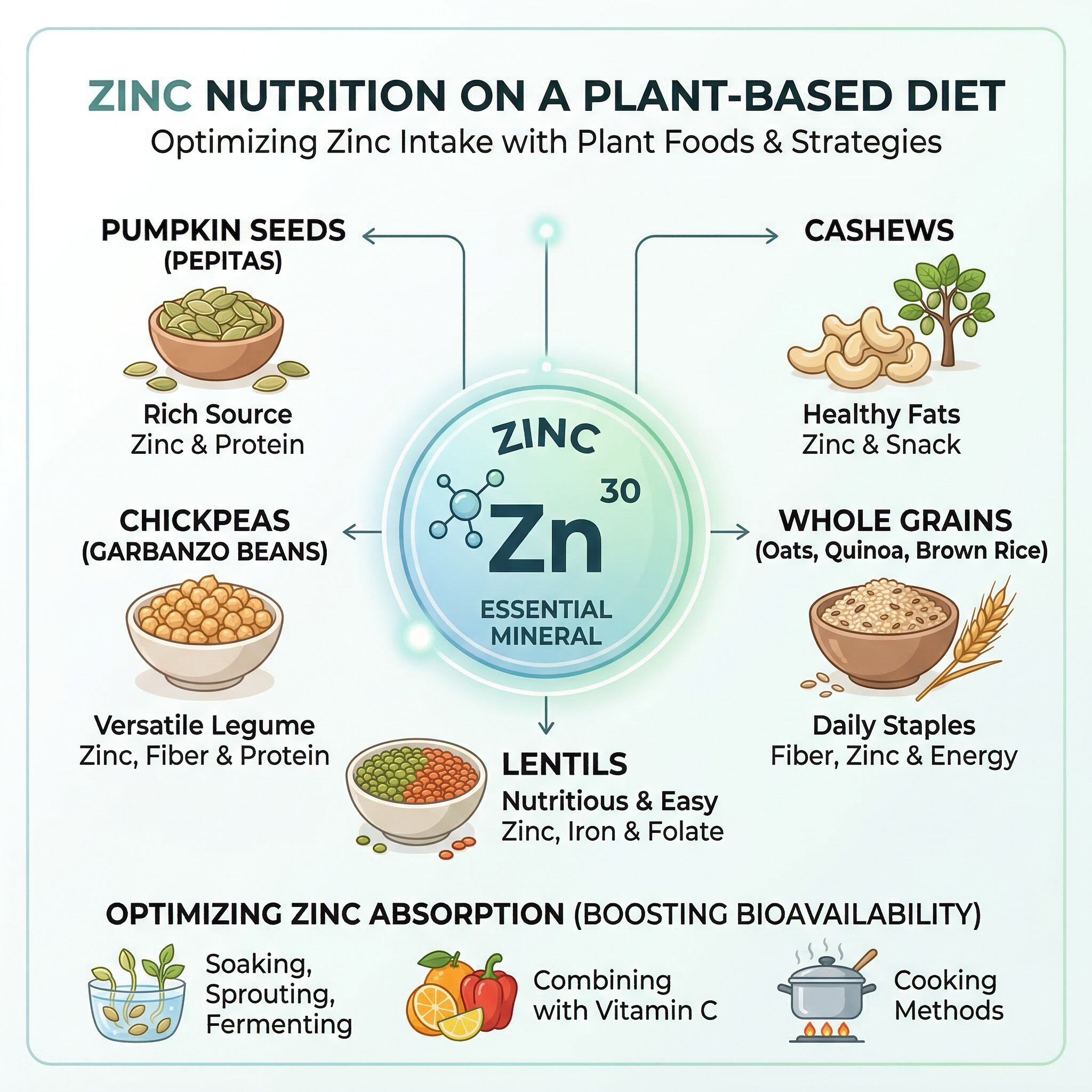
Zinc is an essential trace mineral involved in numerous biological processes throughout the body. It contributes to immune function, supports normal cell growth and repair, and plays a role in metabolism and enzyme activity.
Because zinc participates in hundreds of enzymatic reactions, it helps maintain many systems that influence everyday health, including skin integrity, wound healing, and immune response.
Within plant-based nutrition, zinc intake is often discussed in relation to absorption. Many plant foods provide zinc, but certain natural compounds in grains and legumes can influence how efficiently the body absorbs this mineral.
With a clear understanding of zinc-rich foods and simple dietary strategies that support absorption, plant-based diets can provide meaningful amounts of this important nutrient.
In this guide, we will explore the role of zinc in the body, plant-based food sources, factors that influence absorption, signs that zinc intake may need review, and when supplementation may be considered.
Why Zinc Is Important for Immune Function and Cellular Health
Zinc is involved in many processes that support the body’s ability to maintain and repair itself. It plays an important role in immune function by supporting the development and activity of immune cells that help defend the body against everyday environmental challenges.
This mineral is also essential for normal cell growth and repair. Because cells throughout the body are constantly renewing themselves, zinc contributes to processes that help maintain healthy tissues, including skin and the lining of the digestive tract.
Zinc also participates in enzyme activity that supports metabolism and the breakdown of nutrients from food. These enzymatic reactions influence how the body processes carbohydrates, proteins, and fats.
In addition, zinc contributes to wound healing and the maintenance of normal taste and smell functions. Because of these wide-ranging roles, maintaining adequate zinc intake is important for supporting many aspects of overall health.
For individuals following plant-based diets, understanding where zinc is found in foods and how absorption works can help ensure that dietary patterns continue to support healthy zinc status over time.
Plant-Based Sources of Zinc
Many plant foods naturally contain zinc and can contribute meaningfully to daily intake when included regularly in balanced meals.
Legumes such as lentils, chickpeas, and beans provide moderate amounts of zinc while also contributing fibre and plant-based protein. These foods are commonly used in soups, stews, salads, and grain-based dishes.
Whole grains such as oats, quinoa, and brown rice also contain zinc along with other important nutrients that support overall metabolic health.
Nuts and seeds can be particularly helpful sources of zinc in plant-based diets. Pumpkin seeds, sesame seeds, hemp seeds, cashews, and almonds can all contribute to zinc intake and are easy to incorporate into meals or snacks.
Soy-based foods such as tofu and tempeh also provide zinc and can form part of balanced plant-based meals.
When these foods are included regularly as part of a varied diet, they can contribute to maintaining healthy zinc intake over time.
Factors That Influence Zinc Absorption
While many plant foods contain zinc, the amount the body absorbs can be influenced by several dietary factors.
Whole grains, legumes, nuts, and seeds provide zinc, but they also naturally contain compounds known as phytates. Phytates can bind to certain minerals, including zinc, which may reduce how efficiently the body absorbs them.
However, traditional food preparation methods can help improve mineral availability. Techniques such as soaking, sprouting, fermenting, and cooking grains or legumes may reduce phytate levels and support better zinc absorption.
Dietary variety also plays an important role. Consuming a range of whole plant foods helps ensure a steady supply of essential minerals and nutrients that support overall metabolism.
In addition, overall digestive health can influence how effectively nutrients are absorbed and utilised. A balanced diet rich in fibre and minimally processed foods can support healthy digestion and nutrient uptake.
For individuals following plant-based diets, understanding these factors allows simple adjustments that help support healthy zinc intake over time.
Signs You May Need to Review Zinc Intake
Zinc supports several systems in the body, including immune function, skin health, and cellular repair. Because of these roles, changes in zinc intake over time may gradually influence how the body maintains these functions.
Some individuals may notice that wounds take longer to heal or that skin irritation appears more frequently. Others may experience changes in appetite, taste, or smell, as zinc contributes to normal sensory function.
Zinc also plays a role in maintaining a healthy immune response. When intake is consistently low, some individuals may notice that recovery from common illnesses takes longer than usual.
These signs are not unique to zinc status and can be influenced by many factors, including overall diet quality, lifestyle habits, and other nutrient considerations.
For this reason, persistent symptoms are best discussed with a qualified healthcare professional who can evaluate dietary patterns and determine whether further testing or nutritional adjustments may be helpful.
For individuals following plant-based diets, periodically reviewing zinc intake can help ensure that dietary patterns continue to support long-term health.
When Zinc Supplementation May Be Considered
Plant-based diets can provide meaningful amounts of zinc through foods such as legumes, whole grains, nuts, seeds, and soy-based products. For many individuals, regularly including these foods in balanced meals can support healthy zinc intake.
However, some individuals may choose to consider supplementation depending on their dietary habits, lifestyle demands, or specific health circumstances.
For example, individuals with consistently low intake of zinc-rich foods or those experiencing periods of increased physical stress may review whether additional zinc support is appropriate.
Zinc supplements are available in several forms, including zinc gluconate, zinc citrate, and zinc picolinate. These forms may differ slightly in absorption and tolerance.
Because nutritional needs vary between individuals, supplementation decisions are ideally made with guidance from a qualified healthcare professional. This helps ensure that the form and dosage are appropriate for individual health needs.
For most people following plant-based diets, focusing on a varied diet rich in whole foods remains the primary foundation for maintaining balanced zinc intake over time.
Zinc Optimisation Checklist
Maintaining healthy zinc intake on a plant-based diet can be supported through a few simple and consistent habits.
• Include zinc-rich foods such as legumes, whole grains, nuts, and seeds regularly in meals.
• Incorporate foods such as pumpkin seeds, sesame seeds, lentils, and chickpeas into balanced plant-based dishes.
• Use preparation methods such as soaking, sprouting, or fermenting grains and legumes when possible to support mineral availability.
• Maintain a varied diet that supports overall digestive health and nutrient absorption.
• Review dietary patterns periodically to ensure zinc-rich foods remain a regular part of meals.
With consistent dietary habits and balanced food choices, plant-based diets can provide meaningful amounts of zinc to support long-term health.
Key Questions About Zinc in Plant-Based Diets
Can plant-based diets provide enough zinc?
Plant-based diets can provide meaningful amounts of zinc through foods such as legumes, whole grains, nuts, seeds, and soy-based products. When these foods are included regularly as part of balanced meals, they can contribute significantly to daily zinc intake.
Why is zinc absorption sometimes discussed in plant-based diets?
Plant foods often contain compounds called phytates that can bind to minerals such as zinc. While this can influence absorption, preparation methods such as soaking, sprouting, fermenting, and cooking grains or legumes can help improve mineral availability.
Do plant-based eaters need zinc supplements?
Not necessarily. Many individuals can obtain adequate zinc through a varied diet that includes whole plant foods. However, supplementation may be considered in certain situations if dietary intake is consistently low or individual needs increase.
Can zinc-related symptoms overlap with other nutrients?
Yes. Symptoms such as fatigue, slower recovery, or changes in overall wellbeing can sometimes overlap with other nutritional factors, including iron or vitamin B12 status. Reviewing overall diet and nutrient intake can help provide a clearer understanding of potential causes.